How should Pinellia ternata be cultivated to achieve three harvests in one year?
Pinellia ternata is a medicinal material belonging to the Araceae family. Although the raw Pinellia ternata is toxic, this does not prevent it from being a commonly used traditional Chinese medicinal material. As a traditional Chinese medicinal material with very wide clinical application, how should the Pinellia ternata plant be cultivated?
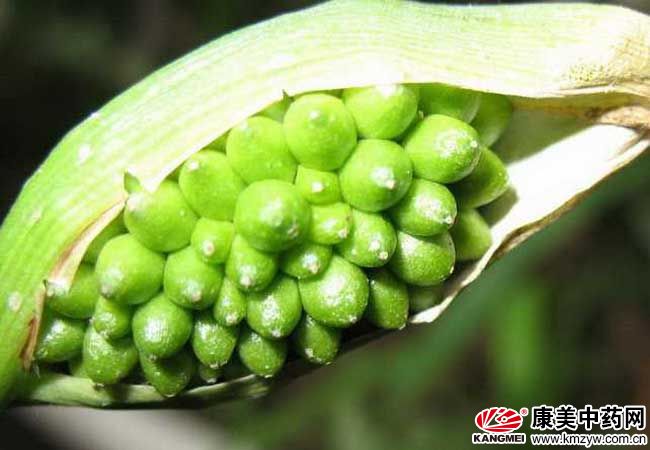
Pinellia ternata is a commonly used bulk traditional Chinese medicinal material harvested year-round. It has wide adaptability, is easy to cultivate, and is simple to manage. If high-yield multi-crop cultivation techniques are adopted, three plantings and three harvests in one year can be achieved, with extremely significant benefits. Especially when intercropped or relay intercropped with crops such as wheat, corn, and sorghum, the economic benefits are even higher.
The cultivation and harvesting-processing techniques for three crops of Pinellia ternata in one year are specially introduced as follows:
1. Land selection and land preparation
For planting Pinellia ternata, loose and fertile soil is best. During land preparation, apply 3000-5000 kg of farmyard manure per mu, 25-30 kg of phosphate fertilizer, and 100 kg of plant ash. Do not apply ammonium bicarbonate. Deep plow and harrow finely, with a bed width of 1.3 m, height of 0.17 m, and ditch width of 0.3 m. In the ditches, tall-stalk crops such as wheat, corn, sorghum, or kenaf can be intercropped.
2. Sowing methods
There are three propagation methods for Pinellia ternata:
The first is tuber propagation. After Pinellia ternata has been cultivated for 2-3 years, the underground tubers can be dug up after the aboveground parts wither in June, August, and October each year. Select medium and small tubers with a transverse diameter of 0.5-10 cm, robust growth, and no pests or diseases as seed tubers. Small seed tubers are better than large seed tubers. Mix them with fine sandy soil of moderate moisture, store them in a ventilated and cool place, and take them out for planting in winter of the same year or spring of the following year. Spring planting is preferable; autumn and winter planting results in low yield.
The second is bulbil propagation. In summer and autumn, use the mature bulbils under the leaf petioles for strip planting, with a row spacing of 10-16 cm and a plant spacing of 6-10 cm. Open holes, place 3-5 bulbils in each hole, and cover with soil 1.6 cm thick. At the same time, apply an appropriate amount of mixed fertilizer, which can both promote the germination and growth of bulbils and provide additional fertilizer for the mother tubers, helping to increase yield.
The third is seed propagation. Pinellia ternata that is more than biennial can bloom and bear fruit successively from early summer to autumn and winter. This method is used when seedlings are insufficient or in breeding. About 10 d after flowering in autumn, when the spathe withers, collect the mature seeds and store them in wet sand.
Usually, tuber propagation is used for three plantings and three harvests in one year, that is, plant in April and harvest in July; plant in July and harvest in October; plant in October and harvest in April of the following year. The amount of seed tubers used per mu varies with size, generally requiring more than 40 kg per mu. When planting, a seed drill can be used to open furrows, with a row spacing of 18 cm. Select white, disease-free tubers and sow them at a plant spacing of 10-15 cm, then cover with soil and press firmly. If dry weather occurs, open the furrows and water along the furrows, then place the tubers and cover with soil.
3. Field management
The main tasks are weeding and earthing up. Weed as soon as weeds appear, first shallowly and then deeply. After about 1.5 months of growth, bulbils grow on the petioles, and earthing up should begin. Combined with earthing up, topdress with phosphate fertilizer and plant ash or potassium dihydrogen phosphate. If earthing up is not done, the bulbils are exposed outside and do not grow new bulbils; if drought occurs, water frequently in small amounts, and after watering, carry out intertillage and earthing up. In the later stage of Pinellia ternata growth, the flower stalks should be cut off to avoid consuming nutrients and affecting tuber growth.
4. Pest and disease control
To control viral disease, spray 1500-fold liquid of Zhibingling. To control leaf spot disease and root rot, spray or drench with 1800-fold liquid of 50% carbendazim wettable powder or 200-fold liquid of 2% Nongkang 120 aqueous solution. To control thrips and hawkmoth larvae, spray 1000-fold liquid of 50% phoxim.
5. Harvesting and processing
At harvest, a plow can be used to turn the soil, and the tubers should be carefully picked out. Large ones are used as medicine, and small ones are kept for seed. Those used as medicine are first piled indoors for 4-5 days to sweat, making peeling easier. Then they are put into hemp bags or woven bags, placed on wooden boards or stone slabs, and rubbed while sprinkling water to peel them. Then they are poured into a sieve and immersed in water. After floating off the skin residue, they can be sold directly to the local medicinal material purchasing department.
The above is the relevant content on the cultivation of Pinellia ternata for three harvests in one year. If you are a medicinal herb grower planting Pinellia ternata, it can be used as a reference. If you have better planting experience, you are welcome to reply to this article and share it with us!