Detailed Explanation of Anhui Fritillary Planting Methods and Precautions
Planting medicinal plants is similar to planting crops. The general steps of planting crops, such as land preparation, sowing, planting, topdressing, and pest control, are also the basic steps for planting Chinese medicinal herbs. As a precious medicinal material unique to Anhui Province, Anhui fritillary (Fritillaria anhuiensis) is basically planted in the same way as other fritillaries. So, how are fritillaries planted? And what should be noted when planting Anhui fritillary?
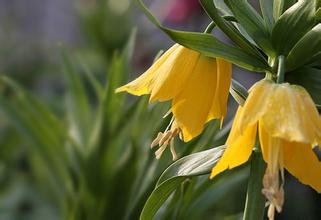
Anhui fritillary is suitable for growing in the humid environment south of the Yangtze River. Throughout the entire growth period, the water requirement is relatively low for cultivation before the end of the year, and relatively high after emergence the following year and before the stems fall over. Sufficient sunlight and soil with a relatively high sand content are extremely suitable for its growth. Clayey soil drains poorly and has excessive water content, which can easily cause underground stem rot; while soil with too much sand has poor water retention, which affects yield.
1. Land preparation and bed making.Evenly spread a layer of chicken manure or pig manure on the selected field plot, and apply 50 kg of superphosphate, 10 kg of potassium chloride, 5 kg of 10% wettable carbendazim powder, and 1 kg of trichlorfon powder (mixed with fine sand and scattered) per 667 sq m (1 mu). After plowing, expose to the sun, then break up the soil clods and shape them into turtle-back form with a bed width of 1.3 m. Open drainage ditches around the perimeter to facilitate drainage.
2. Sowing.From late August to early September, open horizontal furrows on the carefully cultivated bed surface at a row spacing of 10-14 cm and a furrow depth of 3-4 cm, then place Anhui fritillary seed stems into the furrows every 4-8 cm (plant spacing) in the same way as planting garlic cloves. At planting time, use single-clove and cut-clove propagation separately according to seed stem size. Long fritillary cloves can be cut crosswise, while round fritillary cloves can be directly divided. Then cover with soil level with the bed surface, spray with butachlor and press lightly, and cover the furrows planted with fritillary seeds with grass to retain moisture and prevent rain erosion.
3. Intercropping and relay intercropping.The growth period of Anhui fritillary is short, but its time in the field is relatively long. Therefore, after the fritillary seeds are planted in the soil, shallow-rooted crops such as radish, potherb mustard, and water cabbage can be intercropped. These crops have a short growth period and can be harvested around late December. At this time, Anhui fritillary has not yet emerged or has just emerged, and when fertilizing, Anhui fritillary can also absorb part of the fertilizer. Only after harvesting the intercropped crops should special winter fertilizer be applied to Anhui fritillary.
4. Management and topdressing.In spring, carry out manual weeding, clear the ditches and drain water, and remove flowers and pinch the tops. In summer, if drought occurs, irrigate promptly. For sloping land, irrigate shallowly; for field plots, use flow irrigation, and sprinkler irrigation is even better. After rain, especially after heavy rain, clear the ditches and drain water promptly.
After Anhui fritillary emerges, apply topdressing once a month, applying 750 kg of dilute human urine and feces per 667 sq m, or scattering 5 kg of urea on rainy days.
5. Pest and disease control
(1) Wireworm: This pest damages the bulbs, causing the plants to wilt and die. Treat the soil with 5% chlordane powder or drench the base of the fritillary seedlings with a 1:30 tobacco leaf liquid (with 500 trichlorfon granules added) to poison and kill them.
(2) Gray mold: Before the disease occurs in late March, spray 400 times diluted 65% zineb wettable powder. Fushuangmiejue (produced in Tianjin, a new-generation pesticide) can also be diluted with water according to the instructions and sprayed once every 10 days for a total of 3-4 sprays.
(3) Black spot: This disease occurs easily when there is a lot of rain. The control method is the same as for gray mold.
6. Harvesting and processing
When the fritillary leaves turn yellow and withered in mid-to-late May, choose a sunny day and carefully dig out the underground bulbs, remove fibrous roots, soil, stems and leaves, wash clean and air-dry, then fumigate with sulfur for 10 hours, then take samples for inspection. Use a small knife to cut the bulbs crosswise into two pieces, apply iodine tincture to the cut surface. If the cross-section turns white, it has been fully fumigated; if the cross-section turns blue, it has not yet been fully fumigated and should be fumigated again. After fumigation, sun-dry or oven-dry, sift out impurities, seal and package, and it is ready for sale.