Salvia miltiorrhiza planting techniques require the right timing, the right place and the right people
For the cultivation of medicinal herbs, the "right timing, right place and right people" are extremely important. "Right timing" mainly refers to the planting and harvesting time; "right place" refers to the "authentic origin" of the medicinal herb; and "right people" mainly refers to "people's awareness of and recognition for the medicinal herb". Salvia miltiorrhiza (Danshen) is a commonly used traditional Chinese medicine for activating blood and dispelling stasis, unblocking meridians and relieving pain, clearing the heart and relieving restlessness, and cooling the blood and dispersing abscesses. So what are its "right timing, right place and right people"?
Salvia miltiorrhiza prefers warm and humid conditions, tolerates cold but fears waterlogging, and has strong adaptability. It can generally be planted on any land except soil that is too heavy in texture or low-lying and prone to water accumulation. It is best to choose land with deep, fertile, loose soil and good drainage for planting. When preparing the land, plow deeply, break up the soil and make beds.
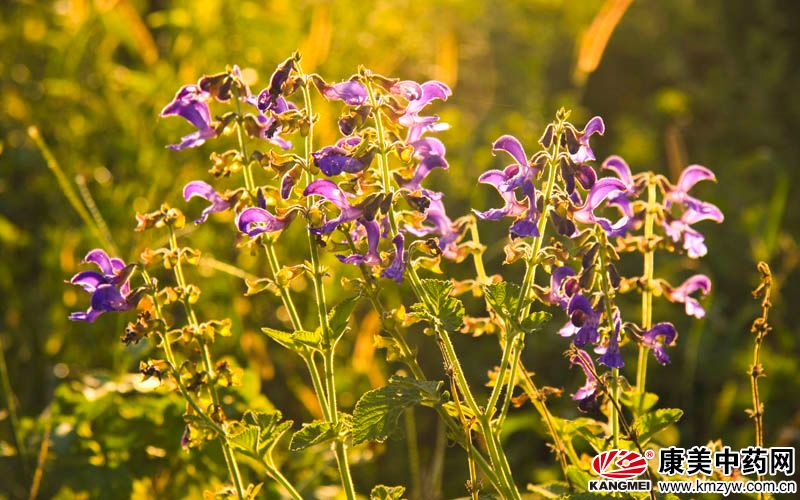
Salvia miltiorrhiza is mainly propagated by root division. Thick, strong new roots can be selected as seed material; cut the roots into 5 cm long root segments and plant them between November and December. When planting, they must be upright, never upside down, and after planting cover with 3 cm of soil. The root segments can also be laid horizontally in the sowing furrow and covered with 5 cm of soil, with 25 cm row spacing and 20 cm plant spacing. Seed propagation can also be used; sowing must be done in the season with abundant rainfall in the same year the seeds are collected. After sowing, cover with grass and water frequently to keep the soil moist. Seedlings will emerge after 7 days, and transplanting is done after the seedlings are strong.
When planting Salvia miltiorrhiza, apply as much base fertilizer as possible, and apply fertilizer several times during the growing period. Carry out timely intertillage and weeding, pay attention to ditching for drainage and remove flower spikes in several rounds. Except for plants kept for seed production, the inflorescences should be cut off in several rounds during the flowering period to promote root growth.
Requirements for the conditions of a Salvia miltiorrhiza planting base:
1. Soil condition requirements
1. The most suitable soil for Salvia miltiorrhiza is relatively fertile sandy loam, requiring a soil pH that is neutral, slightly alkaline or slightly acidic, with no water accumulation during the plum rain season, and a plow layer more than 40 cm (one chi two cun) thick.
2. The limits of heavy metals in the soil environment, such as mercury, copper, cadmium, lead, arsenic, chromium, hexachlorocyclohexane and DDT, shall comply with the Grade I or Grade II standards in the National Soil Environmental Quality Standard. Plots whose previous crop was peanut or where pests and diseases occur easily cannot be used as Salvia miltiorrhiza bases.
2. Water quality condition requirements
There must be water sources and facilities available for irrigation, such as wells, reservoirs, river water or sprinkler irrigation equipment, as well as canals and pumps, etc. The water quality must be pollution-free, and the water quality must meet the National Standard for Irrigation Water Quality (GB5084-92).
3. Environmental and other requirements
1. Within one kilometer of the medicinal source base, there must be no polluting industrial or mining enterprises, no "three wastes" pollution, and no large garbage dumps.
2. Transportation must be convenient; there must be roads accessible to the fields, and field roads must allow the passage of farming machinery, making them suitable for mechanical cultivation.
3. The base must implement the "six unifications" technical management, namely unified seeds and seedlings, unified ridging and transplanting, unified fertilization and weeding, unified irrigation and drainage, unified pest and disease control, and unified harvesting and processing management, so as to stabilize and improve the yield and quality of the medicinal material.
4. The base shall implement "crop rotation and stubble changing" management, with rotation at least once every two years; once a year is best.
4. Base management
1. In order to make the medicinal material production at the base meet the requirements of standardization and normalization, and to ensure that the quality of the medicinal material meets the requirements of safety, effectiveness, stability, controllability, high quality and pollution-free, the base shall be managed in accordance with the National Good Agricultural Practice for Traditional Chinese Medicinal Materials (GAP) and related regulations.
2. The base shall be managed according to the principles of "unified planning, concentrated contiguous plots and standardized management".
3. The Standard Operating Procedures (SOP) for medicinal material production at the Shaanxi Tasly medicinal source base are the standardized criteria for the entire process of medicinal material planting, field management, harvesting and processing at the base. The entire process of medicinal material production at the base must be strictly enforced according to the operating procedures.
The above is the relevant content on Salvia miltiorrhiza planting techniques. Friends who grow Salvia miltiorrhiza may wish to use it as a reference! For medicinal herb growers, whether to grow a certain medicinal herb and the scale of growing a certain medicinal herb often require consideration of the market conditions of the medicinal material, and the Kangmei Traditional Chinese Medicine Network price index can help the majority of medicinal herb growers understand the market conditions of medicinal materials.