The prospects for growing Chinese medicinal herbs are broad, with both opportunities and challenges
On August 26, 2016, the Political Bureau of the CPC Central Committee held a meeting and deliberated and approved the “Healthy China 2030” planning outline. With the state's attention and advocacy, people's health awareness is rising rapidly, and Chinese medicinal herbs, which have the characteristics of “preventing disease before it occurs and preserving health,” will surely receive people's attention. Growing Chinese medicinal herbs has excellent prospects; however, while welcoming new opportunities, it will also face numerous difficulties.
Xi Dada proposed four major principles to help build a Healthy China; scientific development also lies in adhering to equal emphasis on Chinese and Western medicine!
Adhering to scientific development also lies in adhering to equal emphasis on Chinese and Western medicine, and promoting traditional Chinese medicine and Western medicine to complement each other and develop in a coordinated way. Traditional Chinese medicine is a treasure of ancient Chinese science and also the key to opening the treasure house of Chinese civilization. In December 2015, Xi Jinping sent a letter congratulating the China Academy of Chinese Medical Sciences on its 60th anniversary, pointing out that at present, the revitalization and development of traditional Chinese medicine has ushered in a great opportunity with favorable timing, geographical conditions, and harmonious human relations, and expressing the hope that the broad ranks of traditional Chinese medicine workers will strengthen national confidence, bravely scale the peaks of medicine, deeply explore the essence in the treasure house of traditional Chinese medicine, fully give play to the unique advantages of traditional Chinese medicine, advance the modernization of traditional Chinese medicine, and promote traditional Chinese medicine to the world. On August 19, 2016, at the National Health Conference, Xi Jinping once again stressed the development of traditional Chinese medicine: efforts must be made to realize the creative transformation and innovative development of the health-preserving culture of traditional Chinese medicine.
Good prospects for growing Chinese medicinal herbs——“Daodi” has an absolute advantage
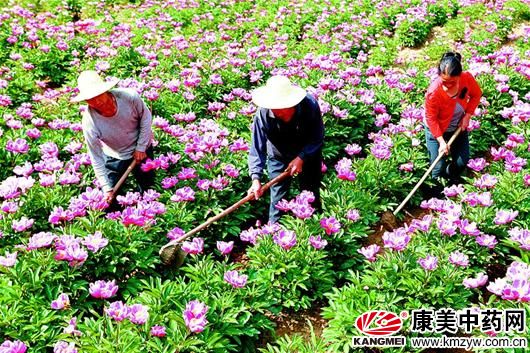
As a special economic crop, Chinese medicinal herbs have strict regional authenticity and selectivity toward the ecological environment. The quality of the environment directly affects the quality of Chinese medicinal herbs, and the quality of medicinal materials not only directly affects pharmacological efficacy and human health, but also involves the quality and safety of traditional Chinese medicine preparations. Daodi, also meaning authentic, means that the efficacy is authentic, solid, exact, and reliable.
Daodi medicinal materials refer to medicinal materials produced in regions with specific natural conditions and ecological environments. Because production is relatively concentrated and cultivation techniques, harvesting, and processing all have certain requirements, compared with the same kind of medicinal material produced in other regions, they have the characteristics of better quality and better curative effect. According to statistics, there are currently more than 200 kinds of traditional Daodi medicinal materials, and the production quantity and output value of Daodi medicinal materials account for more than 80% of cultivated medicinal materials, with remarkable curative effects, a long history, and the highest rate of appearance in prescriptions.
Most Daodi medicinal materials are “produced in one place and used nationwide,” scattered across the country, and have the production-and-marketing characteristics of self-collection (planting, cultivating), self-harvesting, self-processing, and self-selling. The formation of traditional distribution centers is related either to the production areas of Daodi medicinal materials, or to the influence of famous doctors and medicine kings, or to convenient transportation, or to the mass base of markets and temple fairs. For example, Yunnan produces Sanqi, Tianma, Dendrobium officinale, and Yunnan Paris polyphylla; Anguo produces Qimuxiang and Qibaizhi; Yu County produces Yunanxing and Yubaifuzi; Jiangyou in Sichuan produces Fuzi; Guan County produces Chuanxiong; the area around Zhangjiakou abounds in Mahuang and Gancao; and Shaodong in Hunan produces fat Yuzhu. These production areas have a long history of processing, and the medicinal materials produced are of good quality.
Difficulties encountered in growing Chinese medicinal herbs:
1. Problems in the Chinese medicinal herb market: severe variety degeneration
This is one of the important factors affecting the quality of Daodi medicinal materials. It is specifically manifested in the weakening of drought resistance, cold tolerance, and resistance to diseases and insect pests in some Daodi medicinal materials, and in increased pesticide resistance or premature maturity. For example, Sanqi rarely suffered from root rot in the past, but now not only has the incidence of root rot increased, but its resistance to pesticides is also increasing.
2. Lack of “brand” awareness, making it impossible to protect high-quality medicinal materials
Daodi medicinal materials are also commodities. Since they are commodities, they should have brands. “Tianma”: how many people know which place's product it is, and which place's is the best? Tianma is the same, whether produced in Yunnan, Sichuan, Guizhou, Shaanxi, Hunan, or Hubei. Different production areas inevitably lead to differences in the quality of Tianma, directly affecting quality, price, and even directly affecting medicinal efficacy. However, the “Tianma” produced in each place has no brand of its own, and all claim that their own Tianma is the best and is a Daodi medicinal material. These things that should be decided by science have been left to the market to resolve. How can the market distinguish good from bad? There is no way. The market gives a relatively “fair” price for sale on the market, and they are all sold at the same “status,” so isn't the truly Daodi medicinal material Tianma being “wronged”?
3. Large-scale cultivation has not been formed
Individual production and blind cultivation make it very difficult to guarantee the income of medicinal herb farmers. Under market economy conditions, medicinal herb cultivation is scattered among thousands of households, and there are no fixed enterprises or organizations to coordinate production plans. Medicinal herb farmers can only rely on the commodity price shown by the market for a certain variety at a certain time to judge whether to grow it and how much to grow, while rarely considering the changes in market demand when this product faces the market. In this way, periodic fluctuations of excess or shortage in (Daodi) medicinal materials often occur. When production is greatly in excess, even the most precious Daodi medicinal materials may become low in “status”; conversely, when production is insufficient, even a “crow” will sell for a “phoenix” price. It is precisely this abnormal fluctuation that makes it difficult for many precious Daodi medicinal materials to maintain their deserved preciousness and “status” in the market for a long time. And the farmers' own interests are also very difficult to guarantee, thus gradually forming a cycle in which the price of medicinal materials and the income of medicinal herb farmers are out of proportion.
4. The “public hazard” problem is relatively common
Because in the production process, soil selection is not strict, and pesticides and inorganic fertilizers are applied over the long term, while some people use excessive pesticides to avoid diseases and insect pests, this has led to the widespread problem of excessive heavy metal content and pesticide residues in Daodi medicinal materials at present. This is one of the important reasons causing the decline in the quality of Daodi medicinal materials.