What medicinal herbs are suitable for cultivation in the Jiangsu region?
Jiangsu, as a place renowned for its outstanding people and favorable land, is not only blessed with beautiful scenery, classical architecture, and rich culture, but is also the source of many common Chinese medicinal herbs. The main medicinal herbs produced in Jiangsu include Platycodon grandiflorus (balloon flower), mint, chrysanthemum, Pseudostellaria heterophylla (tai zishen), reed, Schizonepeta tenuifolia (Japanese catnip), Perilla frutescens (purple perilla), Trichosanthes kirilowii (Chinese cucumber), lily, Isatis indigotica (woad), Euryale ferox (fox nut), Pinellia ternata (crow-dipper), Salvia miltiorrhiza (red sage), Prunella vulgaris (selfheal), Arctium lappa (greater burdock), ginkgo, and others. Among so many medicinal herbs, which one is actually the most profitable to grow?
Platycodon grandiflorus (Balloon Flower)
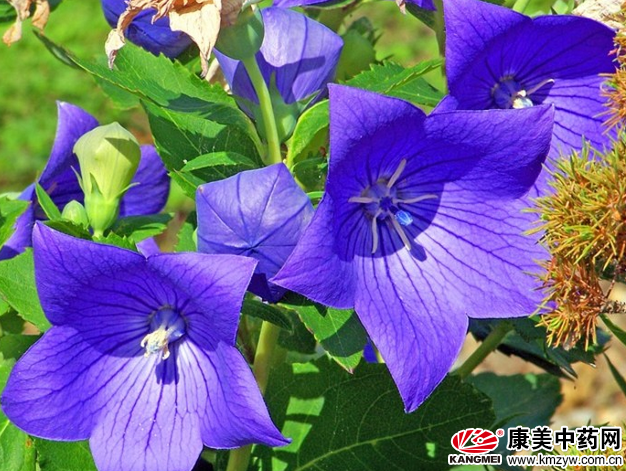
Platycodon grandiflorus, also known as baofuhua, lingdanghua, sengmaohua, and other names, is a perennial herbaceous plant with stems 20 to 120 cm tall, usually hairless, occasionally densely covered with short hairs, unbranched, rarely branched in the upper part. Its root can be used as medicine and has effects such as relieving cough and reducing phlegm, dispersing lung qi, and discharging pus. In Northeast China it is often pickled as a salty vegetable, and on the Korean Peninsula it is used to make kimchi. The local folk song "Balloon Flower Song" describes this very plant. Judging by the name alone, some people may mistakenly think that Platycodon grandiflorus is the stem of a mandarin orange, but in fact it has no direct relationship with mandarin oranges or the Citrus genus.
Platycodon grandiflorus is a perennial herbaceous plant. Its root is used as medicine, and it can also be eaten as a vegetable. It is one of the 40 major commonly used Chinese medicinal herbs, with the effects of dispersing lung qi, dispelling cold, reducing phlegm, and discharging pus. It is mainly used to treat externally contracted cough, sore and swollen throat, chest tightness and abdominal distension, bronchitis, pleurisy, and other conditions. Surveys of several major medicinal herb markets and production areas across the country show that domestic planting area is gradually shrinking, while demand has not decreased, proving that business opportunities for Platycodon grandiflorus have re-emerged, and its development prospects are very promising.
Pseudostellaria heterophylla (Tai Zishen)
Pseudostellaria heterophylla is a perennial herbaceous plant, 15 to 20 cm tall, with spindle-shaped tuberous roots, purple lower stems, a flowering period from April to May, and a fruiting period from May to June. It has the effects of tonifying qi and strengthening the spleen, promoting fluid production, and moistening the lungs. It is often used for fatigue due to spleen deficiency, poor appetite, weakness after illness, insufficiency of qi and yin, spontaneous sweating and thirst, dry cough due to lung dryness, and other conditions.
Pseudostellaria heterophylla, also known as tongshen, uses its tuberous root medicinally. It can tonify qi and promote fluid production, and supplement and strengthen the spleen and stomach. It is used to treat fatigue due to spleen deficiency, poor appetite, cough due to lung deficiency, palpitations, dry mouth, and other conditions. It belongs to the tonic category of Chinese medicines, with an annual demand of more than 500,000 kg, and is mainly produced in Jiangsu, Shandong, and other places. At present, the market price of Pseudostellaria heterophylla is 55 to 60 yuan/kg. The general yield per hectare is 1,200 to 2,250 kg, and the output value per hectare reaches more than 60,000 yuan. The prospects for developing cultivation are still quite good, but we must not plant blindly; we need to look at market demand and market conditions.
Mint
Mint, commonly known as “yindancao”, is a plant of the Lamiaceae family, namely the dried whole plant of the same genus and other species, with the whole plant having a fresh, aromatic scent. Its leaves are opposite, and its flowers are small, light purple, and labiate, producing small dark purple-brown seeds after flowering. It mostly grows in mountain wilds, wetlands, and beside rivers. Its rhizomes spread horizontally underground. It mostly grows at an altitude of 2,100 m, but can also grow at an altitude of 3,500 m. It is an aromatic crop with special economic value. It is one of the commonly used Chinese medicines, a pungent, cool, diaphoretic, and antipyretic medicine, used to treat influenza, headache, red eyes, fever, sore throat, swollen and painful gums, and other conditions. For external use, it can treat neuralgia, skin itching, rashes, eczema, and other conditions. Ordinarily, using mint as a tea can clear the heart and improve eyesight.
Mint uses the whole plant as medicine, and is used to treat wind-heat common cold, headache, sore throat, mouth and tongue sores, rubella, measles, chest and rib distension and tightness, and to prevent early pregnancy, among other uses. Mint oil and menthol are used not only as medicine, but are also widely used as aromatic agents and flavoring agents. Therefore, the market prospects for growing mint are promising. It sells well not only in our country's market, but is also a highly sought-after product on the international market. Calculating on the basis of 25 kg of mint oil produced per mu of mint, its net income is 2 to 3 times higher than growing ordinary crops.
Perilla
Perilla, also known as guiren, baisu, chisu, and other names, is an annual herbaceous plant of the Lamiaceae family, with a distinctive aroma. Its leaves are mostly shrunken and curled; when complete and flattened, they are ovate, 4 to 11 cm long and 2.5 to 9 cm wide, with a long pointed or acute tip, a rounded or broadly cuneate base, and serrate margins. Both surfaces are purple, or the upper surface is green, and the lower surface has many sunken glandular scales. The petiole is 2 to 5 cm long, purple or purple-green, and brittle. The young branches are purple-green, and the cross-section has pith in the center. It has a clear, fragrant odor and a slightly pungent taste.
Perilla leaf can disperse exterior cold and has a relatively strong diaphoretic effect. It is used for wind-cold exterior syndromes with aversion to cold, fever, absence of sweating, and other symptoms, and is often used together with ginger. If the exterior syndrome is accompanied by qi stagnation, it can also be used together with Cyperus rotundus (xiangfu), dried tangerine peel, and the like. For moving qi and relaxing the middle, perilla leaf is used for spleen-stomach qi stagnation, chest tightness, and nausea. Wild and cultivated varieties are found in North China, Central China, South China, Southwest China, and Fujian. In recent years, market demand has been continuously increasing, and there is great room for development in perilla cultivation.
Schizonepeta tenuifolia (Japanese Catnip)
Schizonepeta tenuifolia, also known as xiangjingqi, xianqi, silengganhao, jiasu, and other names, is a perennial plant of the genus Schizonepeta in the Lamiaceae family. Its stems are strong, lignified at the base, and much branched, 40 to 150 cm tall. It tastes mild, is warm in nature, non-toxic, and has a strong clear fragrance. It is a diaphoretic and antipyretic medicine, and one of the commonly used Chinese herbal medicines. It can calm phlegm, dispel wind, and cool the blood, and is used to treat influenza, headache with chills and fever and sweating, vomiting, and other conditions.
Schizonepeta tenuifolia uses the whole plant with flower spikes as medicine. It has the effects of detoxifying, dispersing wind, promoting eruption, and stopping bleeding. In addition to being used as a raw material by pharmaceutical factories, in recent years Schizonepeta tenuifolia has also been widely used in the feed and spice processing industries. The amount of Schizonepeta tenuifolia oil exported to Southeast Asian countries has also increased year by year, causing its demand to continuously rise. Because herb farmers in production areas have been harvesting Schizonepeta tenuifolia year after year, its wild resources have been decreasing year by year, and the marketed product has already appeared in a state of supply falling short of demand, with prices rising year after year. According to surveys, since the beginning of summer this year, the supply of Schizonepeta tenuifolia in major medicinal herb markets across the country has been somewhat low, goods are moving briskly, and the price of the general grade has now risen to 7 to 8 yuan per kg, an increase of 47% compared with the same period last year. At present, existing inventory on the market is not much, and supply cannot be replenished in time, so there is still room for the price to rise.
Warm reminder: Medicinal herb cultivation is similar to crop cultivation, and harvested yield is greatly affected by weather factors. If you are a beginner grower, please be sure to consider carefully; in addition, mastering scientific cultivation techniques and timely medicinal herb market information is crucial for cultivation investment. More medicinal herb cultivation techniques and medicinal herb market information can be found on the Kangmei Traditional Chinese Medicine Network.