What soil should you use for growing flowers? Choose this kind of soil and you won't get root rot or yellow leaves, and it can still burst with growth even in summer
Lately the plants at home keep having problems, either root rot and yellow leaves, or just wilting and dying outright, and it's not from harsh sun or overwatering. So what on earth is going on? Of course, it's a soil problem! Today, Huahua is here to reveal the secrets about flower-growing soil!
Garden soil
The Complete Guide to Flower Growing
Source: the green belts in your neighborhood, fields, or parks.
Pros: garden soil has fairly high fertility,
Cons: if you water too much, its water permeability gets worse; if it's too dry, the soil surface becomes compacted, so it can't be used on its own.
Peat soil (sedge peat)
The Complete Guide to Flower Growing
Source: the bottom of ponds, rivers and lakes, not very easy to dig up
Pros: excellent water retention and fertilizer retention, very light texture, and basically free of pests and diseases.
Cons: it contains relatively few nutrients itself and can't provide enough nutrients for flowers.
Leaf mold
The Complete Guide to Flower Growing
Source: on mountains, under big trees, in rotted grass patches
Pros: soil formed from rotted leaves, with very strong looseness and air permeability.
Cons: it may carry many insect eggs and bacteria; using it without sterilizing can cause infection by pathogens.
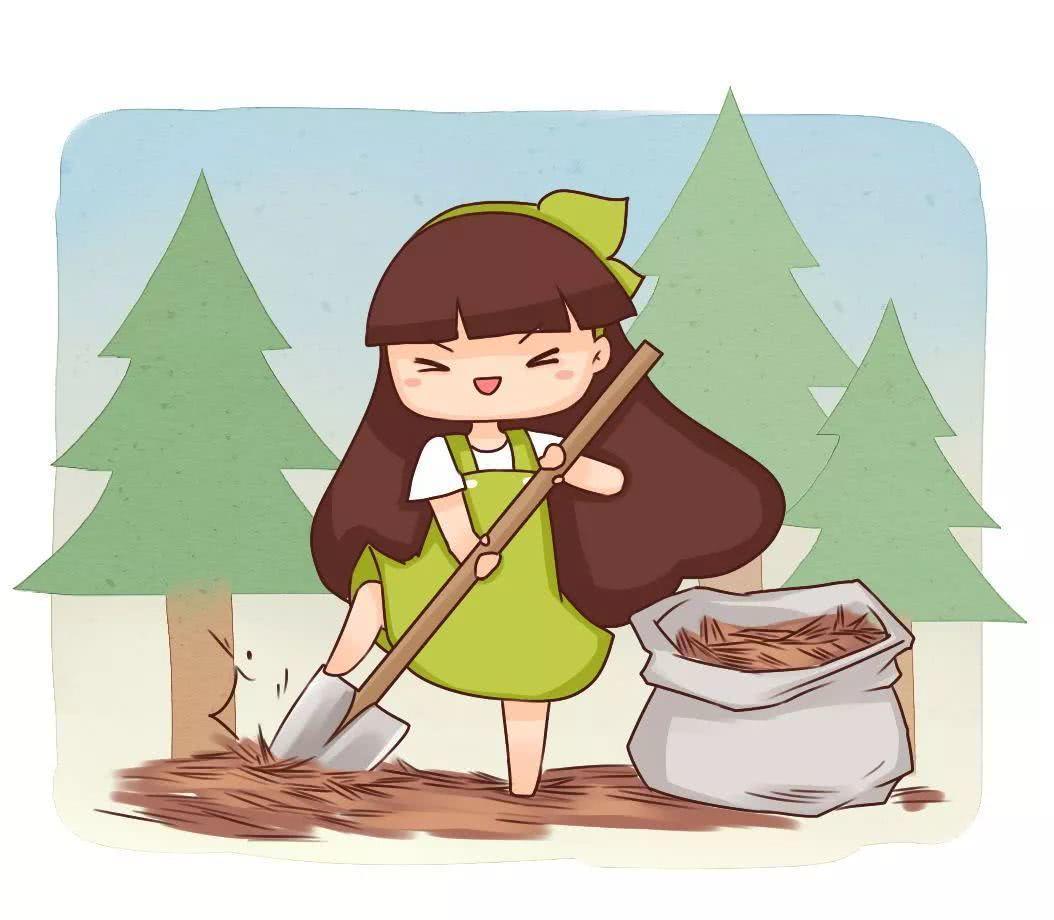
Pine needle soil
The Complete Guide to Flower Growing
Source: under pine trees, push aside the surface layer and the layer below is already decomposed pine needle soil
Pros: weakly acidic, with very strong looseness and air permeability.
Cons: not recommended for young seedlings; the pores are too large to hold the root system.
Coco coir
The Complete Guide to Flower Growing
Source: made from the fibrous powder of the leaf husk, can be purchased.
Pros: extremely strong water and air permeability, won't cause water to accumulate in the pot.
Cons: contains no nutrients at all, best not used on its own.
Sphagnum moss
The Complete Guide to Flower Growing
Source: a natural moss, can be dug up in the wild.
Pros: clean and free of pathogens, keeps warmth and moisture, ventilated and airy, mainly used for growing orchids.
Cons: needs to fully absorb water before use, soak it in water.
Vermiculite
The Complete Guide to Flower Growing
Source: bought
Pros: natural and non-toxic, strong water absorption, good air permeability, often used for cuttings or seedling raising.
Cons: over time it breaks down into fine particles, and its water and air permeability drop greatly
Perlite
The Complete Guide to Flower Growing
Source: bought
Pros: improves soil water and air permeability, more stable than vermiculite, not easily broken down into fine particles
Cons: contains no nutrients, can't be used directly.
Coal cinders
The Complete Guide to Flower Growing
Source: picked up from roadside trash piles or places where coal is burned
Pros: water and air permeable, contains trace elements, supplements nutrients for flowers
Cons: must be sifted before use; unsifted it is highly alkaline, easily burns roots, and also has a lot of dust, so air permeability is poor.
Clay pebbles
The Complete Guide to Flower Growing
Source: bought
Pros: increases soil water and air permeability, used directly as a layer at the bottom of the pot.
Cons: contains no nutrients at all.
How to mix soil for small foliage plants?
The Complete Guide to Flower Growing
For small foliage plants at home such as pothos, spider plant, and ivy, you need to ensure the soil is loose and fertile so the leaves grow shinier and shinier! So the most basic potting soil can use leaf mold, garden soil, and river sand at 1:1:1.
How to mix soil for large foliage plants?
The Complete Guide to Flower Growing
For large potted plants such as money tree and happiness tree, nine out of ten deaths are caused by root rot. So when mixing soil, looseness and air permeability come first. You can mix peat soil, sand, and coal cinders = 3:1:1.
How to mix soil for flowering plants?
The Complete Guide to Flower Growing
If you want the flowers at home to bloom more, then when mixing soil you have to choose to mix some phosphorus and potassium fertilizer into the potting soil, which not only makes the plant grow strong but also lets it bloom more! The simplest soil mixing method is leaf mold, perlite, and bone meal at a 3:2:1 ratio.
How to mix soil for succulents?
The Complete Guide to Flower Growing
When succulents at home get root rot, most of the time it's because the soil isn't airy and water accumulates, causing root rot, so when mixing soil for succulents you must ensure it's loose and airy enough.
For mature succulents, peat soil, perlite, vermiculite = 6:3:2
And for cuttings and beheaded young seedlings, peat soil, perlite, vermiculite = 3:2:5
About flower-growing soil,
that's all Huahua has to share.
Have all you flower lovers learned it?
After all, only by choosing the right soil
is it the first step to successfully growing flowers!
?