Keep your Phalaenopsis like this after buying it home: strong stems and plenty of flowers
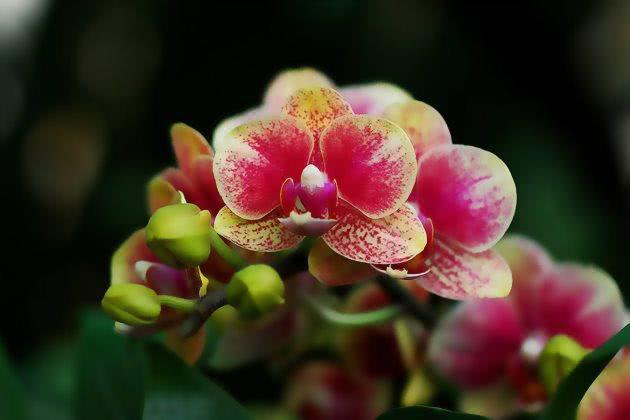
Phalaenopsis is a very beautiful plant. If cared for well, when it blooms you can see lifelike butterflies resting on the branches. Anyone seeing this flower for the first time will be amazed by it.
Although Phalaenopsis is very beautiful, growing it is not something you can achieve easily. Without a certain foundation in flower growing and a clear understanding of its growth habits, you cannot grow Phalaenopsis well. Many gardening enthusiasts manage to keep their Phalaenopsis alive, but cannot get it to produce beautiful flowers. Some enthusiasts take good care of their Phalaenopsis at first, yet in the end still run into yellowing leaves or rotting roots. So how should Phalaenopsis be grown? In other words, how do you keep a Phalaenopsis you bought home from dying, and how do you get Phalaenopsis to bloom? Today Hua'er Gu will introduce the home growing method for Phalaenopsis.
How to grow Phalaenopsis
To grow Phalaenopsis well, the growing environment is very important. The growing environment has several aspects: light, humidity, temperature, watering and fertilizing. In addition, we also need proper pruning and regular repotting and soil changing. Let's study this in detail below.
1. Light
Phalaenopsis likes to grow in a semi-shaded environment. Before and after the flowering period we must ensure plenty of scattered light. It cannot be grown under direct sunlight, otherwise too strong light will cause failure to bloom, yellowing leaves or other poor growth problems.
2. Humidity
Phalaenopsis has fairly high requirements for air humidity during growth. If the air humidity is below 60%, it will cause yellowing leaves, weak and spindly plants, and difficulty in blooming. So we had best keep the air humidity at around 60%-80%. Therefore, when the air is dry we need to take action - spray the air to increase humidity, otherwise it will face the risk of dying!
3. Temperature
The optimal growing temperature range for Phalaenopsis is 16°C-30°C. In winter the temperature must not be lower than 13°C, otherwise cold damage will occur. In summer it should be grown in a cool place, and care should be taken to keep the temperature from going above 32°C. It can be seen that growing Phalaenopsis has extremely strict temperature requirements! Of course, it is not only strict about temperature.
4. Watering
Spring and summer are the peak growing seasons for Phalaenopsis, and we need to water a bit more. In autumn and winter we need to reduce watering appropriately, and when temperatures are low in winter we need to extend the watering interval. As for when to water Phalaenopsis, we need to carefully observe the potting soil and replenish water in time before it dries out completely. Never let the potting soil become drought-stricken.
5. Fertilizing
During the peak growing season of Phalaenopsis we need to apply fertilizer regularly, generally once every half month. We can also follow the principle of light but frequent fertilizing to supplement nutrients before the flowering period, and can add some fertilizer liquid when watering each week. Before the flowering period it is best to apply phosphorus fertilizer two or three times.
6. Pruning
The flowering period of Phalaenopsis is generally around the Spring Festival, and the whole process lasts about 3 months. After the flowers fade, we need to cut off the spent flowers and flower stems. It is recommended to cut at the 5th node counting upward from the soil, so that it will bloom a second time within the year. If we want our Phalaenopsis to bloom better next year, we should cut directly from the base, letting it retain more nutrients to promote plant growth, and next year it will produce even more beautiful flowers.
7. Repotting
As Phalaenopsis grows, most of the nutrients in the potting soil will be used up within a certain period. At this time we need to change the soil regularly, replacing it with more fertile soil, which can effectively meet its needs for growth and flowering. It is recommended to repot and change the soil in April-May. If the plant has grown quite large, we need to change to a bigger pot to meet its need to expand.
Notes on growing Phalaenopsis
Growing Phalaenopsis requires attention to the coordination of various conditions. Watering should not be delayed nor excessive; water thoroughly at one go, and do not water irregularly. Fertilizing should not be too much nor too little - following the principle of light but frequent fertilizing is the safest!
After the flowers fade, pruning needs to be done in time to avoid excessive nutrient consumption causing the plant to grow weak and spindly. When yellow leaves or rotten roots appear, they need to be treated and controlled in time.
The above is Hua'er Gu's introduction to how to keep Phalaenopsis from dying and some growing techniques to promote Phalaenopsis blooming. If you also like Phalaenopsis, then follow Hua'er Gu. We provide you with newer and better flower-growing experience and tips every day.