Lucky bamboo cutting propagation method: do this and roots and leaf buds will sprout on their own
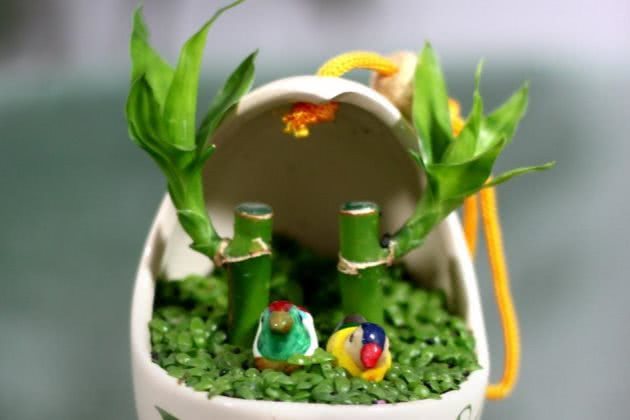
Lucky bamboo (Dracaena sanderiana) is a household green plant we see quite often in daily life, and it is also commonly seen in many shops, companies and so on. Lucky bamboo represents "blooming flowers and wealth," and "bamboo brings peace"! It is fair to say its symbolic meaning is quite wonderful. Placing it at home also makes people feel it fits very well.
Lucky bamboo is relatively easy to grow, and can be cultivated both in water and in soil. It is an excellent green plant for home decoration and air purification. Propagating lucky bamboo is relatively simple; we often use the cutting propagation method to grow more lucky bamboo. Moreover, propagation can be done almost all year round; we just need to control the temperature appropriately. Below, Flower Valley introduces the cutting propagation method for lucky bamboo.
Lucky bamboo cutting time
Generally speaking, lucky bamboo can be propagated between January and February. For cuttings, you can directly insert them into soil, or use river sand or water culture for propagation. Generally, when cutting in spring, it only takes about 30 days to grow new roots.
In addition, we can also take cuttings in March and April. At this time the temperature gradually rises, and lucky bamboo cuttings generally grow new roots in about half a month, noticeably faster than cuttings taken in January and February.
Besides this, we can also choose to take cuttings in summer. In summer we generally use water culture or sand culture for propagation; after cutting, place it in a cool spot with scattered light and it can root in about 7 to 10 days.
Lucky bamboo cutting preparation
For lucky bamboo cuttings, we generally need to cut some leafless stems as cuttings. The length of the cutting is generally about 10cm, and it is best to have three nodes in the middle.
Prepare a pot of river sand, water it thoroughly, then poke holes in it, insert the cuttings into it and firm the sand around them, then place it in a cool spot with scattered light for care, avoiding direct sunlight.
After cutting, lucky bamboo generally needs watering about once every three days; specifically, we can decide the watering time according to the season and the dryness or moisture level of the sand.
We also often use relatively tender stems closer to the top for cuttings; cuttings taken this way also turn out very well.
Notes on cutting
Some flower lovers among us use water culture to propagate new lucky bamboo plants. For water-cultured cuttings, the length is generally the same as for soil culture: choose three nodes and a length of about 10cm. If the nodes are relatively close together, we can also choose a few more nodes.
For water-cultured lucky bamboo, we generally use a flower pot saucer as the container for cultivation rather than vessels such as plastic bottles. This way we can control the water level better, and the environment is better ventilated and breathable. Bottles used for cultivation generally need to be cut shorter before use.
For water-cultured cuttings, the bottom position needs to be a bit closer to a node, so that roots grow faster and rot is less likely.
When using sand culture, remember that the flower pot must not be allowed to accumulate water, otherwise it will cause the cuttings to rot and grow mold, and then the cutting will fail.
The above is Flower Valley's introduction to the cutting propagation method for lucky bamboo and some points to note. If you have also propagated lucky bamboo and have any good experience or tips, you can leave a message to share with the friends at Flower Valley!