Petunias bloom into a waterfall, blooming more joyfully than any other flower under high temperatures
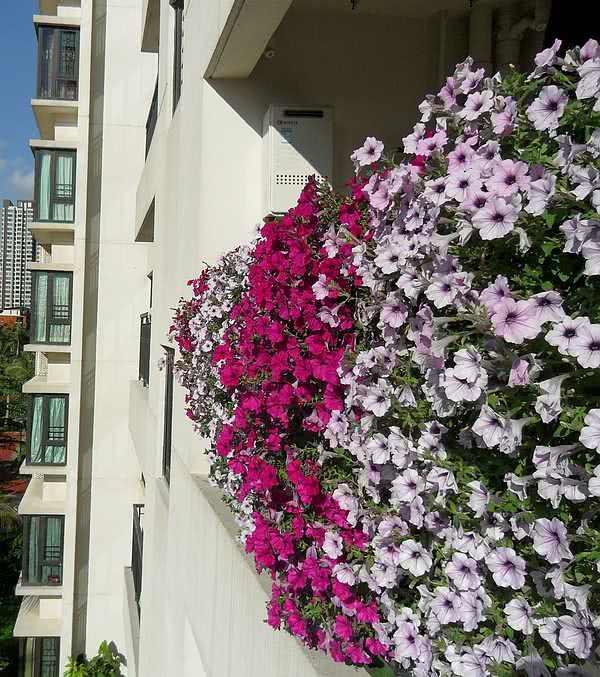
Lately the balcony thermometer often reads 35°C, and the petunias are still blooming the most joyfully. This is the waterfall on the north balcony. Now there are 2 hours of sunlight every afternoon, covering all the railings, blooming so much that other flowers can't compare. Without further ado, here are the pictures.
Just after potting up
Continuing to grow
Lush now
The inner side of the rightmost pot receives a bit of direct light, so I let it grow long; the other inner sides barely get any diffused light, so I only kept them as long as the pot's depth. I suggest not letting the inner side grow too long, as it gets leggy, has fewer flowers, and wastes nutrients. Look how long mine has grown
Still growing longer
Still growing
Nothing can stop the petunias
Completely covered. Mission accomplished
About the seedlings: after sowing, be sure to select strong seedlings for potting. I used 420 tray pots, 2 plants per pot, and now I still think it's too small. If too many are crowded into one pot, nutrients get spread thin and they don't grow as long. Don't be soft-hearted with weak seedlings, just throw them away.
During the petunia growing period, I used a general-purpose nutrient solution, diluted 2000 times, sprayed on leaves daily. When the surface soil is dry, water the roots with the same dilution. Remember not to spray leaves daily on rainy days or when it's too humid, as it easily causes leaf rot. (For very small seedlings, like those with a crown diameter still under 10 cm, don't fertilize; at this stage the root system isn't strong enough, just spray the leaves every other day.) Before they grew to look like picture three, I never let them bloom, pinching off half a bowl of flower buds every day.
When the flowering period arrives, use a one-week cycle: for 6 days, water daily with potassium dihydrogen phosphate (or a bloom-boosting nutrient solution) diluted 1800 times, and on the remaining day use plain water. Potassium dihydrogen phosphate has extremely high phosphorus content, so it's not recommended to water the roots with it daily; you can spray it on leaves, or alternate it with a bloom-boosting nutrient solution for root watering, otherwise excessive phosphorus accumulation in the soil harms the absorption of other elements.
After entering the full bloom period, when it hangs down over 40 cm with flowers but no leaves visible, you can dig open the soil surface a little and bury bone meal to supplement phosphorus. As long as it's genuine bone meal, it won't burn the roots, but don't be greedy, apply according to the instructions. For those with experience, it's suggested to water the soil with ferrous sulfate once every half year, or bury a little sulfur powder to increase soil acidity (not recommended for the inexperienced, to avoid overdoing it). The Meraviglia and Wave series have excellent branching; during the seedling stage, when each side branch from the main stem grows to about 10 cm, pinch once and you never need to bother again. After they become lush, some overly weak branches at the bottom that can't get sunlight can be cut off. If you have time, it's best to cut off spent flowers with their stems every few days, saving phosphorus for blooming. Because many series do set seeds.
Highly recommend the Wave series: large flowers, sturdy branches, thick leaves, and petals very resistant to sun. The Meraviglia and Easy Wave series wilt a bit after two days under a 30°C strong sun, while Wave can hold up for over 5 days. Also as trailing types, Easy Wave and Double Cascade aren't as vigorous and don't have as many flowers, but they come in richer colors. If just choosing a series, I'd rank Wave > Meraviglia > Easy Wave. But the Wave and Meraviglia series have fewer color options. Trailing petunias are really great, no disease and no pests; roses often get harassed by red spider mites, and gazanias often get covered by aphids, but petunias still go their own way.