Detailed Explanation of Kapok Planting Techniques and Key Cultivation Management Points
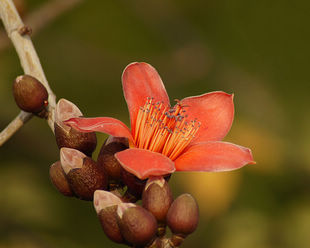
Kapok(kapok) is a specialty of the south, and is the city flower of Guangzhou, Kaohsiung and Panzhihua. Five petals with strong curves surround a dense cluster of yellow stamens, gathered into a firm receptacle; each flower is as big as a rice bowl, spreading downward from the top of the tree to greet the warm spring.
Cultivation Methods
Propagate by sowing, cuttings and division. Collect the capsules before they split open; the seeds have a short storage life for germination, so they are mostly sown immediately after collection, or they can be stored short-term in damp sand. Sow in rows, covering with 2cm of soil; at an average temperature above 20°C, seedlings generally emerge completely in 4-5d. Cuttings are mostly taken in February to March or during the rainy season, using large branches 80-100cm long and 1-2cm in diameter; insert them 10-15cm deep into the seedbed and keep the bed moist regularly. Division uses suckers sprouting from the base of the mother plant; cutting them off together with a section of the mother root and fibrous roots and planting them separately makes it easier to survive.
Daily Management
Re-grafting
Check survival 10-15d after grafting. If the bud body is fresh and the petiole falls off at a light touch, it shows survival; if the scion turns brown, the petiole is hard to detach and the scion feels soft when pinched, the graft has not survived and should be re-grafted immediately.
Loosening the band
After the graft survives, let the scion buds break through the film on their own. New grafted buds sprout rather slowly, and the first few new leaves produced
are pink; after about 2-3 weeks the leaf color begins to turn tender green and the leaves unfold. Once the young leaves have fully turned green and flattened out, the plastic film band can be loosened so as not to affect the growth of the new shoots. However, the binding at the graft union should not be removed immediately, in order to protect the scion from damage.
Removing suckers
For seedlings whose grafts have survived, remove the sprouts on the rootstock at any time so that nutrients are concentrated in supplying the new shoots that have already survived grafting.
Other Management
Timely intertillage to remove weeds and reasonable watering, emphasizing light fertilizer applied frequently, with emphasis on nitrogen fertilizer. New shoots are often damaged by leaf beetles and geometrid moths and other herbivorous insects, such as alder leaf beetles and Chinese pistache geometrid larvae. When damage is minor, they can be caught and killed by hand; when the damaged area is relatively large, chemical control is used: commonly selected are 80% dichlorvos or 50% fenitrothion at 800 times dilution, 25% phosmet emulsifiable concentrate at 800-1000 times dilution, 80% chlordimeform at 1000 times dilution, etc.