What rootstock is best for grafting 10 kinds of nursery stock?
Grafting nursery stock is a commonly used method of propagation, with the characteristics of fast propagation and the ability to maintain the superior traits of flowering plants. To achieve the desired result from grafting, the rational selection of rootstock is an important part of whether the grafting succeeds.
Below is a brief introduction to the rootstock selection for grafting 10 kinds of nursery stock:
1. Wintersweet
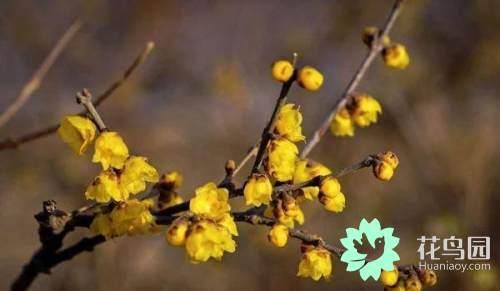
Dog-tooth wintersweet (also known as dog-tooth wintersweet) can be used as the rootstock. Its flowers are small, pale in color, with narrow, long and pointed tepals and a weak fragrance. It is a semi-wild type of wintersweet with extremely strong stress resistance, and is mostly used as the rootstock for horticultural cultivars. In spring, the cut-grafting method is often used for grafting.
2. Ornamental peach
Wild peach or mountain peach can be used as the rootstock, using the bud-grafting or branch-grafting method. Branch grafting is done in spring, and bud grafting is done in summer.
3. Osmanthus
Small-leaf privet, large-leaf privet, water privet, etc. are selected as the rootstock for grafting osmanthus, commonly using the cut-grafting and bud-grafting methods. Cut grafting should be done in early spring before budding, using 1-year-old vigorous branches as scion wood; bud grafting should be done in summer, using 1-year-old vigorous branches with plump buds as scion wood grafted onto the rootstock.
4. Banana shrub
1-year-old white magnolia or broad-petaled banana shrub with a ground diameter of more than 0.8 cm can be used as the rootstock. After "Yushui" (Rain Water) each year, choose a sunny day and use the cut-grafting method to graft.
5. Cherry blossom
Mountain cherry can be used as the rootstock, grafted by the cut-grafting or bud-grafting method. Cut grafting should be done in spring, and bud grafting should be done in summer.
6. Ginkgo
2- to 3-year-old seedling trees, cutting seedlings and root-sucker seedlings can be used as the rootstock. The rootstock is required to be vigorous in growth, with a straight trunk and strong stress resistance. The height of the rootstock varies depending on the cultivation goal.
For those used for early fruiting and close planting, the graft position is at about 1 m, and the seedling height is about 1.5 m;
For those used for courtyard planting, the graft position is at 1.5 to 2 m, and the seedling height is between 2 and 2.5 m;
For those used for road greening, the graft position is at about 2.5 m, and the seedling height is about 3 m.
7. White magnolia
Magnolia, Yulan magnolia or banana shrub, etc. can be used as the rootstock. The approach-grafting method is usually used, generally carried out in June to July; the cut-grafting method should be carried out in spring.
8. Yulan magnolia
The variety of Yulan magnolia, purple magnolia, or small officinal magnolia seedlings are often selected as the rootstock. Methods such as approach grafting, bud grafting and branch grafting can be used. It is usually carried out in early spring.
9. Chinese hibiscus
Purple-flowered rose of Sharon is commonly used as the rootstock. Cut grafting should be done in spring, and bud grafting should be done in summer.
10. Golden-branch willow
Weeping willow, which grows fast and has strong stress resistance, is selected as the rootstock. Varieties suitable as rootstock include fast-growing willow, golden-branch willow, etc. When the common willow used as rootstock is grown by cutting propagation, it is first densely planted at a row spacing of 80 cm and a plant spacing of 40 cm. When the seedlings grow to 60 to 70 cm tall, thin them so that the plant spacing after final planting reaches 80 cm, so that the seedlings meet the standard for grafting in the same year, that is, at the time of grafting the rootstock reaches a diameter at breast height of 3 cm and a height of more than 3 m. The grafting time is preferably from the end of February to early March. Because the rootstock and scion sections differ greatly in thickness, the cleft-grafting method should be used for grafting.