Why are giant bullae prone to complicating spontaneous pneumothorax?
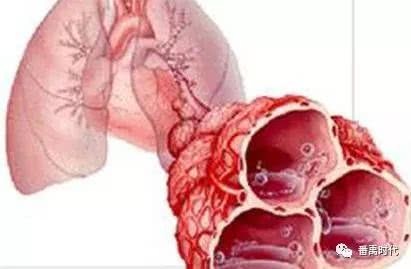
There is a type of pulmonary bulla whose origin, formation and development are mainly caused by infection with a certain virus or bacterium, which increases secretions in the trachea and leads to its generation and growth, and this kind of pulmonary bulla will develop over a long period of time into a giant bulla. But whether it is this pulmonary bulla at the initial stage or one that has grown into a giant bulla, neither is diffuse. However, the broad scope of this viral or bacterial infection will also form multiple pulmonary bullae.
Growing into a giant bulla generally occurs in groups who do not pay attention to health or whose economic conditions are poor; they have respiratory symptoms, and X-ray contrast examination shows a radiolucent area, which will not change after multiple contrast examinations, and it is very likely to complicate spontaneous pneumothorax. Moreover, the onset will be sudden; after pneumothorax occurs, X-ray contrast examination shows that the radiolucent area may markedly enlarge or shrink. A giant bulla generally contains no fluid if there is no concomitant infection, and has no air-fluid level.
And if spontaneous pneumothorax does not receive reasonable treatment, it mostly forms hydropneumothorax within a short period. In addition, thoracic puncture, pressure measurement and air extraction are contraindicated for giant bullae, because piercing the visceral pleura easily causes pneumothorax and aggravates the condition. If it is misdiagnosed as pneumothorax and puncture pressure measurement is performed, then the fluctuation of pressure during respiration belongs to atmospheric pressure, fluctuating around "0"; after air extraction, radiography shows no shrinking of the radiolucent area, and the symptoms also show no improvement.
In tension pneumothorax, however, during puncture pressure measurement the pressure is higher than atmospheric pressure, fluctuating above "0"; immediately after air extraction, measurement shows a marked decrease, the symptoms improve, and on re-examination by radiography the radiolucent area can also markedly shrink. In addition, giant bullae also need to be differentiated from congenital pulmonary cysts, diaphragmatic hernia, lung abscess, etc. Giant bullae or other pulmonary bullae treated with surgery often easily recur, so traditional Chinese medicine treatment should be combined or adopted to treat the root cause and remove it completely.
If you have any questions or need help, you can call 0106217064913269852331