What are the Western medicine classifications and clinical manifestations of pulmonary gangrene?
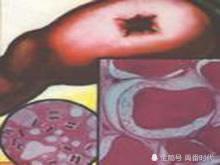
When a foreign body accidentally enters the trachea or bronchi and is not severe enough to cause a critical reaction but remains there, the symptoms subsequently formed during the process of putrefaction are named pulmonary gangrene in Western medicine. It belongs to the category of pulmonary abscess in traditional Chinese medicine and is one of its conditions. After pulmonary gangrene occurs, the patient has purulent, putrid, foul-smelling nasal discharge, along with difficulty breathing, coughing morning and evening, and expectoration. The bacteria and viruses that cause pulmonary gangrene may also bring about more destructive diseases of the respiratory tract and the whole body.
Regarding pulmonary gangrene alone, from the Western medicine perspective it is divided into dry gangrene, wet gangrene, gas gangrene, and so on. The manifestation of categories such as dry and wet pulmonary gangrene is in fact still determined by whether the patient's overall yang qi or yin qi is predominant in traditional Chinese medicine. If yang qi is predominant, there is very little dampness in the body, so it manifests as dry gangrene in Western medicine. Western medicine describes it as arterial obstruction with unobstructed venous return, necrotic tissue with little moisture and relatively dry, with a clear demarcation line; moisture on the body surface evaporates easily, so the gangrenous area becomes dry and shrunken, and the infection is relatively mild.
Gas gangrene
Wet gangrene, in traditional Chinese medicine, is because the patient has predominant yin qi, that is, heavy dampness, which creates favorable conditions for the breeding and spreading of putrefactive bacteria in pulmonary gangrene. Therefore, Western medicine says that the necrotic tissue contains relatively more moisture, the infection is severe, local swelling is pronounced, and it may appear dark green or black. In wet gangrene, putrefactive bacteria vigorously decompose proteins, producing indole and putrescine, which form foul-smelling nasal discharge; toxins and the like are also easily absorbed by the body, causing systemic poisoning and external gangrene, and even shock and death.
Heavy dampness causes wet pulmonary gangrene to develop rapidly and spread without limit, with no obvious demarcation line, and it can trigger many complications, such as gangrenous appendicitis, intestinal gangrene, postpartum gangrenous endometritis, and so on, all of which are very common. Therefore, the harm of wet pulmonary gangrene is especially severe. In summer, when dampness is relatively heavy, patients with dry, wet, or gas pulmonary gangrene should actively eliminate dampness. In particular, patients with wet pulmonary gangrene should eat less dampness-producing food, and do a good job in the prevention and treatment of pulmonary gangrene in summer.
Wet gangrene
Gas gangrene is a severe acute specific infection caused by anaerobic spindle-shaped bacilli. The incubation period is 6 hours to 6 days. The pathogenic bacteria mainly grow and multiply within the wound, and gas may or may not be produced. Tissue within the wound becomes necrotic and putrefied, creating an anaerobic environment, which is even more favorable for bacterial multiplication and makes the condition deteriorate rapidly. The clinical symptoms of gas gangrene are splitting-like severe pain; the wound begins to redden and swell, and the skin becomes pale, tense, and shiny. Subsequently the injured area turns purple-black, blisters containing dark red fluid appear, and foul-smelling fluid may discharge. The muscle within the wound is dark red and swollen, loses elasticity, and does not contract or bleed when cut with a knife. Later, systemic symptoms including toxemia appear.
If you have questions or need help, please call 0106217064913269852331