Water Haworthia like this to easily grow taproots, with leaves that are plump, translucent and crystal clear
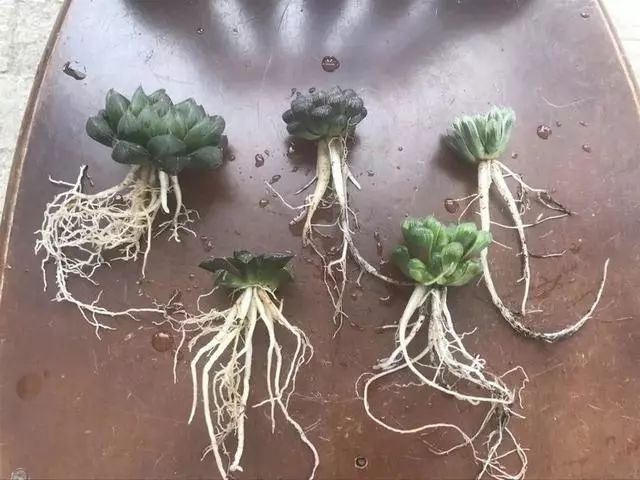
Haworthia (Haworthia cooperi) originates from South Africa. It grows quickly, has a round, plump shape and is crystal clear, making it very popular. I often hear gardening friends marvel that greenhouse-grown Haworthia has rich colors, plump leaf shapes, is exquisite and translucent, and its roots have grown into taproots, while the Haworthia they grow themselves has shriveled leaves, dim and lifeless windows. Today I will share a little method with you: water Haworthia like this to easily grow taproots, with leaves that are plump and can transmit light!
In terms of habits, Haworthia is much easier to grow than Sedum. It likes humid air and fears strong light, which is exactly the opposite of Sedum. Most importantly, Haworthia almost never gets pests! When growing it, you don't need to worry about mealybugs or root mealybugs at all. Among the four seasons, watering is very little in summer and winter, when it is almost in a dormant state. If summer is especially hot and stuffy, cutting off water directly for 2-3 months will not kill it. Although its condition may look rather poor, once autumn comes and you water it, it will immediately recover.
Growing Haworthia taproots is very easy
The first 3 to 6 months of growing Haworthia is the rooting and acclimation period. Once the root system is stable, the leaves will grow wildly and soon fill the pot. From practical experience, roots that are often given heavy watering tend to be relatively thin and weak, while a relatively harsh environment makes it easy to form taproots. For example, if a plant is not watered for 1 month, its leaves will shrivel and shrink; after that, give one heavy watering, and the roots will quickly absorb water and expand, and the leaves will gradually return to their original appearance. At this time, after the roots absorb enough water, they will also expand. Repeat this several times, and the main root will become thick and strong, thus forming a taproot.
But one thing should be explained: the fine capillary roots are thin and weak and dry out easily when short of water. The best growing state is for the upper two-thirds of the root system to be slightly moist and the lower one-third to remain moist.
In winter, in order to increase the air humidity of Haworthia's growing environment, many people like to use the "enclosed growing" method. This method is actually the same principle as spraying water, but covering it with a plastic cup can maintain better air humidity, making Haworthia grow clear and translucent, with higher transparency in the windows. Sunlight shining into the plastic cup also has a heat-preserving effect, and a warm and humid environment is exactly what Haworthia loves most.
After covering with a plastic cup and growing it enclosed for a few days, their windows (leaf surfaces) are obviously much more translucent. Apart from winter, the other seasons are not very suitable for enclosed growing, especially summer, which is already hot and stuffy, so covering it with a plastic cup is even worse.
??????????
END??????????
Thank you all for reading, and thanks to my followers for your attention
If you think the article is good, share it with your friends too
Don't forget to give mea likeoh
Reply: plant name (such asMoney Tree): to check the growing method