Just brought a succulent home? Here's how to check the soil and avoid root rot
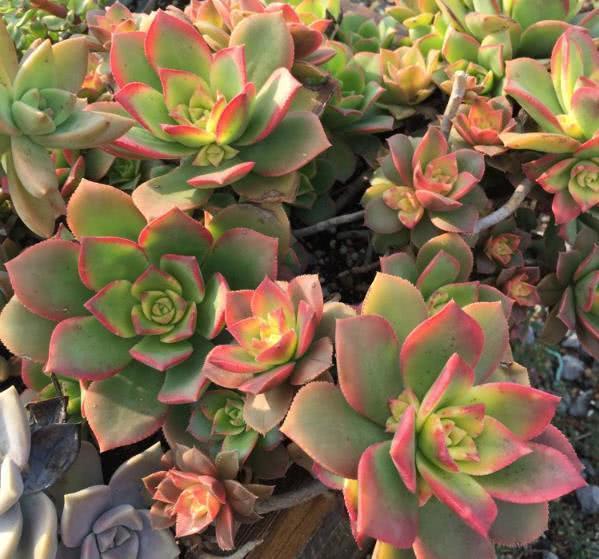
Most succulents like sandy soil. The first thing to do after bringing one home is to check the soil. If it is yellow clay or black soil with very strong putrefactive organic matter, be sure to replace it right away. The usual soil-mixing method: 1 part loose soil (peat soil, coconut coir), 1 part sand (coarse sand), 1:1. If there is a small restaurant near your home burning honeycomb coal, you can also pick some up, crush it, and use it as coarse sand.
Watering succulents has its own rules. At first, you can use a fixed schedule and fixed amount: water once every 5~7 days in spring and autumn, once every 15~20 days in summer, and once every 20~30 days in winter. Later, you can slowly change your watering method based on your own understanding of the plants. You can tell whether watering is needed by observing the plant's condition. For example, leaves becoming soft and developing wrinkles are both signs of water shortage, and at this point you can water a small amount to replenish the plant. Pay special attention that in summer you should avoid exposing the plant to strong sun right after watering, as that can easily suffocate the plant.
What should you do if there are small flying insects around your succulents? The most common small flying insect, one that looks like a mosquito, is none other than the fungus gnat, because its scientific name is Sciaridae. It usually appears in places indoors with poor air circulation and some dampness. It lays eggs in the soil, and the larvae gnaw at the root systems of seedlings. As long as you can keep the air circulating and the environment dry, you can basically keep fungus gnats under control. Be sure not to use the spray insecticide you already have at home directly on the succulent pot. Spray insecticides are generally pyrethroid-based drugs, but spraying them directly at the plant means the concentration is too high and can easily cause chemical burns. Finally, when there are many small flying insects, it is usually closely related to the care environment: damp and unventilated, with potting soil that also contains unrotted organic matter (tea dregs, rice-washing water, fruit peels, and so on), it very easily attracts mosquitoes, flies, and small flying insects. You should still pay attention to keeping the environment clean.
Do wrinkled leaves on succulents mean they lack water? Although succulents dislike overly frequent watering, that does not mean they should be kept thirsty all the time. When wrinkles appear, on the premise of ensuring good ventilation, try giving them a watering. In summer, the most suitable time to water is after evening, and you should try to avoid getting water on the plant. Note that if the problem remains after watering, you should consider whether there is a problem with the roots, and hold out until the growing season to trim the roots and repot. What is the highest level of growing succulents? Personally, I understand it this way: the highest level is not necessarily about getting them into some particular state, but that during the process of growing these succulents, you truly feel happiness and joy. Seeing their changes every day, you take delight in it and do not compare yourself with others.
If we often water our succulents, that may also be one cause of their death. Different succulents need different amounts of water, and in different seasons the water requirement also differs. But for most plants, the amount of water given in summer and winter must be strictly controlled. In summer, we also must not water the plants at high noon, because that is when the sunlight is strongest. If water is added then, the reflection through the water droplets will also be more intense, and the plant's leaves will be scorched. So in general, in summer you should water when the sun is about to set.
We must choose suitable soil to grow our succulents. Some plants like a slightly acidic soil environment, while some plants like an alkaline soil environment, and some plants like a neutral soil environment. We should choose suitable soil according to the different characteristics of the plants, but overall, the soil's drainage system must be good, and it must be rich in nutrients.
This is a gathering place for succulent lovers, sharing succulent care tips. Welcome to follow and exchange ideas.