How to grow Aptenia cordifolia? Detailed guide to cultivation methods and precautions
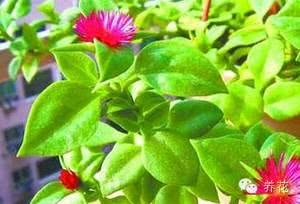
Aptenia cordifolia is a plant that gardening enthusiasts have recently taken a liking to growing. Placed at home, it is very festive and beautiful, but do you understand the cultivation methods and precautions for Aptenia cordifolia? Now let me give you a detailed introduction.
First, Aptenia cordifolia
Aptenia cordifolia belongs to the Aizoaceae family, also known by the aliases dew grass, flowering vine grass, heart-leaf ice flower, Aptenia cordifolia dew flower, sun rose, horned spider plant, and cherry blossom spider plant.
Morphological characteristics:Perennial evergreen trailing succulent herb. Branches about 20 cm long, leaves opposite, thick and fleshy, bright and green. Branches have angular edges, becoming semi-prostrate after extending. Flowers bloom at the tips of branches, and after flowering the branches fork out new growth. Flowers are deep rose red with a pale yellow center, shaped like chrysanthemums, with narrow small petals that are glossy, blooming successively from spring to autumn.
Growth habits:Aptenia cordifolia is native to South Africa and prefers a sunny, dry, and well-ventilated growing environment. It dislikes high temperatures and excessive moisture, and prefers well-drained sandy soil. The suitable growth temperature is 15-25°C. Care is relatively simple; apart from appropriate shading at noon during midsummer, it should receive sufficient light at all other times of the year, especially in winter, when while ensuring temperature, it can be placed in a sunny spot to receive as much sunlight as possible. If placed in a location with insufficient light for a long time, the leaf color easily becomes pale, lacking vitality, and leaves may even drop, losing ornamental value.Those with the conditions can place it outdoors starting from spring. Plants that receive sufficient sunlight produce abundant flowers with brilliant colors, and the leaves are also less prone to leggy growth.
Second, cultivation methods and precautions for Aptenia cordifolia
I. Cultivation methods
1. Soil:Aptenia cordifolia is native to South Africa and prefers a sunny, dry, and well-ventilated growing environment. It dislikes high temperatures and excessive moisture, prefers well-drained sandy soil, and care is relatively simple.
2. Sunlight:Aptenia cordifolia likes light. Apart from appropriate shading at noon during midsummer, it should receive sufficient light at all other times of the year, especially in winter, when while ensuring temperature, it can be placed in a sunny spot to receive as much sunlight as possible. Those with the conditions can place it outdoors starting from spring. Plants that receive sufficient sunlight produce abundant flowers with brilliant colors, and the leaves are also less prone to leggy growth.
3. Temperature:Aptenia cordifolia likes a warm and comfortable living environment, dislikes high temperatures and cold, and the optimal growth temperature is 15-25°C. In summer, when the temperature is too high, attention should be paid to cooling the plant; it can be moved to a well-ventilated semi-shaded area for care. Aptenia cordifolia is not cold-tolerant, so care is needed after autumn begins. When the weather turns cold, attention should be paid to keeping it warm; those placed outdoors should be promptly moved indoors to avoid the cold, so as not to freeze and damage the plant.
4. Watering:Aptenia cordifolia likes a dry environment, and watering should not be excessive. From March to September each year is the peak growth period for Aptenia cordifolia, during which the water demand is greater. Especially during the high-temperature summer period, while increasing the amount of watering, care should be taken that water does not accumulate in the pot. The principle of "water when dry, water thoroughly" should be followed; wait until the potting soil is dry before watering thoroughly. Excessive moisture easily causes root rot, and in severe cases can lead to death. After September, Aptenia cordifolia enters a slow growth period, at which point watering should be gradually reduced to prepare for moving it indoors for the winter.
5. Fertilizing:Aptenia cordifolia has low requirements for fertilizer and water. During the growing season, applying cake fertilizer water once every half month or so is sufficient, and this can be adjusted according to the specific growth conditions of the plant.
6. Pests and diseases:Aptenia cordifolia grows with minimal care and is not prone to pests and diseases. However, if the potting soil is waterlogged and ventilation is poor, in addition to causing root rot, root rot disease may also occur, and attention should be paid to spraying chemicals for prevention and control.
7. Pruning:In winter, the leaves of Aptenia cordifolia stop growing and enter the dormant period. Diseased and pest-infested branches, overlapping branches, conjoined branches, thin and weak branches, aging branches, inward-growing branches, and leggy branches must be promptly pruned. Through thinning, heading back, and removal of suckers, the lifespan of the plant is extended. Keep the plant well-ventilated and exposed to light, making it less prone to pests and diseases, ensuring the plant remains vigorous with thick branches and lush leaves.
II. Cultivation techniques
Propagation and cultivation: Cuttage propagation, carried out in spring and autumn, extremely easy to root.
Note: It can also be cultivated indoors under diffused light without direct sunlight; branches can grow to several meters long, but it will not flower.
Aptenia cordifolia actually does not belong to the spider plant genus. Because its branches and vines are relatively soft, becoming semi-prostrate after extending, with branches drooping down, it looks very similar to spider plants, so people have always cared for it as a spider plant. Its leaves are thick and fleshy with a jade-green color; the flowers bloom at the tips of branches in a rose-red color; the flowering period extends from spring to autumn. It offers both flowers to admire and foliage to enjoy, making it one of the finest potted flowers for decorating living rooms and windowsills.
Aptenia cordifolia is not cold-tolerant, so care is needed after autumn begins. When the weather turns cold, attention should be paid to keeping it warm; those placed outdoors should be promptly moved indoors to avoid the cold, so as not to freeze and damage the plant.
From March to September each year is the peak growth period for Aptenia cordifolia, during which the water demand is greater. Especially during the high-temperature summer period, while increasing the amount of watering, care should be taken that water does not accumulate in the pot. The principle of "water when dry, water thoroughly" should be followed; wait until the potting soil is dry before watering thoroughly. Excessive moisture easily causes root rot, and in severe cases can lead to death.
Aptenia cordifolia has low requirements for fertilizer and water. During the growing season, applying cake fertilizer water once every half month or so is sufficient.After September, Aptenia cordifolia enters a slow growth period, at which point watering should be gradually reduced to prepare for moving it indoors for the winter.
III. Precautions
1. If Aptenia cordifolia is placed in a location with insufficient light for a long time, the leaf color easily becomes pale, lacking vitality, and leaves may even drop, losing ornamental value.
2. Overwatering Aptenia cordifolia can cause root rot, and in severe cases can lead to death. The amount of watering should be well controlled.
3. Aptenia cordifolia has low requirements for both fertilizer and water. During the growing season, attention should be paid to applying cake fertilizer water once every half month or so. If too little fertilizer is applied, it will cause slow growth.
Third, the role of Aptenia cordifolia
Aptenia cordifolia is mostly used for potted ornamental display, and can also be used as an accent for planting other flowers and plants, suitable for garden arrangements of desert landscapes.
Fourth, can Aptenia cordifolia be eaten?
The answer is yes, because Aptenia cordifolia is rich in vitamin C, folic acid, carotene, potassium, magnesium, etc. It also contains a strong antioxidant, namely lutein. It has good health benefits for various organs of the human body. If it reaches the liver, it can detoxify and cleanse the liver. It plays a very good protective role.
LOVE. Soilless Farm
Soilless FarmShengguo Mall
Discover the beauty of growing flowers
Most popular WeChat recommendations
Tip: Long-press the letters inside the box to copy, go back and tap the "+" at the top right of your phone - select "Add Friends"
- "Paste" in the search box - and "Search" to follow
Soilless Farm
WeChat ID: wutunongye
I am a freckle removal doctor, deeply engaged in freckle removal for over ten years, and have successfully helped many female friends remove their freckles. Every week I insist on publishing some of my beauty and freckle removal experiences and insights. If you have been troubled by freckles on your face, hurry up and follow me, let me teach you how to remove freckles without rebound! Because this will be your only chance to change your life.
Growing Flowers and Walking Birds
Growing Flowers and Walking Birds - flowers, birds, insects, and fish, taking you to enjoy life and experience the joy of living
Linhai Real Estate
Hello! Welcome to follow "Linhai Real Estate"! Linhai Real Estate is fully committed to building Linhai's number one home-buying guide platform, making it easy for you to learn the latest and most comprehensive real estate information, and becoming your capable assistant for buying and renting homes! Reply with a property area, such as: [Gucheng Street], [Dayang Street], [For Rent], [Wanted], [Seeking Rental], etc., and you will receive a satisfactory reply
Jinhua Big City Small Matters
Gathering Jinhua's extraordinary people, extraordinary events, extraordinary objects, embarrassing moments, interesting anecdotes, news, etc., recording and sharing dynamic information happening in the streets and alleys of Jinhua.
▎Text and images: edited by Xuanlang of Soilless Farm
Taizhou Mochi Culture Communication Co., Ltd.is a company integrating APP and mini-program development, cashier systems, surveillance systems, and online and offline marketing promotion systemsone-stop merchant serviceenterprise. The company is located on Dayang Street, Linhai City, with registered capital of1 million, possessing20 people+ of technical talent! The core team has focused on the internet industry for20 years, researching the upgrading and transformation of brick-and-mortar industries for5 years. With strong technical advantages, it covers multiple fields including hardware R&D, game development, app distribution, health O2O, education O2O, and WeChat business platforms.
At present, the company has several all-media content platforms with over 1.28 million followers, covering various fields, and isTaizhou's largest self-media alliance center. The mini-programs independently developed and currently operated by the company"One-Stop Merchant Service," "Cashier Essentials," "Merchant Quick Reference," "Speed Calculation Champion", and "Pinpin Coupon Claim" are all online. Reply [Taizhou Mochi] on the platform to contact us.