What are the precautions for planting Kalanchoe cuttings
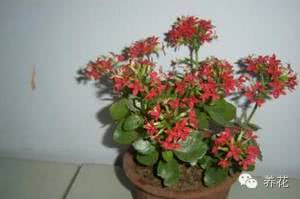
Kalanchoe blossfeldiana, also known as dwarf Kalanchoe, is a perennial succulent herb with opposite, fleshy, juicy leaves that break easily; it bears terminal cymes with orange-red, yellow, red and other colored flowers, has a short, compact form, a long flowering period, and blooms profusely, making it highly ornamental. Kalanchoe is surely familiar to us all, but how much do you know about growing it? Here we give you a specific introduction to the relevant knowledge about Kalanchoe.
First, an introduction to growing Kalanchoe
How to grow Kalanchoe: 1. Growing temperature
The most suitable temperature for Kalanchoe growth is 15°C to 25°C; above 30°C growth slows and it enters a semi-dormant state, below 10°C growth stalls, below 8°C the leaves turn red and flowering is delayed, and below 0°C it is prone to freezing to death.Therefore, to grow Kalanchoe well, you must create a small environment for it that is warm in winter and cool in summer. At noon in midsummer, avoid strong direct sunlight and place it in a semi-shaded spot with ample scattered light.Such as under a large tree, under the eaves or on a north-facing balcony. Pay special attention to ventilation and cooling; you may sprinkle water on the nearby ground, but do not sprinkle it on the plant itself.
How to grow Kalanchoe: 2. Ample sunlight
Kalanchoe likes a sunny, well-lit environment. Apart from slight shading at noon in midsummer, it should be placed in a sunny spot at all other times. It needs at least 4 hours of direct light per day to grow vigorously.On a building balcony, rotate the pot 180 degrees every half month so that it receives light evenly, avoiding a lopsided crown that reduces its ornamental value. Although it can also grow in semi-shade, the stems are thin, the leaves are thin, there are fewer flowers and the colors are pale, far less luxuriant than in a sunny spot. If it is too shady, it will not only easily drop leaves and bear no flowers, but even a plant that has already bloomed, if placed in shade, will have its flower colors fade and then the flowers drop and wither.
How to grow Kalanchoe: 3. Suitable moisture
Kalanchoe is a succulent plant with a relatively high water content in its body, so it is fairly drought-tolerant and afraid of waterlogging. It grows well under the dry air conditions of high-rise buildings.In spring and autumn, water thoroughly once about every 3 days after the potting soil dries, keeping it slightly moist. In summer, water less; once every 5 to 7 days is best. For Kalanchoe placed outdoors, avoid rain soaking during the rainy season, as too much water easily causes root rot and leaf drop, or even death. Control water appropriately so the potting soil alternates between dry and moist, and it will have lush branches and leaves and many flowers. In winter, after bringing it indoors, it is best to water at noon with water close to room temperature, about once a week.
How to grow Kalanchoe: 4. Ample fertilizer
Kalanchoe likes fertilizer. Half a month after seedlings are potted and established, or half a month after old plants are divided, apply 2 to 3 times a nitrogen-based liquid fertilizer to promote stem and leaf growth. After flowering, apply one nitrogen-based liquid fertilizer to promote recovery.At other times, apart from stopping application in summer, only a nitrogen-phosphorus-potassium compound fertilizer may be applied. When fertilizing, do not get fertilizer on the leaves, otherwise the leaves easily rot. If the leaf surface is accidentally soiled, rinse it off with water. Kalanchoe has a long flowering period, so you should break the rule of not fertilizing during flowering and apply a dilute nitrogen-phosphorus-potassium fertilizer or a 0.2% potassium dihydrogen phosphate solution once a month, so that the later flowers do not become smaller and paler due to lack of fertilizer.
How to grow Kalanchoe: 5. Beware of pests and diseases
As the environment becomes milder, Kalanchoe also becomes very susceptible to pest and disease infection. Pay attention to keeping indoor ventilation to prevent pests and diseases from entering the room.At the same time, you should mainly use some insecticides to prevent pest and disease infection. The main diseases seen are downy mildew and anthracnose.
How to grow Kalanchoe: 6. The sandy loam should be loose
Kalanchoe grows best when planted in a permeable earthenware pot, but placed indoors it is not attractive, so you can put it in an outer plastic or porcelain pot, or plant it directly in a small purple-clay pot or plastic pot.When planting, put a layer of crushed charcoal pieces or crushed hard plastic foam pieces at the bottom of the pot to enhance permeability. For a pot with an inner diameter of 10 cm to 20 cm, plant 3 to 6 plants. Although it is not very particular about soil, it easily rots in heavy clay, while it grows best in loose, fertile, slightly acidic sandy loam. For home potting, it is best to use leaf mold mixed with an equal amount of vegetable-garden topsoil, then add 5% to 8% sand as the growing medium.
How to grow Kalanchoe: 7. Suitable pruning
In the early stage of vigorous growth of Kalanchoe, pay attention to pinching to promote branching and make the potted plant fuller; after the flowers fade, promptly cut off the spent flowers to avoid consuming nutrients and affecting the number of flowers in the next bloom.
Kalanchoe is a bonsai flower used by many people to decorate their homes. Each plant has different growth characteristics. If you want Kalanchoe to grow densely and bloom more, you must pay attention to the growing methods. In addition, Kalanchoe is afraid of cold, so after autumn it is recommended to place it on a balcony or indoors, and as far as possible do not leave it outdoors.
Second, precautions when planting Kalanchoe cuttings
1. Choice of season for the cutting method:
Kalanchoe leaf cuttings can be done throughout the year, but summer and autumn are best. Before cutting, first prepare a cutting bed; the cutting medium is fine river sand or well-drained sandy loam.When cutting, first cut a certain length of stem from the mother plant, use a blade to cut the leaf off along the base of the petiole, rinse the cut with fresh tap water, then place it in a ventilated, shady spot. After the sap at the wound has dried, insert it obliquely into the medium to a depth of 2 to 3 cm. After inserting, press the medium firm, then water, and spray the cutting and its surroundings once with a 50% wettable powder.
2. Precautions when cutting:
1. Use clean yellow sand, sandy loam or nutrient soil as the medium; it is best to disinfect with a 0.1% potassium permanganate solution.Take a 6-10 cm long stem section, which must include two or more leaf-base segments. When cutting, trim the cuttings as much as possible to a uniform height. The lower end of the cut is generally slanted, preferably about 2 mm from the lowest bud eye, to aid rooting; the upper cut should be flat and at least 4 mm from the topmost bud, to avoid the upper cut drying out and discoloring after water loss, causing the cutting to fail.
2. Insert directly into the medium; a depth of 1/2 to 2/3 is better, press firm, and water thoroughly once.After that, just keep the medium moist. Never water too much or spray too much, because it easily causes the fleshy leaves and stems to rot.
3. Freshly inserted cuttings should avoid strong light; it is best under scattered light. After cutting, do not fertilize the cuttings for the time being.
4. They root as soon as inserted, and can take root in about a week. Once new axillary buds and leaves grow, they can be transplanted.
5. After cutting, if conditions allow, you can cover with plastic film to keep warm and moist, which can promote rapid rooting of the stems and ensure the survival rate.
Third, pruning methods for Kalanchoe
1. Cut off the second pair of leaves below the flower stem together with the flower stem; after some time new buds will grow and it can bloom a second time.
2. Every year after the flowers fade, do major pruning. For pruning before July, only about 3 cm of stem needs to be kept; the rest can all be cut off (you may leave no leaves at all).
3. When pruning, coordinate with repotting and fertilizing; the pruned stems can be used for cuttings. Before long, Kalanchoe will grow many tender buds; afterward keep the plant within 10-15 cm, and remove any that exceed this.
LOVE. Soilless Farm
Soilless FarmShengguo Ju Mall
Discover the beauty of growing flowers
Most popular WeChat recommendations
Tip: Long-press the letters in the box to copy, go back and tap "+" at the top right of your phone - select "Add Contacts"
- "Paste" in the search box - and "Search" to follow
Soilless Farm
WeChat ID: wutunongye
I am a freckle-removal doctor, deeply engaged in freckle removal for more than ten years, and I have already helped many female friends successfully remove their freckles. Every week I insist on publishing some of my beauty and freckle-removal experience and insights. If you have always been troubled by the freckles on your face, hurry up and follow me, and let me teach you how to remove freckles without them coming back! Because this will be your only chance to change your life.
Growing Flowers and Walking Birds
Growing Flowers and Walking Birds, flowers, birds, insects and fish, taking you to enjoy life and experience the joy of living
Linhai Real Estate
Hello! Welcome to follow "Linhai Real Estate"! Linhai Real Estate is fully dedicated to building Linhai's number one shopping guide platform, making it convenient for you to learn the latest and most complete real estate information, and becoming your capable assistant for buying and renting homes! Reply with the property area, such as: [Gucheng Street], [Dayang Street], [For Rent], [Wanted to Buy], [Wanted to Rent], etc., and you will receive a satisfactory reply
Jinhua Big and Small Matters
Gathering Jinhua's extraordinary people, extraordinary events, extraordinary objects, embarrassing moments, interesting anecdotes, news, etc., recording and sharing the dynamic information happening in the streets and alleys of Jinhua.
▎Text and images: edited by Soilless Farm Xuanlang
Taizhou Mochi Culture Communication Co., Ltd.is a one-stop service for merchants integrating APP and mini-program development, cashier systems, monitoring systems, and online and offline marketing and promotion systemsone-stop merchant serviceenterprise. The company is located in Dayang Street, Linhai City, with registered capital of1 million, and has20 people+ of technical talent! The core team has focused on the internet industry for20 years, and researched the upgrading and transformation of the physical industry for5 years. With strong technical advantages, it covers many fields including hardware R&D, game development, app distribution, health O2O, education O2O, and WeChat business platforms.
At present, the company has several all-media content platforms, with more than 1.28 million followers, covering various fields, and isTaizhou's largest self-media alliance center. The mini-programs independently developed and currently operated by the company"One-Stop Merchant Service", "Cashier Essentials", "Merchant Quick Reference", "Speed Calculation Champion", and "Pinpin Coupons" are all online. On the platform, reply [Taizhou Mochi] to contact us.