Is edamame just young soybeans? The relationship between the two explained once and for all
During the years I lived in the UK, many of the slightly hippie-ish arty young people around me (that is, hipsters) - besides riding vintage bicycles, growing big beards, drinking craft IPA and listening to indie rock - many of them declared themselves to be vegetarians, or, using the British art of self-exculpatory definition, pescetarians who eat fish, or flexitarians who occasionally eat meat.
Whether for animal protection, environmental protection, health, keeping up with trends or whatever reason, when they talked about the ever-changing array of vegetarian products, their faces would light up with excitement. "Have you tried Whole Foods' veggie sausages?" "I bought Japanese tofu yesterday, tastes pretty good." "Tempeh is all the rage now, I just can't get into it." "These days I only drink alpro soy milk"...
Chinese people like fried dough sticks with soy milk for breakfast, yet it is not only China - most people in the world love drinking soy milk. Image: pexels
I am not a vegetarian, or rather I cannot quite accept these things that are essentially soy products being labeled "organic" and "vegetarian" so that the numbers on the price tag shoot right up. I recall the damp, crowded market in my hometown, where at the not-so-friendly-smelling soy product stall, densely packed werefirm tofu, twisted into clumps thetofu shreds, and the bean puffs squeezed together in a jumble, and I think of thedried tofuadded to twice-cooked pork (a bit heretical, a family recipe) and thetofu skinin hot pot, and I swallow my saliva.
Yet this rich and varied array accounts for only a tiny fraction of the global annual345 million tonsof soybean production. This ancient crop originating in China has a story far bigger than tofu and soy milk.
Soybean as a food of the common people
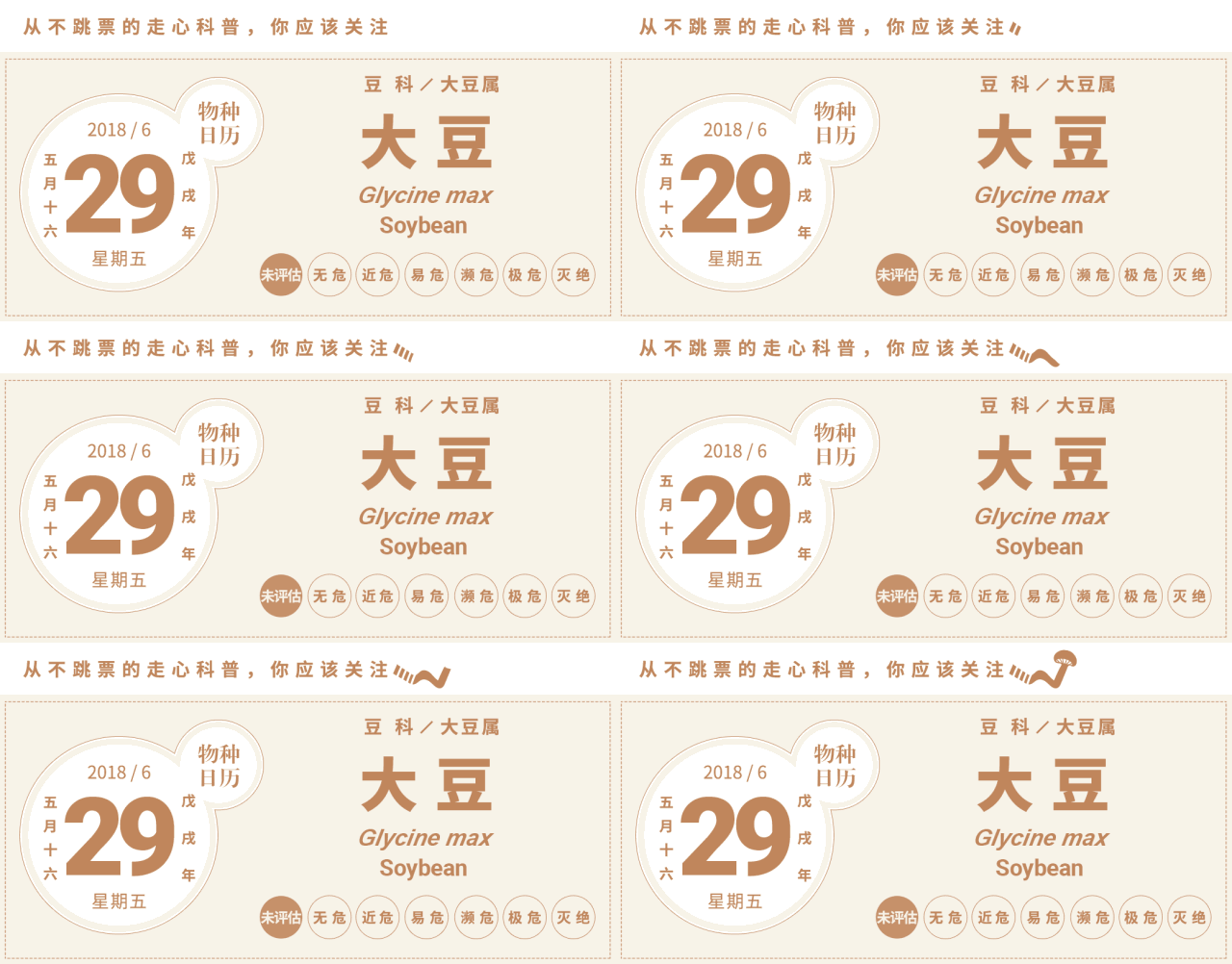
Soybean(Glycine max) is a legume, belonging to thegenus Glycine(Glycine), whose name comes from the Greek word"sweet"(glykys). It is not tall, an annual herbaceous plant, bearing the small compound leaves common to legumes, blooming withwhite-purple pea-like flowers, and producing pods. If you see a similar species in the wild, it must be a wildnear or distant relative。
of the soybean. Soybean plant. Image: USDA / wikimedia
The pea-like flower of the soybean; you can see the soybean stem is covered in many hairs. Image: wordpress.com
The soybean pod is surely familiar to you. On quadrennial summer nights of watching ball games, beer, peanuts plusedamame- this edamame is the soybean's stillimmature pod, covered in dense, soft hairs. Boiled edamame really does have a slight sweetness.
Yet apart from edamame, the truly mature soybeanis very "hard" to eat. Soybean seeds may have seed coats of different colors, hence the common names "yellow bean", "black bean", "green bean" and so on. This coat is very hard, cooking takes a long time, the texture is coarse, and the flavor is unremarkable. In the past, when spices and cooking techniques were lacking, beans used to fill the belly were hardly presentable food - and would also, because of too many hard-to-digest polysaccharides and proteins, make the gut flora produceexcess gas。
But for the "tough" soybean, the price of being hard to eat buys the advantage ofa hard, waterproof shell that canprotect the embryo; a high protein content, so that even when dehydrated it can survive, and after absorbing water it can continue to live, which also let it secure a place among crops.
After edamame matures, its shell hardens and it becomes the soybean we know. Image: azernews.az
Coming from history
The soybean has a cultivation history of5,000 years, and soybean residues have been found in Neolithic sites. The Book of Songs once wrote: "On the plain grow beans [shu], the common people gather them" - the "shu" here is the soybean.
In the "Minor Odes" section of the Book of Songs, another scene related to soybeans is described - "Gather beans, gather beans, basket them and round basket them. The lord comes to court, what shall be bestowed on him" - the Zhou king comes to court, a scene of joy and peace among the people, who are busy in the fields, filling basket after basket with beans. But do not misunderstand - these soybeans were not given to the king, and at that time there was still no tofu, thatfancy way of eating beans.
Before the various ways of processing soybeans were invented, the sturdy soybean was not easy to cook. Image: waymagazine.org
The soybean is a very cheap and ordinarysource of protein; in an era lacking meat protein, farming peoples took in protein mainly from wheat bran in wheat and from various beans.
The soybean's rich protein comes from a magical bacterium -rhizobium. This bacterium stimulates the roots to grow and swell into root nodules. These bacteria convert nitrogen in the air into nutrients delivered to the soybean, and then draw some essential minerals and the like from the soybean's roots, making it amutually beneficial symbiosis。
with the soybean. Roots with nodules, formed in combination with rhizobium. Image: Stdout / wikimedia
And the first change in the soybean's fate came fromcoagulation and fermentation。
The much-anticipated tofu
Thefancy ways of eating beansmentioned above mostly originated in China. The history of tofu cannot be verified; perhaps acetic acid or gypsum accidentally fell into soy milk and caused the protein to denature and coagulate, or perhaps some cook deliberately tried mixing to change the physical properties of soy milk, and there is also a legend that"King of Huainan" Liu Anaccidentally made tofu while refining elixirs, and some even believe that the people who made tofu were inspired by nomads making cheese.
Tofu still coagulating and not yet formed. Image: daum.net
The earliest proper description of tofu's characteristics appeared in the late Tang and Five Dynasties, and it was not until the Song Dynasty that the word "tofu" spread widely.
Bittern (magnesium chloride) and gypsum (calcium sulfate) turn soybeans into a form that can be freely cut and processed, and the possibilities for handling soybeans suddenly multiplied. The initial form isdouhua(bittern) orsoft tofu pudding(gypsum), after which people scoop out the solid matter and press it into tofu with a mold.
Putting the not-yet-formed tofu into a mold and pressing it yields different forms of tofu. Image: daum.net
With different coagulating materials and different pressing strength and time, tofu can evolve into various forms: thefirm tofufor cooking, thesilken tofufor soup, and thelactone tofufor cold dishes (coagulated with glucono delta-lactone, similar to the method for cheese).
Tofu advanced, with endless variations
Fermentationis another way out for the soybean - becomingbean paste, soy sauce, natto, and evenfermented tofu, stinky tofu, furu. Using the enzymes of aspergillus or various bacilli to digest part of the soybean's starch and protein, making it easier to digest and absorb, the soybean's flavor also changes.
Natto mixed with rice, which Japanese people love, may be hard for some Chinese people to accept. Image: Shades0404 / wikimedia
To most foreigners, furu also counts as China's dark cuisine. Image: Hmm / wikimedia
These flavors are to a large extentregional- Japanese people savor natto with relish, while we keep to our own fragrant, appetite-stimulating fermented tofu, each viewing the other as heretical. But there are also times of agreement -Mapo tofubecame the most representative Sichuan dish in Japan, whilesoy milkis loved by people around the world.
Mapo tofu is made differently in different places, but our love for tofu is similar. Image: Archon6812 / wikipedia
It is no coincidence that other edible relatives among the legumes share this fate around the world. The Middle East'schickpea(chickpea) is bland and tasteless, the Mediterranean coast'sfava bean(fava) and India'ssmalllentil(lentil) are hardly delicacies when steamed or boiled.
Two kinds of chickpeas and hummus. Image: Sanjay Acharya / wikimedia; Paul Goyette / flickr
However, when chickpeas are transformed intohummusthey work wonders, anddalmade from lightly fermented lentils has also become a much-loved side dish. The people of Indonesia, meanwhile, developed a way to eattempeh(tempeh) - soybeans pressed together and inoculated with rhizopus, wrapped in banana leaves and fermented into a block, then cut open and deep-fried.
Dal with rice and Indian flatbread, a very popular meal in India. Image: Monali.mishra / wikipedia
Inoculating cooked, peeled soybeans with rhizopus fungus, wrapping the inoculated soybeans in banana leaves, and fermenting for one to two days yields tempeh. Image: Sakurai Midori / wikipedia
If soy products were the soybean's first transformation, then what truly changed our lives happened afterthe modern industrial revolution.
Today's fate
Global annual soybean production345 million tonnes. What does that mean? It's about half of rice production. Yet we eat three meals a day and don't see that much tofu. That's because most soybeans aren't eaten directly by people, but are consumed asoil and feed.
Soybean oil is used extremely widely in daily life. Image: livestrong.com
The Portuguese first brought soybeans to Europe, but without the craft of making soy products, soybeans could not become a popular food -- except that Linnaeus was interested in the soybean plant itself. In the 18th and 19th centuries, soybean seeds were brought from China and Japan to the United States by various routes, taking root in Georgia, but they did not find success there either.
It was not until the AmericanCivil Warthat soldiers short on food and protein began eating soybeans, and only then did Americans discover the advantages of soybeans as a crop. So the U.S. Department of Agriculture began promoting soybean cultivation domestically -- this time not trying to turn it into food for people, but feeding it to livestock.
The production of meat and dairy products requires large quantities of plants as feed. Image: beefmagazine.com
With large machinery, soybeans are harvested and dried when half-ripe, which is when protein content is at its highest, reaching11% of total gross weight. Then the entire soybean plant is crushed, baled and made into feed. As machinery became widespread, production efficiency grew higher and higher and costs grew lower and lower, while people's demand for meat consumption further drove soybean cultivation (meat livestock farming requires large quantities of feed crops)。
Main uses of crops by U.S. state. Red represents crops grown mainly for livestock, such as soybeans and corn; green represents crops grown mainly for human consumption, such as fruits and vegetables. Image: usda.gov
And after entering the 20th century, people'sdemand for oilrose further still. Americans once again turned their eyes to soybeans, a crop not particularly high in oil content, but one that won out through technological progress and low cost --solvent extractionoptimised the extraction of soybean oil, while the remaining soybean meal could be made into feed and shipped to farms.
In 1920 the soybean was called America's"Cinderella crop", emerging from obscurity yet bringing people surprise. Soybean oil is everywhere --soap, paint, celluloid(though these are all petroleum products now), and a substance called margarine,artificial butter. A beef burger that seems to have nothing to do with soybeans would probably cost two or three times as much without them.
Margarine is mainly obtained through the hydrogenation of vegetable oil. Image: bestfoodfacts.org
The soybean, a crop that came out of China, became America's darling, as well as the protagonist in controversies overinternational tradeandgenetically modified food policy. Believe it or not, China, which was the first to eat soybeans, nowranks first in the world in soybean import demand。
Soybean cultivation requireslarge amounts of land(though the traditional intercropping of soybeans x corn also counts as a wisdom of saving land), while its labour requirements are relatively low; and China happens to bea country with little land and many people, simply unable to compete with thelarge farms。
of the American Midwest. In the United States, agricultural aircraft spray pesticides on large tracts of cultivated soybeans. Image: Ken Hammond / wikipedia
Yet fundamentally it is still that weneed soybeans,need them too much. From 1950 to now, the world's soybean planting areahas increased 15-fold, and behind this is the change in our lifestyle habits -- what we ate in the past waseighttenths staple food, one tenth meat, one tenth vegetables; but now it isfourtenths staple food, three tenths meat, three tenths vegetables。
From the soybean crop to soy products istraditional experience, craft and wisdom; from soy products to soybean oil and soybean meal ismodern industry and global trade。
Next, where will soybeans take us? What is the future of our food? There is no conclusion yet. But one thing is certain: we are still using our own stomachs to measure the development and changes of civilisation.
This article is the 180th article of Year 4 of Species Calendar, from Species Calendar author @Li Zi.
If you like her, you can also follow
Museum of Humankind
id: museumofus
Technology, civilisation, society, history.
Focus on the present, think about the future.
Calendar Lady has something to say
On the night that just ended, Calendar Lady invited "succulent plant expert"@Attacking Succulentsto bring everyone"Succulent Summer Survival Guide"an online salon. Below are the friends who won prizes in the event~