The steps for beheading a succulent are simple, and after beheading it just won't stop growing.
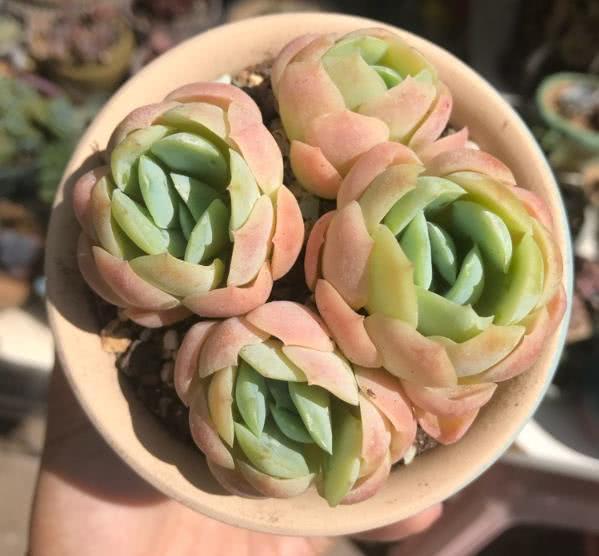
Beheading is an important method for dealing with leggy succulents and for making a single-headed succulent grow into a full pot. It is an important part of succulent propagation and one of the skills every succulent lover must master. Succulents are beautiful for their plump, chubby leaves, but once they get thin they turn ugly, and once they grow leggy they lean in all directions and look wrong no matter how you look at them. Although a leggy succulent will gradually turn into a "fake old stump," if you can't wait and can't stand it, beheading is the most effective way to deal with legginess.
First, let's explain the basics: "beheading" a succulent is actually the same as "removing the terminal bud" in crop production, which in botany is called "apical dominance." During the process of plant growth and development, there is a close relationship between the terminal bud and the lateral buds. When the terminal bud grows vigorously, it inhibits the growth of the lateral buds. If for some reason the terminal bud stops growing, some of the lateral buds will grow rapidly. This phenomenon, in which the terminal bud has priority in growing and inhibits the development of lateral buds, is called "apical dominance." Therefore, when you remove the terminal bud, many lateral buds naturally sprout. This is also the fastest way to solve legginess in succulents and turn one plant into many.
You need to find a suitable spot before beheading the succulent. If the stem and leaves of the succulent are growing wildly, you should find a relatively suitable spot on the stem for the cut. In general, the closer to the top of the stem, the less likely the beheading is to succeed, and the easier it is for bacteria to breed. It is better to make the cut at a spot on the stem that is slightly firm; the success rate will be much higher.
For beheading succulents, it is recommended to use a sharp utility knife or similar cutting tool. Why not recommend the most common scissors? Because when scissors cut through a succulent stem, they squeeze the wound. Those who use scissors to behead will find that the stem left behind dries up for a large section, and that is because the squeezing from the scissors causes tissue necrosis in the succulent's wound.
Coat the wounds on the stump and the removed head with carbendazim dry powder, not liquid; if the wound after beheading gets liquid on it, it easily rots. Place the stump and the removed head in a ventilated, shaded place. Be sure not to expose them to strong sun, and do not water for now. Once new buds appear, water again and move them into the sun for normal care. Let the removed head dry until the wound heals, then insert it into a loose, breathable dry medium. After one week, give a small amount of water and keep the potting soil slightly moist. In about ten days or so, roots will grow. Once the plant's leaves look vigorous, you can move it into the sun for normal care.
After beheading, the succulent needs to be placed in a container or on a paper towel to dry. Let the wound on the beheaded succulent heal before putting it into sandy soil. Sandy soil drains and breathes well, making it very suitable for beheaded succulents to grow. After roots form in the sandy soil, move it into soil to continue growing. The removed succulent can also be rooted by water propagation, but after rooting it still needs to be transplanted into soil.
This is a gathering place for succulent lovers, sharing succulent care tips. You are welcome to follow and join the conversation.