A Detailed Guide to Golden Thread Orchid Planting Techniques and Cultivation Management Methods
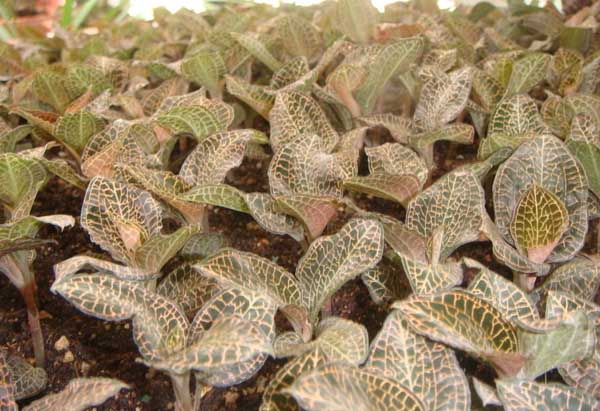
Golden Thread Orchid (Anoectochilus) is in short supply on the market, and prices remain high. Moreover, Golden Thread Orchid has strict growth condition requirements, grows slowly, and its seeds do not germinate easily. Combined with heavy harvesting by people and feeding by animals, its wild resources are now increasingly endangered and, to a large extent, can no longer meet market demand. Therefore, artificial cultivation of Golden Thread Orchid has broad prospects. The planting techniques for Golden Thread Orchid are introduced below.
Biological Characteristics
There are more than 30 species of plants in the genus Anoectochilus (Golden Thread Orchid). They are terrestrial orchids with a plant height of 10-18 cm, soft rhizomes, and cylindrical stems that are upright at the tip, with distinct nodes. The leaves are alternate and stalked, elliptical, glossy on the surface, with golden leaf veins and a pale purplish-red underside. The flowers are complete flowers, and the raceme has 1-6 loose flowers, covered with soft hairs, with pale purple ovate-lanceolate bracts. They are generally distributed in hilly areas or broad-leaved forest land at an altitude of 500-1000 m. Golden Thread Orchid is a shade plant with a low light saturation point. It prefers a shaded, moist, cool, weakly lit or diffused-light ecological environment, and especially likes to grow in damp zones along ditch banks, stone walls, and loose soil where evergreen broad-leaved trees are present. It most fears direct strong light around midday. It requires little light and heat, about 1/3 of normal sunlight intensity. The most suitable growing temperature is around 18-25 degrees C, and the relative air humidity is above 80%.
Golden Thread Orchid prefers loose soil conditions with good aeration, drainage, and water retention. Under appropriately shaded and cool environmental conditions, it grows rapidly, with fresh tender leaf color, thick stems, and large leaves.
Planting Techniques
1. Scientific Site Selection
When cultivating Golden Thread Orchid artificially, the planting site should be selected in a shaded and cool place by forestland stream ditches at a relatively high altitude. This is the key to successful cultivation. An altitude of more than 400 m is required, near broad-leaved forest or a mixed zone of coniferous and broad-leaved forest. The average temperature in January is required to be 10 degrees C, the average temperature in July is 25 degrees C, the relative air humidity is 70%, with little or no wind, and a light transmittance of about 30%. There should be a water source nearby, and the soil structure and performance should be good, preferably weathered yellow loam soil that is neutral or slightly acidic (pH=4.5-6.5).
2. Scientific Planting
Golden Thread Orchid should be planted shallowly rather than deeply. After planting, it is best to cover it with clean, dry moss. The plant and row spacing is 5-10 cm * 5-10 cm. After planting, water immediately with rooting water to ensure the survival rate. In mountainous areas at higher altitude, it is suitable to plant in April-May in spring, which can accelerate growth and allow harvest in the same year. On flat land and low hills, it should be planted in August-September in autumn, which can avoid the peak period of high summer temperatures and the occurrence and spread of pests and diseases, and improve the survival rate and yield.
3. Field Management
The quality of field management of Golden Thread Orchid directly affects its survival rate, growth, and yield. The growth cycle of Golden Thread Orchid requires little light and heat, and it especially fears direct strong light around midday, so a shade shed should be set up on the cultivation site to regulate light transmittance. Golden Thread Orchid needs water but is not suitable for waterlogging, so the amount of watering should depend on the development status of the seedlings and their growing environment. For Golden Thread Orchid after planting, the types of fertilizer applied should mainly be slow-release organic fertilizers, such as diluted liquid from fermented soybean cake, pig manure, horse and cattle manure, and other farmyard manures. It is even better if foliar fertilizer can also be sprayed. Usually, a small amount of ferrous sulfate is added to every 100 kg of fertilizer solution to promote a deep green and glossy leaf color.
During the growing season of Golden Thread Orchid, every half month it can also be sprayed once with a solution of 0.3% urea plus 0.2% potassium dihydrogen phosphate, for 4 consecutive sprays. When fertilizing, never contaminate the leaves of Golden Thread Orchid. If contamination occurs accidentally, spray clean water immediately. The factors harmful to Golden Thread Orchid and the occurrence of pests and diseases are mostly caused by high temperature, poor ventilation, and unclean light and cultivation sites. Therefore, efforts should be made to overcome these adverse factors and remove weeds.
4. Harvesting
Four to five months after planting Golden Thread Orchid, when the plant height is more than 10 cm, with 5-6 leaves and a fresh weight of 1-2 g, it can be harvested. At harvest, pull it up with the roots (the stems can also be cut while leaving the roots to regenerate), shake off the soil, and place it in the sun to sun-dry or dry it over fire to make the dried product.
Pest and Disease Control
1. Insect Pests
① Mollusks: snails and slugs. They eat the soft tissues of Golden Thread Orchid, such as root tips and tender buds, seriously affecting growth.
② Red spiders and mites. Adults and nymphs suck sap on the leaves, causing yellow small spots on the damaged leaf surface. In severe cases, the leaves turn yellow, wither, and scorch until they fall off, and the plant dies.
③ Small cutworms. Larvae before the 3rd instar feed on the heart leaves and leaves of Golden Thread Orchid, making small notches or net-like holes. After the 3rd instar, the larvae bite off the young seedlings of Golden Thread Orchid at the tender stems near the ground, causing missing plants and broken rows.
④ Mole crickets. They bite and feed on the roots and stems of seedlings in the soil, causing tangled, broken heads, resulting in seedling death. They also make many raised tunnels in the surface soil layer, causing seedling roots to separate from the soil, then lose water, dry up, and die.
2. Diseases
① Damping-off. It is mainly caused by Fusarium damage. Yellow-brown water-soaked lesions appear at the base of the stem of diseased seedlings and quickly develop to encircle the stem for one full circle. The diseased tissue rots, dries up, and constricts into a thread-like shape. The disease develops rapidly, and the seedlings quickly lodge and die, showing damping-off.
② Soft rot. It is a bacterial disease and mainly harms the inner stem of the middle and lower parts and the petioles of leaves near the ground surface. It is difficult to detect in the early stage. In the middle stage, brown necrotic spots appear on the epidermis about 3 cm from the stem base, and brown wet rot appears on the leaf veins. The leaves in the middle and lower parts of the plant turn yellow and appear wilted under high temperature. In the later stage, the whole plant wilts and dries up but remains upright, and it breaks easily when gently bent by hand.