How Is Cloud Seeding Implemented? A Detailed Explanation of the Principles and Methods
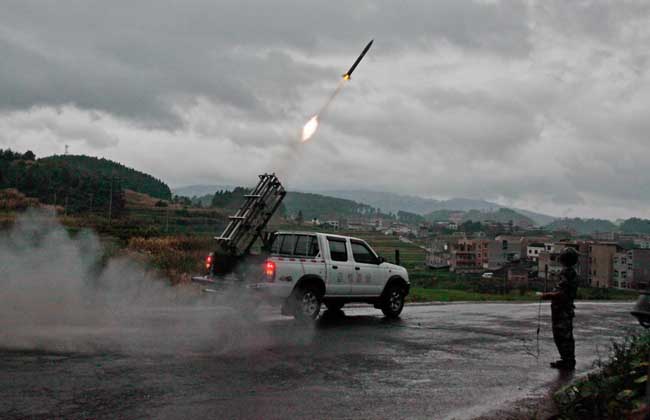
Cloud seeding refers to selecting the appropriate timing based on the physical characteristics of different cloud layers and using aircraft or rockets to disperse catalysts such as dry ice, silver iodide, and salt powder into the clouds, causing the clouds to produce precipitation or increasing the amount of precipitation, so as to relieve or mitigate farmland drought, increase reservoir irrigation water or water supply capacity, or increase water for power generation, and so on. Now let us take a look at the principles and methods of cloud seeding!
The Principles of Cloud Seeding
Cloud seeding applies the principles of cloud and precipitation physics. By dispersing precipitation agents (salt powder, dry ice, silver iodide, etc.) into clouds, cloud droplets or ice crystals grow to a certain size, fall to the ground, and form precipitation. Artificially influencing the microphysical processes of clouds can, under certain conditions, stimulate clouds that could not produce natural precipitation into producing precipitation, and can also increase the precipitation efficiency and precipitation amount of those clouds that have a relatively large water supply and can often produce natural precipitation. However, clouds that cannot produce natural precipitation can supply relatively little water, so the economic value of artificial seeding is limited.
The Conditions for Cloud Seeding
The formation of precipitation requires two conditions: first, there must be sufficient water vapor in the cloud, and second, there must be an appropriate amount of condensation nuclei. Therefore, the method of cloud seeding is to introduce artificial condensation nuclei into clouds. Generally, means such as aircraft, rockets, anti-aircraft guns, balloons, and burning silver iodide on the ground in updraft areas are used to send catalysts into the clouds. For warm clouds with temperatures above zero, hygroscopic substances such as salt powder, urea, and calcium chloride are generally used to make the water vapor in the clouds become large water droplets that fall as rain. For cold clouds with temperatures below zero, artificial ice nuclei such as silver iodide are dispersed, or dry ice, liquid nitrogen, and the like are dispersed, so as to increase the number of ice crystals in the cold cloud and improve precipitation efficiency.
The Methods of Cloud Seeding
The methods of cloud seeding generally use means such as aircraft, rockets, anti-aircraft guns, balloons, and burning silver iodide on the ground in updraft areas to send catalysts into the clouds. Aircraft generally fly to an altitude of about 6000 m and penetrate the clouds to disperse catalysts. Rockets and anti-aircraft guns directly strike appropriate parts of thunderstorm clouds, with the warheads loaded with silver iodide sent into the clouds. Balloons carry silver iodide pyrotechnic shells suspended beneath them, rise above the zero-degree layer in the clouds, and burn there, releasing the catalyst.
The Hazards of Cloud Seeding
At present, China's cloud seeding mainly uses two kinds of catalysts. One is dry ice, which cools the surrounding air layer to several tens of degrees below zero Celsius when it vaporizes, thereby causing water droplets to condense. The second type is silver iodide, whose "rain-making" ability is first-rate. Dry ice is actually carbon dioxide, and silver iodide, as a chemical substance, has extremely low toxicity. In addition, silver iodide is highly efficient at creating ice crystals. Usually, a single cumuliform cloud only needs more than ten grams or several tens of grams to be effective, and the amount used is very low, almost negligible, so it will not cause any pollution.