What are the differences between traditional agriculture and modern agriculture?
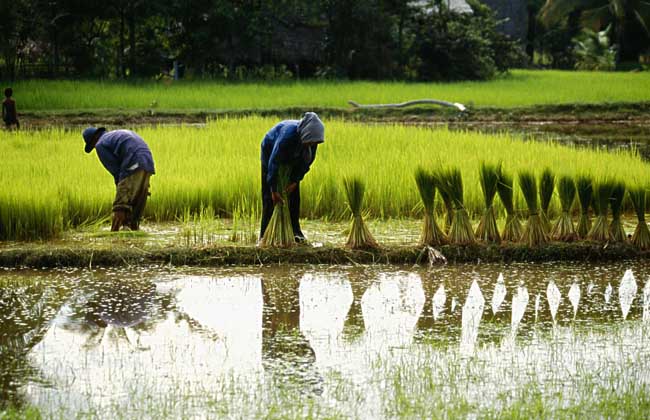
Traditional agriculture is agriculture carried out under conditions of a natural economy, using manual labor methods based mainly on human power, animal power, hand tools and iron tools, developing through traditional experience accumulated over generations, and dominated by a self-sufficient natural economy. It is agriculture that uses farming methods and agricultural techniques inherited from history. Let us take a look below at the differences between traditional agriculture and modern agriculture!
Different business objectives
Traditional agriculture has backward production techniques and low production efficiency, and farmers' ability to withstand natural disasters is very limited. Agricultural production is greatly affected by the natural environment, and the phenomenon of “living at the mercy of the weather” is fairly common. In order to prevent natural disasters from threatening people's survival, farmers produce and store as much grain as possible to prepare for the unexpected, that is, taking output maximization as their production goal, and the main means of increasing output is to increase labor input. The business objective of modern agriculture, however, is to pursue the maximization of profit, that is, to obtain the greatest possible profit with a certain input. Because modern agriculture, like a modern enterprise, requires employers to pay wages to employees, only when the marginal return on labor is greater than the wage will the employer find it profitable and increase labor input. Therefore, for traditional agriculture to transition to modern agriculture, the goal of agricultural production must change from maximizing output to meet self-sufficient consumption to maximizing profit in commercial production. The primary conditions for completing this transformation are a decline in the proportion of agricultural labor and a easing of the pressure of agricultural population. Under enormous pressure from the agricultural population, the transformation of agricultural production goals from traditional to modernized cannot be realized.
Different technological content
Technological progress in the agricultural field is achieved through the continuous input of modern agricultural factors embodying advanced technology. Traditional factors are obtained from within the agricultural sector and from nature, have low technological content, and have long remained stagnant. The state invests relatively little in agriculture, and agricultural production requires a relatively large amount of labor. Under such a state of highly prominent contradiction between people and land, the use of agricultural machinery would instead further intensify this contradiction. Therefore, in traditional agricultural societies, the application and promotion of agricultural machinery are often suppressed. Modern agriculture, however, is agriculture armed with modern science and technology, and its factors are mostly provided by modern industrial sectors and service sectors outside the agricultural sector. The growth of modern agricultural factor input and the increase in the content of modern agricultural science and technology mean a reduction in the labor capacity of the agricultural sector. Therefore, agricultural modernization is inseparable from industrialization and the strategic transfer of the agricultural population.
Different business scale
1. Modern agriculture is agriculture in which operators pursue profit maximization. This goal cannot be realized on the basis of small-scale or ultra-small-scale traditional agriculture aimed at meeting self-sufficient consumption; it can only be realized on a relatively large business scale, when farmers break free from the survival pressure of producers and take profit maximization as their pursuit.
2. Modern agriculture is high-income agriculture. Looking across developed countries in the world, farmers are a relatively affluent class with high incomes, and such high incomes must be built on a relatively large scale of agricultural operation.
3. Modern agriculture is agriculture with a high commodity rate of agricultural products. To measure the development level of a country's agriculture, the key lies in the level of its commodity rate of agricultural products, and the commodity rate of agricultural products is necessarily linked to a relatively large scale of agricultural operation.
4. Modern agriculture is high-technology agriculture. Traditional agriculture mainly uses human and animal power, while modern agriculture is agriculture armed with modern mechanical technology, modern biochemical technology and modern management technology. In particular, the application of large-scale agricultural machinery requires a relatively large operating space, and therefore also requires a relatively large farm scale.