What medicinal herb varieties are suitable for planting in mountainous areas?
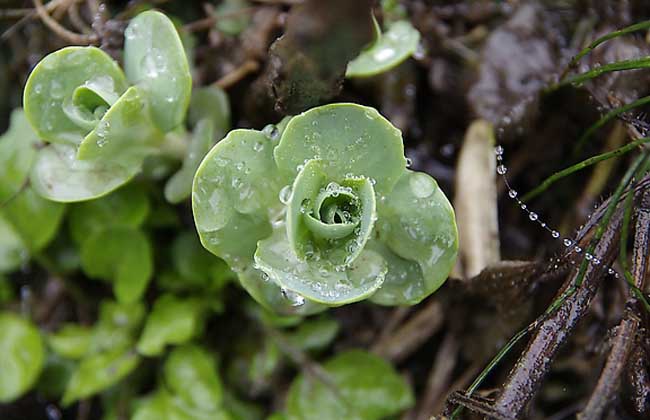
Mountainous areas have unique climate conditions, and many places are especially suitable for the growth of Chinese medicinal herbs, making them ideal locations for developing the Chinese medicinal herb industry. However, due to many misunderstandings in terms of awareness, Chinese medicinal herb cultivation in mountainous areas has long remained small-scale and has not truly become a leading industry for farmers to escape poverty and become prosperous. Below, let us take a look at what medicinal herbs are suitable for planting in mountainous areas!
Licorice
Licorice is drought-tolerant, cold-tolerant, and light-loving. It is not only widely used in Chinese medicine, but also widely used in health products, seasonings, food, and chemical raw materials. In recent years, wild licorice has been prohibited from being dug up, making it very difficult to obtain wild licorice in the national Chinese medicinal herb market. This major gap must be filled by artificial cultivation. The state encourages the artificial development of licorice cultivation, because this is a good thing that benefits the country and the people. Licorice is harvested after 2 to 3 years of growth, with a yield of 600 to 800 kg per mu, and 3 to 4 kg of seed used per mu. The current market price is 9 to 15 yuan/kg, and it sells very well in the national Chinese medicinal herb market, so the prospects for developing licorice are full of hope.
Scutellaria baicalensis
Scutellaria baicalensis has strong adaptability and is not afraid of severe cold or drought. It can grow on barren mountains and slopes, in forests, and in wild fields. In some places, seeds are broadcast on sandy beaches, and in other places, they are broadcast on mountain slopes, both of which have succeeded and produced benefits. Scutellaria baicalensis grows for many years and yields 300 to 350 kg per mu. Calculated at the general price of 10 yuan/kg, the output value per mu is 3,000 to 3,500 yuan, and its price is still expected to rise in the future.
Astragalus complanatus
Astragalus complanatus is suitable for dry areas with little rain. Its main root is deep and long. Regardless of barren mountains, wasteland, desert, sandy beach, grassland, or poor soil, it can grow, while it grows poorly in fertile land with good water conditions. Its advantage lies in fast growth. As long as it does not freeze, it can be planted in all three seasons of the year. In arid areas, if planted in the rainy season, it will sprout and grow within a few days. It has strong stress resistance. One planting can continue growing for 5 years, and during these 5 years, the average annual yield of medicinal material is 120 kg per mu. The whole plant of Astragalus complanatus is rich in crude protein and vitamins. If used as forage for grazing, it can make cattle and sheep plump and strong without feeding them extra feed, and they will not get sick. This will also promote the development of animal husbandry. If planted on plains, 1.5 kg of seed is used per mu; if broadcast in mountainous areas, 2 kg can be used; if used as forage grass, 3 kg can be used. It is necessary to adapt to local conditions to achieve high yield and high efficiency.
Large-leaf dandelion
Large-leaf dandelion has strong stress resistance. Clinically, it has certain unique effects in treating acute mastitis, lymphadenitis, acute conjunctivitis, colds and fever, gastritis, hepatitis, and so on. It sells very well in the national Chinese medicinal herb market and is an indispensable commonly used Chinese medicinal herb. Large-leaf dandelion is not only a commonly used Chinese medicinal herb, but also a delicious vegetable when tender. If planted in protected cultivation, it can be cut 6 to 7 times a year, with 7,200 to 8,000 kg of fresh vegetables per mu, and it can continue for 3 to 4 years. This is a good project. If the market develops, it can actively supply specialty vegetables, allowing people to enjoy a treat, and while eating the vegetable, clear heat and detoxify, keep the body healthy. It has no pests or diseases and is a completely green food.
Belamcanda chinensis
Belamcanda chinensis has strong adaptability and can grow all over the country. It is not only a precious Chinese medicine, but also a beautiful flower. Planting Belamcanda chinensis does not occupy good land. It can grow on barren mountains, barren slopes, wasteland, grassland, and sandy beaches. It has strong drought and cold resistance. As long as the seedlings emerge, they will survive tenaciously, and the more they grow, the more vigorous they become. It has extremely strong vitality. If planted before freezing, Belamcanda chinensis will not emerge that year and will emerge in the spring of the following year. If sown in spring and summer, it can be done from March 20 to June 20, so the planting time is very long. It is harvested after 2 to 3 years of growth, with a yield of 200 to 250 kg of dried goods per mu, and 5 to 6 kg of seed used per mu. The current market selling price is 16 to 21 yuan/kg, and it is showing an upward trend.
Dryland pinellia
Dryland pinellia prefers shaded environments. It is planted from October to December and from February to May, and harvested in the same year. Experiments show that the general yield per mu is 150 to 200 kg, and the benefit per mu is more than 6,000 yuan. If the soil is fertile and management is proper, the yield per mu can reach more than 250 kg, and the benefit is even more considerable. In the field, dryland pinellia can be intercropped with tall-stalk crops such as corn and sorghum, and can also be intercropped under fruit tree forests. Three-dimensional planting gives even better benefits. The price of its seedlings has risen and is high. Dryland pinellia requires a relatively large amount of seed per mu, about 35 to 50 kg. The high planting cost makes it unaffordable for medicinal herb farmers. Generally, they do not dare to develop it on a large scale and only plant it on a small scale, expanding after cultivating their own seedlings. This situation also suppresses the possibility of large-scale development.