How do you handle the procedures for transferring an urban household registration back to rural areas?
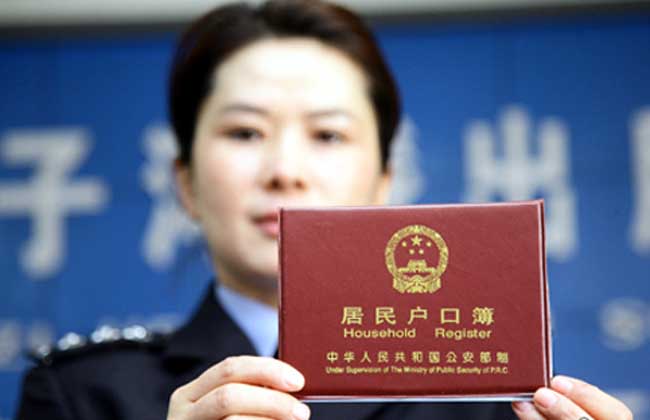
In China, according to the classification of household registration by the public security departments, there are only two types: agricultural household registration and non-agricultural household registration. There are many ways to convert rural household registration to urban household registration, but wanting to convert urban household registration to rural household registration is almost an impossible task to accomplish. In most cases, the local public security bureau's household registration management department will not approve the conversion from non-agricultural to agricultural. Let us now take a look at how to transfer urban household registration back to rural areas!
Proof materials for transferring urban household registration back to rural areas
Written application report (signed and agreed to by two-thirds of the households in the villagers' group or more than 70% of the villagers), certificate of consent to accept issued by the village group and the village committee, "Household Register", "ID Card". Those who graduated from universities, colleges, secondary schools, or graduate schools and are returning to their place of origin must submit a "Graduation Certificate" and proof of unemployment. Those who are joining a spouse must submit a "Marriage Certificate", proof of unemployment, and a family planning certificate. Those joining their parents must provide an "Unmarried Certificate", proof of no fixed occupation and no residence. Those who have been allocated residential land in the countryside and have built houses must provide a "Land Use Certificate" or "Property Ownership Certificate". The police station must conduct an investigation and also provide the above relevant materials.
Conditions for transferring urban household registration back to rural areas
1. Those who underwent "agricultural-to-non-agricultural" conversion because they attended universities, colleges, or technical schools, and after graduation have no job placement and return to their place of origin.
2. Where one spouse has an agricultural household registration, and the non-agricultural household registration holder has no fixed occupation in the town or city and lives and resides in the countryside.
3. Unmarried persons who have no fixed occupation or residence in the town or city and who follow their parents in living and residing in the countryside.
4. Persons who have no fixed occupation in the town or city, have been allocated residential land in the countryside and have built houses with assigned door numbers, and who live and reside in the countryside, including themselves, their spouse, and unmarried children.
5. Those who originally underwent on-site "agricultural-to-non-agricultural" conversion due to land expropriation and now request "non-agricultural-to-agricultural" conversion, if both their household registration and they themselves still live and reside in the countryside.
6. Village committees that have already posted signs for "village-to-community conversion" shall under no circumstances process "non-agricultural-to-agricultural" migration in.
7. For village committees that already have plans for "village-to-community conversion" but have not yet posted signs, items 4 and 5 above shall not be processed for "non-agricultural-to-agricultural" migration in.
Differences between agricultural household registration and non-agricultural household registration
1. In terms of definition: During the era of the planned economy in China, the people at that time were divided into the two categories that are now agricultural household registration and non-agricultural household registration. Agricultural household registration refers to the agricultural registered population who can produce grain through their own hard work, while non-agricultural household registration refers to urban household registration residents who rely on the state to allocate grain rations.
2. In terms of employment: Compared with agricultural household registration, the biggest difference of non-agricultural household registration is that cities have a labor re-employment policy. There is not much difference otherwise, but the government's investment in rural areas in terms of employment is much less compared with its investment in urban employment.
3. In terms of education: Some high-quality educational resources in cities have a lower threshold for local urban household registration residents, while those with rural household registration may need to pay certain fees to attend, and other thresholds are also higher.
4. Social insurance: The difference between basic agricultural household registration and non-agricultural household registration is very small. People who have graduated from university will have the feeling that if you have an agricultural household registration, your employer pays three insurances and one fund for you, while if you have an urban household registration, they pay five insurances and one fund for you. Otherwise, things are basically integrated, though there are certain differences in some aspects of unemployment insurance.
5. Other aspects: Those with rural household registration are allocated land, while cities do not have this. In addition, another difference is that in aspects such as joining the military, retirement from service, and self-employment after retirement from service, people with urban household registration receive more subsidies than people with agricultural household registration.