Key Technical Points and Feeding Management Methods for Neijiang Pig Farming
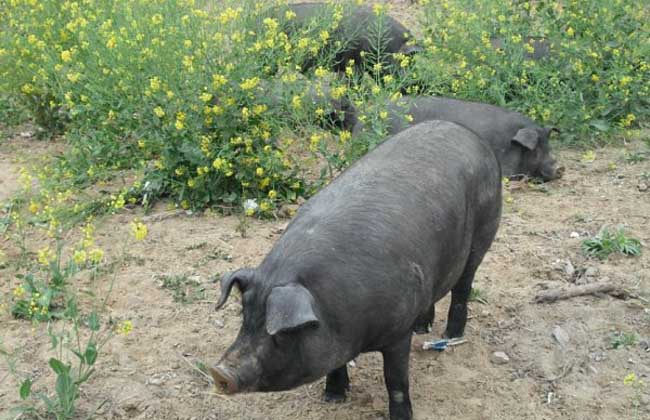
The Neijiang pig is one of the nationally protected local breed resources and belongs to the southwestern type of pig. It is an excellent local pig breed in China, originally produced in Neijiang City, Neijiang County and other places in the central Sichuan Basin. The core production areas are Shizhong District and Dongxing District of Neijiang City, Sichuan Province. In 2000, China included it in the "National Livestock and Poultry Breed Resource Protection List". Let us take a look at Neijiang pig farming technology together below!
Breed Advantages of the Neijiang Pig
Compared with other pig breeds, the Neijiang pig has the following advantages. First, it has strong adaptability and strong stress resistance and tolerance to high-cold climate environments and extremely poor nutritional conditions. Second, it has good combining ability and obvious heterosis. Third, it has strong disease resistance, and its sensitivity to many diseases is lower than that of foreign pig breeds. Fourth, it has strong maternal instincts, obvious estrus, and basically no reproductive disorders. Fifth, its meat is delicious. In addition, the Neijiang pig also has characteristics such as stable heredity, tolerance to coarse feed, and a docile temperament.
Feed for Neijiang Pig Farming
Most of the feed for Neijiang pigs relies on field planting and agricultural by-products. Concentrate feed includes corn, silkworm cakes and Bashan shrimp, while green feed includes sweet potato vines, chard, Tianxing ai, Yichuangting, buckwheat seedlings, Bashan bean seedlings and Jiehan sugar, pea stubble, and soybean bran. Succulent feed includes pumpkin and carrot, and dry coarse feed includes broad bean bran, pea bran, soybean bran, and so on. Except that state-owned farms and pastures mostly use raw feeding for pigs, rural areas mostly use cooked feeding. Tender green feed is generally chopped and fed fresh, while the coarser and older parts are chopped, mixed with coarse feed and green feed, cooked, and then fed. Dry coarse feed is soaked to soften or boiled soft before feeding. Some dried potato and broad bean seedlings are used for silage or air-dried storage.
Stage-Based Feeding of Neijiang Pigs
1. Boar feeding: Locally, breeding boars are fed and managed quite carefully, generally fed 4 times a day. The diet's mixed concentrate commonly includes corn, peas, broad beans and animal and coarse feed. During the mating period, the amount of concentrate fed to boars is appropriately increased.
2. Sow feeding: The people have rich experience in pig farming based mainly on green and coarse feed, using concentrate according to the different stages of sows and adjusting the nutritional level.
3. Piglet feeding: Piglets generally begin supplemental feeding at 20 days of age. First, roasted peas are soaked in salt water and placed outside the pen to attract them to eat. After the piglets start eating, the concentrate is cooked into thin porridge and fed 3 times a day; some also use raw feeding. At weaning at two months, each piglet on average consumes about 13 kg of concentrate and about 15 kg of green feed. Piglets intended for fattening are castrated at around 40 days of age. Near the weaning period, the amount of green feed is gradually increased to develop their tolerance to coarse feed.
4. Fattening pigs: Fattening pigs generally use the "hanging frame" fattening method. At 60 to 90 days of age and 12 to 20 kg body weight, the diet is mainly concentrate and green feed, and they are let out to walk near the pen every day. For frame pigs at 25 to 40 kg body weight, the Neijiang pig's strong tolerance to coarse feed is fully used, and only green and coarse feed or a small amount of agricultural by-products are fed. After body weight reaches 50 kg, potato and grain feed are started to promote fattening.