This kind of growing medium is great for orchids: no fertilizing for three years, vigorous leaves, many shoots and fragrant flowers
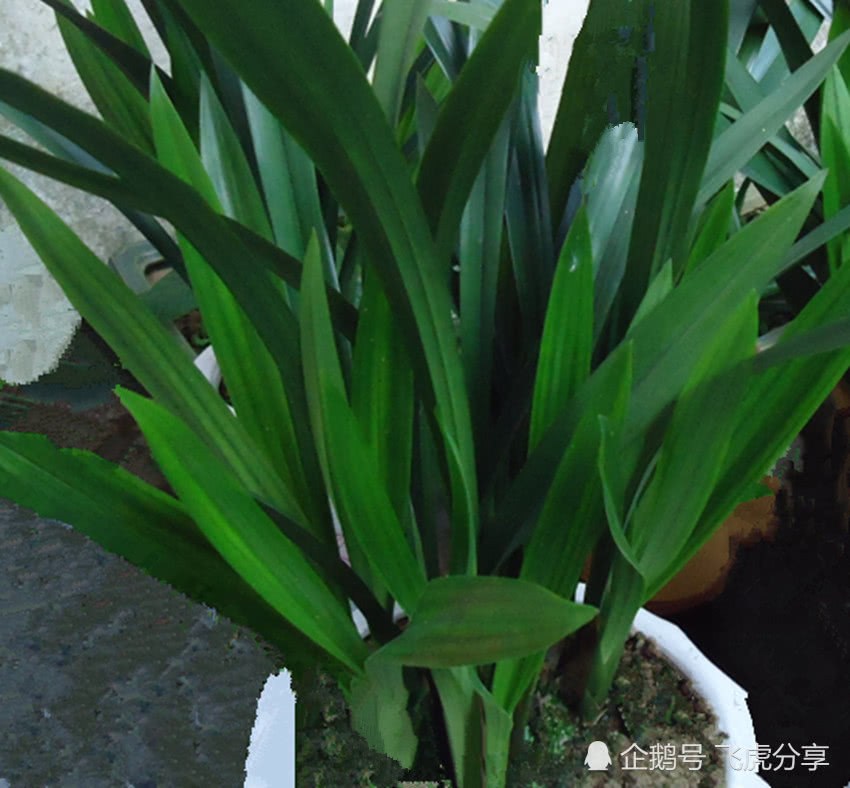
Nowadays the materials used for growing orchids can be said to be a dazzling array of everything. The reason many orchid-growing beginners fail to grow orchids well is basically related to the growing medium and care. Most flower lovers only consider the loose, airy texture of the medium when growing orchids, while ignoring the needs of orchid roots during growth. Some flower lovers use a medium mixed from several materials; although it is loose and airy, the nutrients in the medium are unbalanced, and the orchid plant never grows well. I have also been growing orchids for many years, but I have always used only one kind of medium, and I never fertilize, yet the orchid plants grow jet-black and glossy. Today I have specially analyzed my own experience and insights on growing orchids, for everyone's reference.
Orchids, like other plants, can only be grown well if you follow their growth habits. Everyone knows that wild orchids grow in the surface soil layer of deep mountain forests. No one tends them, and they endure wind and rain all year round, yet they grow very densely and very vigorously. That is because orchid fleshy roots like exactly this kind of environment. Many people think that using only one kind of material to grow orchids will affect aeration and cause root rot. But I have grown orchids for many years using only leaf mold from the mountain plus cow dung and sand, and in all those years of cultivation I have never found any root rot. Moreover, care is extremely easy: just water every few days, and no fertilizing is needed all year round; they grow even better than fertilized ones.
I once used two kinds of growing medium. The first was leaf mold from the mountain + sand + cow dung, and the second was pond mud + sand, but the pond mud needs to be sun-dried, placed on the ground and burned with firewood for 20 minutes, and then sand is added. With these two media, growing orchids requires no fertilizing; after three years, just repot and change the soil. But in the place where I live there is very little pond mud, so I generally use leaf mold. That is because this kind of soil has comprehensive nutrients, and with sand and cow dung added, the soil will not compact even after long-term use, and its looseness and aeration are also very good. Normally you only need to master watering well.
When using this kind of medium to grow orchids, watering is also very easy to master. You only need to grasp the principle of three parts wet, seven parts dry. At the beginning you can use the simplest method: before watering, use your hand to scrape open the soil layer along the edge of the pot to a depth of about 3 cm. If the soil below is wet, there is no need to water. If the soil below is still dry, then you need to water. There is no particular technique or secret to watering; you need to handle it flexibly according to the actual situation. Practice makes perfect, and after a long time you will naturally know when to water and when not to water. The above is a little of my experience in growing orchids, and I hope it gives everyone some inspiration. You are also welcome to exchange your own growing experience at any time.