Key Technical Points and Management Methods for Dianzhong Cattle Farming
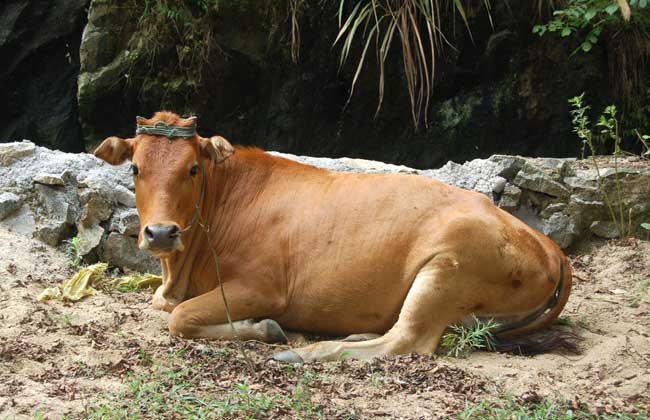
Dianzhong cattle have a sturdy constitution, a well-proportioned structure, are good at climbing slopes, and have strong foraging ability, as well as excellent adaptability to the environment. They are an excellent dual-purpose meat and draft breed unique to the ethnic minorities of the Yunnan region, with a relatively long history of farming. They are suitable for raising in high-cold mountainous and semi-mountainous areas. At present, Dianzhong cattle farming is increasingly favored by rural people. Let us take a look at Dianzhong cattle farming techniques below!
Cattle Shed Construction
Farmers should consider that the cattle shed should be warm in winter and cool in summer. The cattle pen should preferably have a concrete floor. The feed trough should be built higher at the front and lower at the back, slightly above the ground, with an arc-shaped bottom and a certain longitudinal slope. The cattle shed should be built as a single-row or double-row type depending on the scale of raising and site conditions.
Forage Selection
Dianzhong cattle prefer gramineous grasses and tall-stalked plants, followed by leguminous forages. Planted forages have good palatability and higher nutrition than crop straw. Farmers can vigorously plant grass to raise cattle. Suitable forage varieties for feeding cattle include hn-mc Youyou Pennisetum, hn-mc Youyou Hybrid Pennisetum, and hn-mc Youyou alfalfa. Harvested forage can be chopped short before feeding to cattle. Especially for coarse and hard stems that are less eaten or difficult to eat when fed whole, if chopped short and fed, they can be fully utilized and the digestibility is also improved. Generally, it is better to chop the stems into 3-5 cm for feeding cattle.
Feeding Methods
Farmers can feed twice a day: at 5:00 in the morning and 17:00 in the afternoon in winter and spring, and at 4:30 in the morning and 17:00 in the evening in summer and autumn. Each feeding generally lasts 30-40 minutes, and feeding to about 90% full is sufficient. In summer, provide water once at noon. Within 2-3 days of changing the diet, the feeders should frequently observe the cattle's feed intake and rumination frequency. Once abnormal conditions are found, they should be handled promptly. Concentrate feed should be soaked thoroughly with clean water before feeding, until it forms a ball when held in the hand and breaks apart when dropped on the ground.
Careful Feeding and Fine Management
During the transition period when feeding Dianzhong cattle dry grass or ammoniated grass, deworming should be carried out. Albendazole can be given orally at 30 mg per kg of body weight. After administration, the stomach can also be strengthened. In the fattening stage, grazing for 1-2 months during the season with green grass is recommended. In the late fattening stage, no less than 1 month of barn feeding is required, and the fattening period using a high-concentrate diet is 60-90 days. When mixing feed, first moisten the feed, then mix it evenly with grass after 1 hour. In addition, clean water must be provided for drinking, twice a day. The cattle pen should be frequently dehumidified and bedded with dry material to remain dry and clean.
Fattening Management
After weaning, young heifers can be raised in groups in pens. At the beginning, the number in each group should be small, and grouping should mainly be based on the nutritional requirements of the animals. The size and number of cattle in each group also depend on the size of the herd and the available cattle shed conditions. In addition to considering age, heifers of similar size should be grouped together as much as possible. Fattening cattle should be fed 2-3 times a day at fixed times, with each feeding lasting 1.5-2 hours. During feeding, feed according to the feed amount determined by the nutrition that each fattening cow should be supplied; it must not be increased or decreased arbitrarily. The general feeding order is roughage first and concentrate later, that is, feed dry grass (corn stalks) first, then distillers' grains, concentrate, and water. In winter, provide water once after each feeding and once more at noon. In summer and autumn, in addition to the same watering frequency as in winter, add 1 nighttime watering.