Detailed Explanation of Chinese Holstein Cattle Farming Techniques
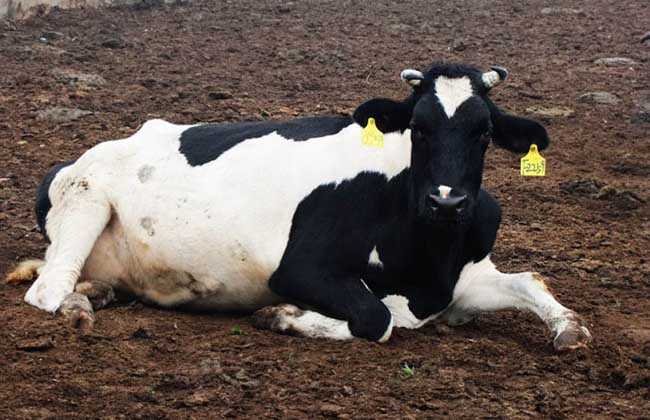
The Chinese Holstein is a breed formed by crossbreeding local Chinese yellow cattle with imported Holstein cattle from abroad, followed by long-term selective breeding. It has the obvious physical characteristics of dairy-type cattle: a tall and large frame, well-proportioned structure, large udder, good milking performance, and a black-and-white patched coat color. It is a relatively high-yielding dairy cattle breed. Let's take a look at Chinese Holstein cattle farming techniques below!
Breed Selection
Mainly use Chinese black-and-white dairy cattle, and in actual production, high-quality American dairy cattle breed Holstein can also be used as the sire for crossbreeding improvement. Selection of individual Chinese Holstein cattle. Choose the dairy cattle body type: robust physique, uniform structure, thin and elastic skin, long, wide and deep body, straight and level back and loin, long, level and wide rump, well-developed chest, large but not drooping abdomen, and the outlines seen from the side, top and rear all tend toward a triangle, with the hindquarters markedly developed. The coat should be fine, short and glossy; the skin thin and elastic. There should be little subcutaneous fat, visible blood vessels, fully developed and round udder. Teats should be evenly distributed, cylindrical, and moderate in thickness and length; the milk veins thick and highly tortuous; and the milk wells large and deep. Some dairy cattle have 3 or more milk wells, which is a sign of many branches of the milk vein, and such dairy cattle generally have high milk yield. At the time of purchase, testing for brucellosis and tuberculosis should also be done.
Cattle Farm Construction
1. The site of a Chinese Holstein dairy farm shall conform to the local land use development plan and be combined with agricultural and animal husbandry development plans, basic farmland construction plans, and so on. The site should be high and dry, sheltered from the wind and facing the sun, with a relatively low groundwater table, and a gentle slope (higher in the north and lower in the south), but overall flat; it is strictly forbidden to build in low-lying areas or at wind gaps. Sandy loam is the most ideal, sandy soil is relatively suitable, and clay soil is the least suitable.
2. The site of a Chinese Holstein dairy farm shall be no less than 500 m from the main highway and no less than 1000 m from residential areas, and located downwind of residential areas. It should be far away from other livestock and poultry farms, and within 1500 m of the surroundings there should be no chemical plants, livestock product processing plants, slaughterhouses, hospitals, veterinary hospitals, and so on. To facilitate the transport of raw fresh milk, it is best to have a dairy processing plant within 50 km of the surroundings. It should be more than 2000 m from scenic tourist areas, nature reserves, and water source protection areas. Surrounding feed resources, especially roughage resources, should be abundant, and farms of the same scale should be avoided as much as possible nearby.
3. A dairy farm should be reasonably divided by function, generally including 3 to 5 functional zones, namely the living area, management area, production area, manure and urine sewage treatment area, and sick animal management area. To strengthen the exercise of dairy cattle and promote their health and high yield, an exercise yard of sufficient area should be provided.
Feeding Management
1. Feed formulation: The feed given to Chinese Holstein cattle should be based mainly on green succulent feed and high-quality hay, with the insufficient nutrients supplemented by concentrate and a small amount of other additives. On a dry matter basis, green succulent feed can account for 50%, roughage 30%, and concentrate 20%. The daily ration of dairy cattle, especially during lactation, should be as varied as possible, consisting of at least 2 or more kinds of roughage such as green hay, rice straw or corn husks, 23 kinds of succulent feed such as silage, carrots, sugar beets, and 34 kinds of concentrate such as cornmeal, wheat bran, soybean cake, barley, and so on. If conditions permit, some by-products beneficial to milk production such as tofu dregs, brewer's grains, and pear peels can also be fed. The aim is to make green feed the main part and concentrate the supplement, with silage as the main part and green cutting as the supplement, and to keep hay and silage available year-round, so as to achieve feed diversity and good palatability, promote the appetite of Chinese Holstein cattle, and improve feed utilization.
2. Feeding method: Chinese Holstein cattle should be fed at fixed times and in fixed amounts. High-yielding Chinese Holstein cattle must be raised according to their characteristics and preferences. Some like dry feed, and some like wet feed; different preparation methods should be used to meet their needs. The number of feedings per day is the same as the number of milkings; generally, milking can be done 3 times a day and feeding 3 times a day. The feeding order is generally concentrate, succulent feed, green feed, silage, hay, and so on; once a habit is formed, do not change it easily.
3. Sufficient drinking water: A Chinese Holstein cow producing 50 kg of milk per day needs about 50 to 75 kg of water per day. If drinking water is insufficient, it will directly affect milk yield. Cattle should be given water at least 3 to 4 times a day; in hot summer weather, drinking should be increased to 5 to 6 times. A water trough should be set up in the exercise yard and often kept full of clean water so that Chinese Holstein cattle can drink at any time. In winter, the water temperature should not be too low; warm water can be given when necessary.
Daily Management
1. Sufficient exercise: Chinese Holstein dairy cows can strengthen their physique through exercise, and especially Chinese Holstein barn-raised cattle must be guaranteed an appropriate amount of exercise. If exercise is insufficient, the body condition is likely to become too fat, affecting milk yield and reproductive capacity, and even causing obstetric diseases such as difficult calving and retained placenta. Therefore, for dairy cattle, in addition to persisting in 23 hours of driving exercise every day, on sunny days after each milking and feeding, they should also be put in the exercise yard to move freely.
2. Brushing the cattle body: The purpose of brushing is to enhance the metabolism of Chinese Holstein cattle and improve blood circulation. Persist in brushing 12 times a day. The time is before milking. The tools are a horse-root brush and a soft-bristle brush. The brushing order is from front to back and from one side to the other. The method is to brush first against the hair and then with the hair, and after every few brushes, scrape off the dirt on an iron scraper, then continue brush by brush over the whole body. In hot summer, clean water can be used to wash parts soiled by manure or mud, such as the rump, tail, external reproductive organs and surrounding areas of the cow. In cold weather, brush dry as much as possible and do not wash the cattle body with water to prevent catching a cold. At ordinary times, also keep the hoof wall and hoof cleft clean and remove attached dirt. To prevent the hoof wall from cracking, Vaseline oil and the like can often be applied. If the hoof tip is too long, trim it in time; normal hoof trimming is generally done once each in spring and autumn.