Key Technical Points of Grass-Fed Cattle Raising and a Detailed Guide to Feeding Management
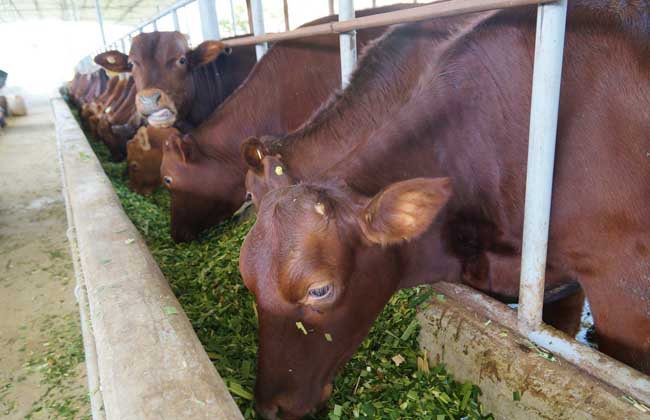
Forage grass is the foundation of cattle raising. It not only contains the various nutrients cattle need, but also contains crude fiber, which is especially important for maintaining cattle health and cannot be replaced by grain or other feeds. High-quality forage can fully meet the nutritional needs of cattle. Unless they are in production or fattening periods, there is generally no need to supplement concentrates. Let us take a look at grass-fed cattle raising techniques together below!
Forage Grass Combination Methods
Cattle most prefer gramineous forage grasses and tall-stemmed plants, followed by leguminous forage grasses. Suitable forage grass varieties for feeding cattle include hybrid napiergrass, Sudan grass, alfalfa, cup plant, winter grazing-70 rye, chicory and rutabaga, etc. Dairy cows generally need 50 kg of green feed per head per day, while a mixed cattle herd including young cattle and calves needs an average of 30 kg of green feed per head per day. To ensure an uninterrupted year-round supply of green feed, annual forage grasses and perennial forage grasses, and tropical-type forage grasses and temperate-type forage grasses, should mainly be planted in combination, and on a unit area basis, single planting and interplanting should be combined as much as possible.
Forage Grass Planting Techniques
1. Pasture area selection: First, the area for planting forage grass should be relatively extensive. In choosing the pasture area, a broad and flat area should be selected. The soil should be relatively fertile, deep and well-drained, and able to support the nutritional needs of dense forage growth and multi-season growth. After determining the location of the pasture area, the land in the pasture area should be tilled once, which can make the soil looser and also distribute the nutrients in the soil more evenly.
2. Forage grass selection: There are very many types of forage grass. The main conditions for selection are good grass quality, high yield, the ability to be harvested in multiple seasons, strong vitality, high nutritional value for livestock and improvement of livestock meat quality, etc. Most planting is mainly of leguminous crops, and there are also many crops that can be chosen, such as ryegrass, Mexican corn grass, king grass forage, sweet elephant grass forage, alfalfa and many other varieties. However, fellow farmers should also choose forage grass according to conditions such as the climate and soil of the region where their farm is located.
3. Forage grass maintenance: After fellow farmers have chosen the pasture area and forage grass, they should choose the amount of forage grass according to the size of the pasture area. After the forage grass is planted in the soil, maintenance must be carried out. Because the growth of forage grass needs to supply livestock across multiple seasons, fertilization of the forage grass should be increased during routine maintenance to increase the growth rate of the forage grass. In addition, in summer the weather is relatively hot and water evaporation is vigorous, so watering of the forage grass should be increased. In addition, pests and diseases of the forage grass should also be prevented and treated.
Misunderstandings in Planting Grass to Raise Cattle
1. Anything is grass: The grass people usually refer to is the wild (miscellaneous) grass that grows and dies naturally in the wild. Its characteristics are strong early-spring sprouting ability, drought resistance and poor-soil resistance, but its nutritional value is poor, its palatability is poor and its yield is low. The grass now advocated for planting refers to high-quality forage grass that has been artificially bred specifically for livestock and poultry feeding. Its characteristics are weak early sprouting ability and certain condition requirements for growth, but its nutritional value is high, its yield is high, and it can even be a hundred times that of wild (miscellaneous) grass.
2. Grass can be planted anywhere: For high-quality forage grass, different varieties have different soil requirements. For example, saline-alkali land is only suitable for planting salt-alkali-tolerant forage grasses, such as astragalus adsurgens, ryegrass and grain amaranth, etc., while other forage grasses are not suitable; otherwise, even if planted, they will not grow. If forage grass is interplanted in fruit tree orchards, shade-tolerant forage grasses must be selected. The soil in the north is neutral to slightly alkaline, and suitable varieties include alfalfa, astragalus adsurgens, etc. The soil in the south is neutral to slightly acidic, and suitable varieties include red clover, white clover, etc.; otherwise, it is likewise broad sowing with thin harvest. For example, in low mountain and hilly areas, where most soil quality is poor and water resources are lacking, forage grasses with poor-soil tolerance, drought tolerance and good coverage should be planted, such as alfalfa, clover, tall fescue, bluegrass, bahiagrass, etc.
3. Planting grass does not require technology: In fact, this is a very dangerous misconception. Because of the existence of this understanding, especially when guiding production practice, it is very likely to deal a fatal blow to the newly emerging upsurge of planting grass to raise livestock. Most forage grass receives little labor, has thin fertility, poor seedling conditions and many weeds, seriously affecting the yield and economic benefits of the forage grass.
4. Forage grass has low nutritional value: Scientific analysis shows that forage grass is comprehensive in nutrition, good in palatability and easy to digest. For example, alfalfa hay contains 14-18% crude protein, higher than rice, wheat and corn. In addition, forage grass is also rich in various vitamins and minerals, etc., which rice, wheat and corn cannot match. Therefore, do not think that the nutritional value of forage grass is not as high as that of traditional crops.
Forage Grass Drying Techniques
1. Natural drying method: The natural drying method does not require special equipment. Although it is limited to a large extent by weather conditions, it is the main drying method used in China. Compared with artificial drying methods, the natural drying method has lower efficiency, greater labor intensity, poorer quality hay and lower cost. Natural drying methods can also be divided into three types: ground drying, rack drying and fermentation drying.
① Ground drying method: The ground drying method is also called field drying. After the forage grass is mowed, it is spread in the original place or in another selected place with higher terrain to dry. After about 4-6 hours, it is dried to a moisture content of roughly 40%-50%. It is then raked into windrows with a hay rake to continue drying. According to climatic conditions and the moisture content of the forage grass, the windrows can be turned and dried, reducing the moisture of the forage grass to 35%-40%. At this time, the leaves of the forage grass have not yet fallen off. A hay collector is used to gather it into stacks 0.5-1 m high, keeping the stacks loose and ventilated, and after 1.5-2 days it reaches complete dryness.