How Long Do Fire Salamanders Live? A Detailed Explanation
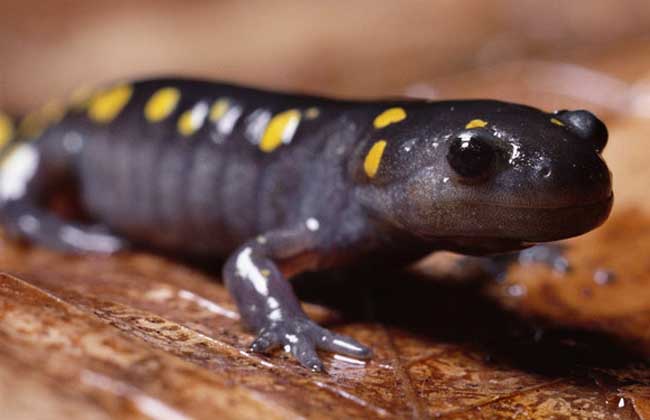
The fire salamander is actually an animal that closely resembles a lizard in body shape. It is a striped amphibian belonging to the genus Salamandra in the family Salamandridae, usually black with yellow spots or markings. Some specimens are even entirely black or predominantly yellow, and sometimes red and orange appear. Let's take a look below at how long fire salamanders live!
How long do fire salamanders live?
The fire salamander's lifespan can be extremely long. At the Alexander Koenig Museum in Germany, there is a fire salamander that reached 50 years of age. Like most amphibians, fire salamanders are inclined to be nocturnal animals. Because they like to hide in the cracks of dead wood, when the dead wood is taken by people to light a fire, they often flee out in alarm, as if born from flames, which is how they got the name fire salamander.
What food do fire salamanders eat?
The fire salamander is carnivorous and can be fed crickets or mealworms. Although it is a nocturnal animal, it will also come out to forage during the day when hungry. Fire salamanders live in forests and other humid areas, emerging at night, usually after rain to prey on quarry such as earthworms. Fire salamanders mate on land, but female fire salamanders lay their young in ponds and streams.
Are fire salamanders poisonous?
Fire salamanders have poison glands on both sides behind the eyes and along both sides of the spine. If threatened, they secrete a milky venom similar to toad venom. The toxicity is not strong and will not cause harm, but if it enters the eyes it can cause temporary blindness, so it is best to wear gloves when moving a fire salamander, and you must wash your hands afterwards.
Feeding and management of fire salamanders
Fire salamanders have strong adaptability and are not difficult to keep. Basically, as long as the temperature is well controlled, it is fine, and the mortality rate during import is not high. However, when keeping them, be sure to put a lid on the terrarium and weigh it down with a heavy object, otherwise fire salamanders can push up the lid and escape. There must also be no gaps left, because fire salamanders can be considered escape artists among amphibians. Unless an escaped fire salamander can find a water source, it will dehydrate, dry out and die within a day.