Is the Komodo dragon a dinosaur? Uncovering its true identity
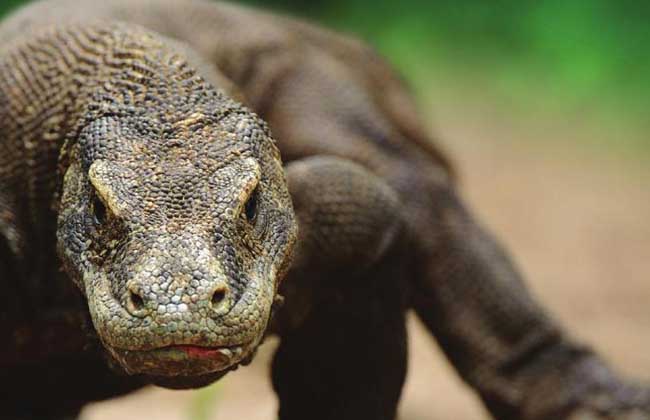
The Komodo dragon is the largest known living lizard, with an average body length of 2.4 to 2.5 m, a tail length of 1.3 to 1.5 m, the tail accounting for most of the body length, a body height of 0.5 m, limbs as thick as an adult's arm, and a head about the size of a volleyball. It is mostly found on the Lesser Sunda Islands of Indonesia (Komodo Island, Rinca Island, Padar Island, Flores Island). Let's take a look below at whether the Komodo dragon is a dinosaur!
Is the Komodo dragon a dinosaur?
The Komodo dragon is not a dinosaur. Some scientists believe the Komodo dragon is a relative of dinosaurs, and some scientists study the Komodo dragon to infer the habits of dinosaurs. In 2006, paleontologist Scott of the Queensland Museum discovered some suspicious fossils in a cave in northeastern Australia, which were later confirmed to belong to an ancestor of the Komodo dragon from 3.8 million years ago. At that time, the Komodo dragon had already reached a body length of 3 m, similar to today's adult males, and was already a top super killing machine in the food chain, with a very broad diet, able to prey on all kinds of animals in different environments.
Does the Komodo dragon have natural enemies?
The Komodo dragon has almost no natural enemies. The Komodo dragon is a species that inspires awe and terror. Its mouth contains a great many bacteria, and it also has venom glands at its lower jaw. Any animal bitten will die from bacterial infection or the onset of the venom, making it a very dangerous animal with almost no natural enemies in nature. The only natural enemy of the Komodo dragon is the Javan tiger, but excessive hunting by humans led to the extinction of the Javan tiger, leaving the Komodo dragon without a natural enemy.
What food does the Komodo dragon eat?
As a carnivore, the Komodo dragon feeds on wild boars, deer, monkeys, anacondas and so on on the islands, and sometimes also preys on weaker members of its own species and juveniles. It occasionally attacks humans or scavenges human corpses. As of 2010, about 12 people had died from the venom in wounds inflicted by the monitor lizard. After finishing a meal, the Komodo dragon lies prone among the jungle, on the beach or on the reefs, sleeping sweetly and basking in the sun. The Komodo dragon is also a good swimmer, with the special ability to dive underwater to catch and eat fish or stay underwater for several tens of minutes, and it can even swim across the ocean.