What exactly is a dragonfly's larva called?
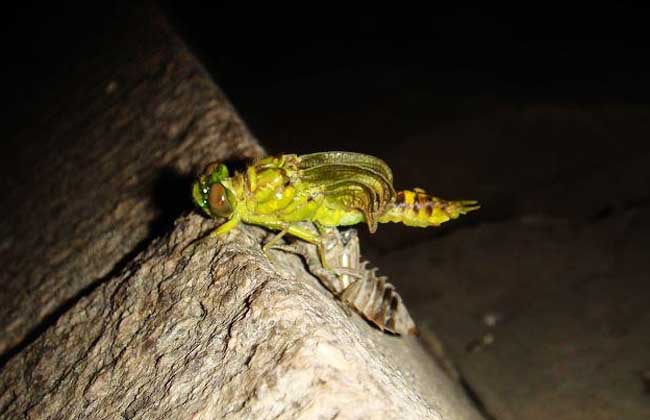
The dragonfly is also known by names such as Dingding, Diandenger, and Malang, and is the collective name for insects in the families Libellulidae and Aeshnidae. Adults generally fly over ponds or rivers hunting flying insects, and besides preying in large numbers on mosquitoes, flies and other insects harmful to humans, some can also prey on butterflies, moths and bees, but their larvae differ completely from the adults in form and habits. Let us take a look below at what a dragonfly larva is called!
What is a dragonfly larva called?
The larva of a dragonfly is called a naiad (shuichai). The naiad is fully aquatic and breathes through gills, and its color varies with the habitat: naiads that prefer to live in yellow mud are yellow, and those whose surroundings are black are black. They usually lurk on the muddy bottom of streams, ponds and reservoirs or under decaying branches and fallen leaves, while some prefer to lie in wait where aquatic plants are dense, waiting for prey to arrive; when the prey comes near, they shoot out their extensible labium to seize it. During development the naiad molts 8 to 15 times, and the number of molts differs both within and between species, with no pupal stage.
What do dragonfly larvae eat?
The diet of dragonfly larvae is related to the species. Naiads living in streams mainly feed on mayfly nymphs, stonefly nymphs, chironomids and other dipteran larvae, as well as some small fish, while species living in still water mainly feed on tadpoles, small shrimps, small fish, water fleas, smaller dragonfly nymphs, backswimmers, mosquito larvae, chironomids and other dipteran larvae. The natural enemies of dragonfly larvae are birds, large omnivorous fish, Ranatra, Diplonychus, diving beetles and the like.
How long is the larval stage of a dragonfly?
The larval stage is the longest period in a dragonfly's life. The first stage or instar of the nymph after hatching is called the prolarva, which has no legs and usually lasts only a few seconds to a few minutes. After this first molt the nymph enters the second instar, with simply constructed legs and three segmented antennae. Dragonfly nymphs have different numbers of instars depending on the species, ranging from 8 to 16 instars, and the time required for the entire nymph stage varies with species and season, ranging from one month to three or four years.