Key Technical Points and Management Methods for Raising Iron-Foot Partridge Chickens
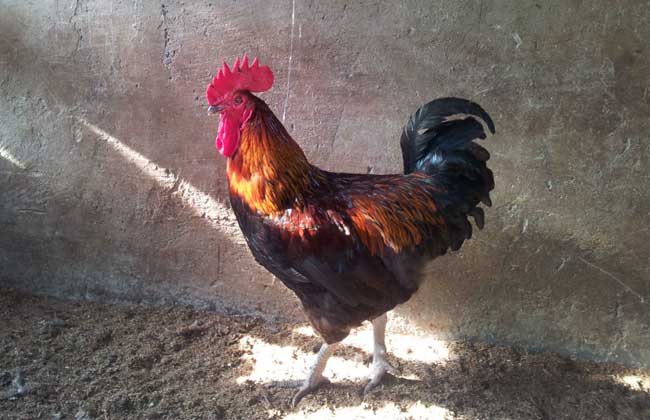
The Iron-Foot Partridge chicken is a meat-type poultry breed. The back feathers of hens are mainly of three colors: partridge yellow, partridge brown, and partridge tawny. Roosters have a strong constitution and well-proportioned build. Raising is mainly distributed in Sichuan, Chongqing, Yunnan, Guizhou, Guangxi and other places. In recent years, through independent breeding and rearing by various farms, their growth genes have undergone great changes. Let us take a look at the raising techniques for Iron-Foot Partridge chickens!
Feed Management
Iron-Foot Partridge chickens can be raised free-range and feed freely. The crude protein requirement of the diet is 18-19%. They can be fed fast-growing medium-chicken feed, and in the later stage some green vegetables or green grass can be fed, generally accounting for about 20% of the total feed, but it should not be mixed into dry feed. After 30 days of age, if kept as breeding chickens, quantitative feeding should be adopted to prevent early maturity and excessive fattening. Breeding chickens can be kept 100-200 per flock, with 4-6 feedings of green feed per day. According to relevant experts, when raising chickens it is best to plant green forage grasses that are rich in nutrients and highly palatable to chickens. These forage grasses are rich in protein and calcium. Farmers should mainly plant leguminous forage grasses such as hn-mc Youyou alfalfa and hn-mc Youyou sand lucerne (Astragalus adsurgens). These forage grasses can be cut green and fed at a relatively tender stage.
Ventilation and Air Exchange
During the raising of Iron-Foot Partridge chickens, attention should also be paid to ventilation and air exchange. In deep winter when temperatures are low, people often pay attention only to keeping warm and neglect ventilation. When the air in the coop is relatively foul in the morning, the ventilation volume should be gradually increased, preferably at noon when the temperature is relatively high, and it is better to ventilate for a shorter time each time and ventilate more times. If chickens are found to be listless without disease and breathing with slight panting, and the chicken coop is filled with dust and has a strong odor, it indicates that the air in the coop is extremely foul, and ventilation should be strengthened immediately. However, drafts must be prevented. Generally, elbow-type ventilation devices are installed on the leeward wall of the chicken coop to prevent the flock from being directly exposed to wind.
Chicken Farm Disinfection
When raising Iron-Foot Partridge chickens, medicines should be appropriately used to disinfect the environment. The chicken coop should be fumigated and disinfected with potassium permanganate and formalin, and must be sealed for fumigation for 8-10 hours. After fumigation and disinfection, leave at least a 1-week vacancy period. Disinfecting drinking water with bleaching powder requires 30 minutes, while adding 5-6 drops of 2% iodine tincture to each kilogram of drinking water requires only 15 minutes to achieve the disinfection effect. Spray disinfection with peracetic acid generally requires 10-20 minutes; if the fumigation disinfection method is used, it requires 1-2 hours. When using lime milk to disinfect manure, the contact time between lime milk and manure should be at least 2 hours.
Disease Prevention and Epidemic Control
In the process of raising Iron-Foot Partridge chickens, the treatment and prevention of diseases run through the entire feeding process. Newly hatched chicks should be injected with Marek's disease vaccine. For chicks at 1-5 days of age, 12-14 days of age, and for those with many diseases and poor management at 35-37 days of age, administer medication once, for 3-5 days each time, to prevent bacterial diseases such as Salmonella and Escherichia coli. The first-choice drug is enrofloxacin, using 100 milliliters of a 10% solution dissolved in 100 kilograms of water for half a day of drinking, or 10 milligrams per kilogram of body weight. In addition, drugs such as Tailong (tylosin) and doxycycline are used to prevent respiratory diseases such as mycoplasma and Mycoplasma gallisepticum, and disinfectants such as Baidusha are often used for drinking water disinfection. Around 3 weeks of age, pay attention to preventing coccidiosis. At 7-10 days of age, administer Newcastle disease strain II vaccine by nasal drip or drinking water, and simultaneously vaccinate against fowl pox. At 12-14 days of age, give the first vaccination against infectious bursal disease vaccine by drinking water, and it is best to give a booster two weeks after the first vaccination. For breeding chickens, do a good job of vaccination and prevention with inactivated oil vaccines for Newcastle disease, infectious bursal disease, infectious bronchitis, etc., specifically formulated according to the local chicken immunization program.