Detailed Explanation of Key Points in Silkie Chicken Breeding Techniques
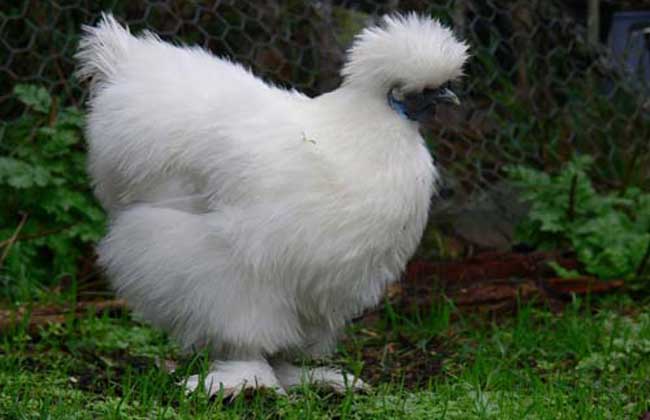
The Silkie chicken is a specialty of Taihe County, Jiangxi Province, also known as the Taihe Silkie, Wushan chicken, or Bamboo Silkie, and originates from the northern foot of Wushan in Taihe County. It is world-famous for its "ten" characteristics - cluster comb, tassel head, green ears, beard, silky feathers, feathered feet, five toes, black skin, black flesh, and black bone - as well as its extremely high nutritional and medicinal value. Now let us take a look at Silkie chicken breeding techniques together!
Breeding Prospects
The Silkie chicken is a precious medicinal-type local chicken breed in China and is the main raw material for the traditional Chinese medicine used to treat gynecological diseases, "Wuji Baifeng Wan." It is renowned at home and abroad for its snow-white silky feathers, black skin, muscles, and periosteum, and its unique medicinal value. It also has characteristics such as a gentle temperament, poor flying ability, strong adaptability, attractive appearance, and tender meat. However, its production performance is low and urgently needs improvement.
Production Performance
1. Meat production: The growth rate, egg weight, and feed nutrition level of the Silkie chicken are closely related. For example, at 5 months of age, roosters reach 70.23-80.62% of adult rooster body weight, while hens correspondingly reach 82.53-87.73%. The half-eviscerated dressing percentage of roosters is 88.35%, and the fully eviscerated dressing percentage is 75.86%; for hens, these are 84.18% and 69.50% respectively.
2. Egg production: The age at first laying is generally 170-205 days, annual egg production is 75-150 eggs, and egg weight is 37.56-46.85 grams. Reproductive performance: The male-to-female breeding ratio is 1:15-17, the fertilization rate of breeding eggs is 87-89%, and the hatching rate of fertilized eggs is 75-86%. The chick survival rate at 60 days of age is 78-94%.
Chicken Coop Construction
1. The chicken coop should generally be chosen in a location with convenient transportation, flat roads, and abundant water sources, with no noise or pollution sources around the coop. There are many forms of chicken coops; for household breeding, open-style coops or greenhouse-style coops are generally chosen. An open-style coop is 20-30 m long, 6-9 m wide, and 4-5 m high, built with bricks, with 2 opposite-facing windows per coop room and one door every 2-3 rooms. For ease of disease prevention and cleaning, the floor is made of cement.
2. The construction of a greenhouse-style coop is similar to that of a vegetable plastic greenhouse, built with cement posts and bamboo poles, with a height of 2.5-3.5 m, covered with double-layer plastic film. Some place crop straw between the two layers of plastic film to enhance cold and heat resistance. In winter, the coop is sealed around with plastic film; in summer, for ventilation, it is sealed with nylon mesh.
3. Rural household chicken raising mostly adopts floor rearing or off-ground rearing. Off-ground rearing generally involves building a chicken bed made of wooden strips or bamboo pieces at a height of 70-100 cm above the ground. Other facilities needed for raising Silkie chickens include feed troughs and water supply facilities. Larger-scale household breeders also need ventilation facilities, heating facilities, and supplemental lighting equipment.
Chick Rearing
1. Disinfection: Generally, 0-7 weeks of age is the brooding period. Before brooding, the brooding room must be thoroughly disinfected. The surrounding walls, floor, etc. should first be disinfected with a 3% coal tar saponification solution, then whitewashed with 10% lime milk, and finally fumigated with 14 ml of formalin (containing 40% formaldehyde) per sq m, adding 20 ml of water, heating to evaporate, and sealing for 1-2 days. Select strong, robust chicks and eliminate sick or underdeveloped weak chicks from rearing.
2. Drinking water: 24-36 hours after hatching, start providing warm water. For every 100 chicks, provide 2 tower drinkers of 45 liters each. In the first few drinking water sessions, 0.01% potassium permanganate can be added. Chicks that have undergone long-distance transport should also be given 5% glucose or sucrose to increase their energy. Feeding begins after drinking water.
3. Feeding: The initial feed for chicks is millet, broken rice, etc. soaked in boiled water. After 2-3 days, start feeding chick compound feed. Feed in small amounts with frequent additions. On the first day, feed 2-3 times; afterward, feed 5-6 times per day; after 6 weeks, gradually transition to 4 times per day, with relatively fixed feeding times. While feeding compound feed, to save costs, about 10% green feed can be added.
4. Temperature: Chicks are relatively sensitive to temperature. In the early brooding period, the indoor temperature should be controlled at 22-24°C. At 3 weeks of age, it should be close to room temperature, and room temperature should be maintained at a minimum of 18°C. Keep the relative humidity in the brooding room at 60-65%; too dry or too humid is not conducive to chick growth. Chicks aged 1-3 days should receive 23-24 hours of light, those aged 4-14 days should receive 16-19 hours of light, and after 15 days of age, 8-9 hours of light. When sunlight is insufficient, provide artificial supplemental lighting, with light intensity controlled at 1 white incandescent lamp of 25-40 watts per 15 sq m. Artificial supplemental lighting should be stronger in the first week and weaker in the remaining weeks.
5. Density: The brooding room should be ventilated frequently to prevent harmful gases from accumulating indoors. When ventilating, be careful not to cause drastic fluctuations in indoor temperature. The rearing density of chicks varies according to chick size and rearing method. For floor rearing, raise 30 chicks per sq m within 2 weeks of age, 25 per sq m at 3-4 weeks of age, and 20 per sq m at 5-6 weeks of age. Chicks should be beak-trimmed twice, at 10 days and 12 weeks of age respectively. Throughout the entire rearing process, frequently carry out disease prevention and control work, perform routine epidemic prevention, and inject various vaccines in a timely manner.