What are the prevention and treatment methods for infectious laryngotracheitis in chickens?
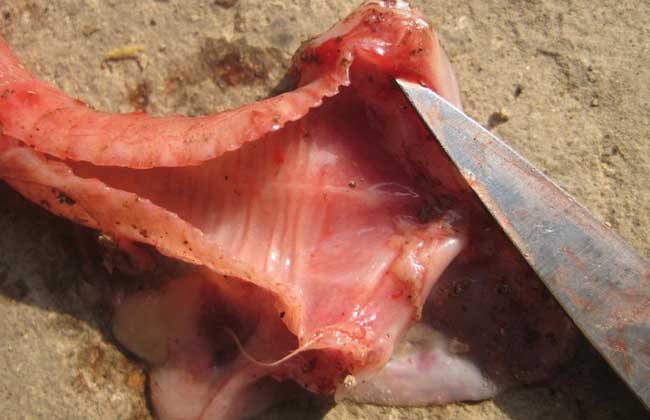
Infectious laryngotracheitis in chickens is an acute, contagious upper respiratory tract disease caused by the infectious laryngotracheitis virus. It is characterized by difficulty breathing, coughing, and coughing up bloody exudate. On necropsy, swelling, hemorrhage, and erosion of the larynx and tracheal mucosa can be seen. It spreads quickly and has a relatively high mortality rate. Let's take a look at the prevention and treatment methods for infectious laryngotracheitis in chickens.
Onset characteristics
The incubation period of natural infection with infectious laryngotracheitis in chickens is 6 to 12 days. After artificial tracheal inoculation, chickens can develop the disease within 2 to 4 days. The length of the incubation period is related to the virulence of the virus strain. In the early stage of the disease, several sick chickens often die suddenly. In the early stage, affected chickens have nasal discharge that is semi-transparent, tearing, and conjunctivitis. Afterward, characteristic respiratory symptoms appear, with moist rales during breathing, coughing, and wheezing sounds. Sick chickens squat on the ground or on perches. With each inhalation, the head and neck are stretched forward and upward, the mouth is opened, and the chicken tries its best to inhale, with wheezing cries. In severe cases, there is severe difficulty breathing, spasmodic coughing, and bloody mucus may be coughed up, which can contaminate the beak corners, face, and feathers on the head.
Disease progression
In the most acute cases of infectious laryngotracheitis in chickens, death can occur in about 24 hours. Most die within 5 to 10 days or longer. Most of those that do not die recover after 8 to 10 days, and some can become virus-carrying chickens. When some less virulent strains cause disease, the epidemic is relatively mild, the incidence rate is low, and the symptoms are mild, with only listlessness, slow growth, reduced egg production, and conjunctivitis, infraorbital sinusitis, rhinitis, and tracheitis. The course of the disease is relatively long and can last up to 1 month. The mortality rate is generally low (2%), and most sick chickens can survive. If there is secondary bacterial infection and the presence of stress factors, the mortality rate will increase.
Field diagnosis
1. Infectious laryngotracheitis in chickens often occurs suddenly and spreads quickly. It occurs most often in adult chickens, with a high incidence rate, and deaths vary greatly depending on conditions.
2. The clinical symptoms of infectious laryngotracheitis in chickens are relatively typical: open-mouth breathing, panting, rales, coughing up bloody mucus, and a posture of stretching the head forward and upward while inhaling.
3. On necropsy of dead chickens with infectious laryngotracheitis, catarrhal and hemorrhagic inflammatory lesions can be seen in the trachea, with the hemorrhagic type being the most characteristic. Blood clots of varying amounts can also be seen in the trachea.
Prevention and treatment methods
1. Treatment method: When the disease occurs, Longda tripeptide can be used, with each set injectable for 1000 adult birds, and antibacterial drugs can be used to prevent secondary infection. Feeding and management utensils and chicken houses must be disinfected. Recovered chickens must not be raised together with susceptible chickens.
2. Disinfection treatment: Feeding and management utensils and chicken houses should be disinfected. Chickens of unknown origin should be isolated for observation. Several susceptible chickens can be placed together with them for observation for 2 weeks. If no disease occurs, it proves that they do not carry the virus, and only then can they be raised together.
3. Culling sick chickens: Recovered chickens must not be raised together with susceptible chickens. Chickens that survive the disease carry and shed the virus for a certain period of time, so contact between susceptible chickens and recovered chickens must be strictly controlled. It is best to cull recovered chickens.
4. Improving immunity: After natural infection with infectious laryngotracheitis virus, chickens can develop strong immunity, which can last at least more than 1 year, or even lifelong immunity. Susceptible chickens can obtain protection for half a year to 1 year after vaccination.
5. Vaccination: In areas where infectious laryngotracheitis in chickens is prevalent, vaccination with attenuated infectious laryngotracheitis vaccine can be considered, by nasal drops, eye drops (drinking water is also used), and immunization should be carried out according to the vaccine instructions.