Key Technical Points and Rearing Management Methods for Black-Boned Silkie Chicken Farming
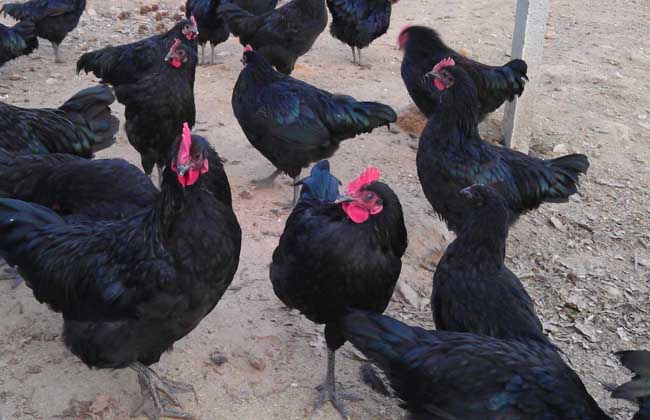
The black-boned silkie chicken is a rare delicacy among poultry worldwide, also known as the five-black-one-green chicken, Hualu black chicken, Three Gorges black chicken, etc. It has the "five black" characteristics of black feathers, black skin, black meat, black bones and black internal organs. Its meat is tender and delicious, and its melanin has medicinal value. It also contains large amounts of lecithin, vitamins and trace elements. Let us take a look at black-boned silkie chicken farming techniques below!
Profitability of Black-Boned Silkie Chicken Farming
1. Farming advantages: The black-boned silkie chicken has a gentle temperament, likes living in groups and has strong disease resistance, and can be raised anywhere in the country. The chicken grows quickly, has excellent meat quality, is highly productive, saves feed and is efficient. Raised for 70 days from hatching, it can reach 1 kg, requiring only 5.76 yuan in feed costs (even less in grain-producing areas). Annual egg production reaches more than 180 eggs, and the green-shell egg rate can reach more than 85% under normal rearing conditions. Adult roosters weigh 1.5-2 kg and hens 1.2-1.5 kg. They can begin laying after being raised for more than 5 months, and the fertilization rate, hatching rate and survival rate can reach 85-95%.
2. Farming profitability: Under good rearing management, raising 50 groups (each group 1 rooster and 5 hens) produces 45,000 eggs per year, yielding a profit of at least 65,000 yuan. If breeding commercial chickens, at the most conservative estimate about 20,000 can be bred. At 30 yuan each based on ordinary domestic chickens, the annual output value can reach 480,000 yuan. After deducting all costs, a profit of at least 250,000 yuan can still be made. Its profitability is 10-20 times that of pig farming and dozens of times that of ordinary crop farming.
Site Selection and Construction of the Chicken Farm
1. Site selection: The terrain should be high and dry with good drainage, an adequate water source, good water quality and convenient power supply, no less than 500 m from a main road and no less than 100 m from a secondary road.
2. Chicken house types: closed type and open type.
3. Chicken house layout: Determined according to the number raised, and it must be conducive to disease control.
4. Rearing equipment: Adapt to local conditions (heating, ventilation, water supply, feeding, cages, lighting and other equipment).
Preparatory Work Before Brooding
1. Chicken house disinfection: Before brooding, prepare the brooding room, which must be warm, airtight and rainproof. One week before the chicks arrive, the brooding house should be swept and washed clean, then fumigated with formalin and potassium permanganate or disinfected by spraying with Xiaoteling water.
2. Preheating in advance: 1-2 days before the chicks arrive, spread the litter and heat the brooding room in advance, requiring the room temperature to reach 27-29degC and to be kept stable.
3. Facility preparation: Prepare sufficient feed troughs, drinkers and other utensils, choose nutritious, high-quality feed, and prepare enough commonly used chick medicines such as anti-pullorum drugs, anticoccidial drugs and disinfectants.
Rearing Management During the Brooding Period
1. First drinking: Chicks should drink before they eat. First drinking should begin as early as possible to help gastrointestinal movement and yolk absorption. The drinking water must be clean; in winter, warm boiled water should be used. First drinking usually uses penicillin water at 1,000 units per chick, and after first drinking, drinking water must be available without interruption. At 2-4 days of age, they can drink 0.02% enrofloxacin water for 3-5 consecutive days, then stop for 3 days, then use another course to prevent gastrointestinal diseases.
2. First feeding: After the chicks have drunk enough water and 2/3 of them show pecking behavior, feeding can begin. The feed used after first feeding should all be nutritious, high-quality chick feed, following the principle of small amounts fed frequently. After 1 week, some green feed and grit can be given.
3. Temperature: Temperature is the primary condition for raising chicks well. A hen can keep the chicks she hatches alive mainly by using her body temperature to brood them. For floor brooding, regardless of the season, litter must be spread indoors so the chicks' abdomens do not get cold while sleeping. The brooding temperature must be constant: the first week requires a temperature of 32-35degC and a room temperature of 27-29degC, after which it drops by 2degC each week.
4. Humidity: Humidity has a relatively large effect on the health and growth of chicks. For example, high humidity with low temperature makes chicks prone to catching colds and diarrhea. But if humidity is too low, it will also affect the absorption of the yolk sac in the body. The humidity required by black-boned silkie chickens is 60-65% in the first week and 50-60% after the second week.
5. Ventilation: The purpose of ventilation is to promptly remove stale indoor air, take in fresh air and regulate the temperature and humidity inside the house. Chicks need both warmth and attention to ventilation, so as to expel toxic gases such as ammonia and carbon dioxide.
6. Lighting: Correctly controlling lighting helps the flock grow and mature uniformly. During the brooding stage, chicks can have 24-hour lighting, with a light intensity of 2-3 watts per sq m as appropriate.
7. Density: Density has a great effect on the growth and development of chicks. Low density is uneconomical, while excessively high density causes uneven development, slower growth, greater susceptibility to disease and increased mortality. For the litter floor rearing method, the rearing density is 30-35 birds per sq m before 6 weeks of age and 12-15 birds per sq m before 18 weeks of age.
8. Grouping: The purpose of grouping is to make the chicks develop uniformly and increase the survival rate. Generally, they are grouped at the appropriate time according to size and strength. For weak and small chicks, the nutritional level of the feed should be raised and rearing management strengthened.
9. Hygiene: The brooding room should be swept frequently and the litter replaced promptly. Feed troughs, drinkers and the brooding house should be cleaned and disinfected once a week, and the drinkers washed once a day. When entering and leaving the brooding house, change clothes and shoes, and set up a disinfection pool at the door to do a good job of prevention and disinfection.