How to raise yellowcheek carp? A detailed guide to yellowcheek carp farming techniques
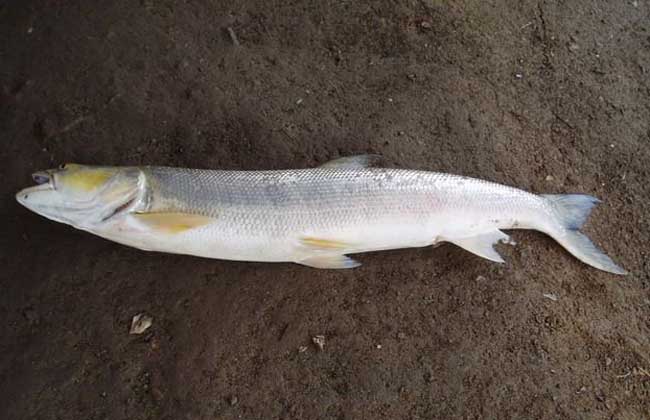
The yellowcheek carp, also known as the yellow-cheek fish, water tiger, big-mouth yellowcheek carp, and so on, is very widely distributed. In China, it can be found in many water systems from north to south. Its flesh is delicious, and it is high in protein and fat. It has the effects of warming the middle, benefiting the stomach, and stopping vomiting, and is mainly used to treat weakness of the spleen and stomach, nausea and vomiting, and other conditions. Therefore, it has relatively high farming economic value. Let us take a look below at the farming techniques for yellowcheek carp!
Growth habits of the yellowcheek carp
The yellowcheek carp is a broad-temperature species among freshwater fish. Its survival water temperature range is relatively wide, and the suitable growth water temperature is 16 to 30 degrees Celsius, making it suitable for farming in most parts of China. It is a ferocious fish and feeds on live fish in natural waters. However, in artificial farming, if live bait is still fed, first, the farming cost is high; second, a dedicated forage fish pond must be provided, which is time-consuming and labor-intensive and has relatively high costs. Practice has shown that after domestication, yellowcheek carp can also grow normally by eating chunks of chilled fresh fish, and its domestication usually begins when the fish is about 5 cm in body length.
Growth and reproduction of the yellowcheek carp
The yellowcheek carp grows quickly and reaches a large size. If feeding is normal, one-year-old individuals weigh between 1.0 and 1.5 kg, two-year-old individuals 3.5 to 5.5 kg, three-year-old individuals 7.5 to 11.0 kg, and four-year-old individuals can reach 15.0 to 20.0 kg. After sexual maturity, body length continues to increase, and the largest individuals can reach 2 m in length and 60 kg in weight. Usually, male fish reach sexual maturity at three years of age and female fish at four years of age. In the wild state, broodstock spawn from April to June, while artificial reproduction is generally carried out in May. Yellowcheek carp eggs are floating eggs, and after absorbing water and swelling, they must drift with the water to complete development. A mature female fish with a body length of 1 m can carry up to 500,000 eggs.
Farming preparation for the yellowcheek carp
1. Pond conditions: The pond is best chosen in a place with a quiet environment, convenient transportation, sufficient water sources, and convenient water intake and drainage. There should be no tall trees around the pond, so as not to block sunlight and hinder air circulation. The size of the farming pond is generally 3 to 4 mu, and the water depth is about 1.5 to 2 m. It is best to use earthen ponds to raise yellowcheek carp, as earthen ponds contain large amounts of plankton, which can provide some live bait for silver carp and bighead carp.
2. Farming equipment: To raise yellowcheek carp, necessary aeration machinery must be provided. In addition, several water pumps must be provided, and different nets must also be prepared for catching yellowcheek carp summer fry, market fish, and broodstock. The yellowcheek carp has an impatient temperament and will desperately dart and crash around when being caught, so a single layer of net is easily broken. Yellowcheek carp aged 2 years and older must be caught with double-layer nets. The inner layer is a net with smaller mesh and a certain degree of elasticity, which can buffer the impact of the yellowcheek carp, while the outer layer is a nylon net with larger mesh.
3. Pond clearing and disinfection: Before stocking yellowcheek carp, the pond must be cleared and disinfected. Quicklime is diluted with water and splashed over the whole pond. About 80 kg of quicklime is used per mu of pond, which can both kill wild miscellaneous fish and pathogens and effectively improve the substrate and water quality. After disinfection, after 2 to 3 days of ventilation and sun exposure, water can be added.
4. Water quality conditions: The yellowcheek carp is a freshwater fish that lives in rivers, lakes, and reservoirs. It is best to use water from rivers, lakes, and reservoirs to raise yellowcheek carp, as such water bodies are rich in plankton and have sufficient oxygen, which is beneficial to the healthy growth of yellowcheek carp. The pH value of the farming water must be kept between 7.0 and 9.0, the ammonia nitrogen content per liter of water must not exceed 0.03 mg, the salinity must not exceed 5‰, the dissolved oxygen content of the water body must be kept above 5 mg per liter, and in addition, the transparency of the water body must be above 30 cm.
Broodstock farming of the yellowcheek carp
1. Broodstock selection: There are now fewer and fewer wild yellowcheek carp. Catching broodstock in rivers and lakes is time-consuming and labor-intensive, and many times nothing is gained. Yellowcheek carp broodstock is generally introduced from regular yellowcheek carp farms. If yellowcheek carp has already been farmed for many years, broodstock can also be selected from market fish. Broodstock should be sexually mature individuals with a robust physique and no injuries or diseases. The ratio of females to males is 1:1.5.
2. Intensive cultivation: Broodstock are generally intensively cultivated in dedicated earthen ponds of between 6 and 10 mu, with a water depth of between 1.5 m and 2 m, and the dissolved oxygen in the water is kept above 5 mg per liter. On cloudy and rainy days or in high-temperature seasons, aeration is carried out for 4 to 8 hours per day, mainly concentrated from two to three o'clock in the afternoon, or between one and six o'clock in the morning.
3. Stocking density: The stocking density of broodstock is controlled at about 300 kg per mu. About 100 silver carp weighing 250 g each can be stocked per mu of pond, which can help yellowcheek carp broodstock improve water quality. If the broodstock have already been domesticated and can eat chunks of chilled fresh fish, fish chunks accounting for about 8% of the broodstock body weight should be fed every day. If the broodstock have not been domesticated, the pond must contain a sufficient amount of live bait fish, and live fish accounting for 5% of the broodstock body weight should be put into the pond at fixed times every day.
4. Maturity identification: Female broodstock with good maturity have an enlarged abdomen, a soft and elastic feel, and a swollen and slightly red genital pore. When male fish are sexually mature, generally white semen flows out when the abdomen is lightly pressed, and it disperses upon entering water. After catching the broodstock, use a special cloth clamp to hold the broodstock and do not let it crash around, so as to avoid escape and injury. Put an appropriate amount of water into a plastic bag, place the broodstock into the plastic bag, then hold it with the cloth clamp, carry it to the oxygen filling machine for oxygen filling, and then transport it.