Detailed Explanation of Key Points for High-Yield Culture Techniques of Sleepy Goby
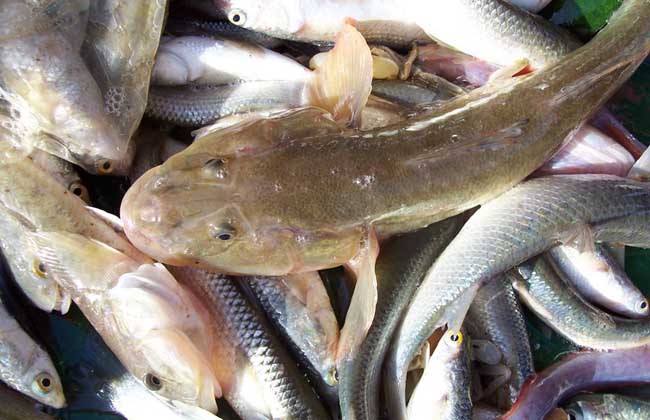
Sleepy goby, also known as puzhaige, pushayu, shamuruan, etc., is a warm-water marine or freshwater small fish widely distributed in tropical and subtropical regions around the world. Common species include the Chinese black sleeper (Bostrychus sinensis), the pointed-head sleeper, and the dusky sleeper. Currently, most sleepy gobies on the market are wild species captured from rivers or ponds, and the proportion of artificially cultured sleepy goby is still relatively low. The prospects for aquaculture are very broad. Let us now take a look at high-yield culture techniques for sleepy goby!
Aquaculture Prospects of Sleepy Goby
As people's dietary concepts evolve from quality-oriented to nutrition-oriented, small freshwater fish (and shrimp) that were historically undervalued, such as yellow catfish, sleepy goby, black carp, rice field eel, and crayfish, are increasingly favored by consumers. As a native fish species in Northeast China, sleepy goby is often eaten after being processed by braising in soy sauce or deep-frying. Due to its unique flavor and rich nutrition, it has become a signature dish used by major hotels and restaurants to attract customers. With the acceleration of social development, the living environment of sleepy goby is under threat, and its resources have sharply declined, which has caused the price of sleepy goby to rise rapidly. The market price has now risen to around 80 yuan/kg and demand exceeds supply. Adapting to market demand, investing in the sleepy goby aquaculture industry will be very promising.
Culture Conditions for Sleepy Goby
Because sleepy goby has strong stress resistance, tolerates low oxygen, tolerates low temperatures, and does not have high requirements for water depth, insect larvae, small fish and shrimp, and even fish eggs in natural waters can serve as bait. Under artificial culture conditions, animal viscera, by-products from livestock and poultry processing, and fresh miscellaneous fish combined with soybean cake and cornmeal can be processed into feed, which can replace natural bait after simple domestication. In terms of culture methods, taking advantage of the bottom-dwelling and feeding habits of sleepy goby, it can be polycultured with traditional fish species to improve the utilization rates of feed and water bodies, and high-density pond culture and rice field culture can also be developed. In addition, some "ponds" can also be modified for sleepy goby culture, which lays a material foundation for the development of large-scale sleepy goby aquaculture.
Breeding Techniques for Sleepy Goby
1. Broodstock cultivation: For sleepy goby, individuals with strong physique, no damage to the body surface, no parasites, and a body weight of 75 grams or more should be selected as broodstock. Mature female fish have a distended abdomen with an obvious outline, feel soft and elastic to the touch, and when turned belly-up, obvious banded patterns can be seen. The area where the ovary is located droops to both sides, and the center of the abdomen appears as a shallow groove. The genital papilla is light red, and when the abdomen is squeezed, plump free eggs can be seen flowing out. For male fish, those with a peach-red genital papilla are preferable.
2. Artificial induced spawning: For sleepy goby, fish chorionic gonadotropin (HCG), luteinizing hormone-releasing hormone analog (LRH-A), domperidone (DOM), and salmon gonadotropin-releasing hormone analog (SGnRH-A) are used as spawning-inducing agents, used alone or in combination, with single or double injections, with the needle inserted at the base of the pectoral fin. The best spawning-inducing effect is achieved with a single injection of HCG.
3. Egg incubation: Incubation of fertilized sleepy goby eggs should be carried out under weak light conditions in an incubation pond. Either the still-water method or the slight-flow-water method can be used, but both require slight aeration to ensure sufficient dissolved oxygen for embryonic development. During incubation, dead eggs and debris should be removed promptly, and 0.5-1.0 ppm furan drugs or antibiotics should be applied regularly to prevent disease. The suitable water temperature for incubation is 26-29°C, and the salinity is 20-28‰.
4. Fry and fingerling cultivation: For the early stage of sleepy goby fry and fingerling cultivation, small cement ponds of 20-30 cubic meters are suitable, and for the later stage, cement ponds of about 50 cubic meters are suitable. The nursery water should first be subjected to sedimentation and sand filtration, and finally filtered through a 250-mesh silk screen before being injected into the pond. The suitable water temperature for cultivation is 26-30°C, the salinity is about 25‰, and the pH value is about 8.2. During the cultivation process, air stones should be used for aeration to maintain sufficient dissolved oxygen. The cultivation density is 5,000-8,000 fish/cubic meter, 3,000 fish/cubic meter at the juvenile stage, and about 1,500 fish/cubic meter at the young fish stage.
5. Fry and fingerling transportation: For fry and fingerling transportation, plastic film bags are used as containers. Each bag is filled with 7-8 kg of water and 500-1,000 fry, filled with oxygen to account for 2/3 of the total volume, and the bag opening is tied tightly with a rubber band. For long-distance transportation, ice should be used to control the water temperature at 25-27°C. After arriving at the destination, the fry bags should immediately be placed to float on the pond water for a while, and after the water temperature inside the bags is close to the pond water temperature, the fry can be released.
Culture Techniques for Sleepy Goby
1. Pond disinfection: For sleepy goby culture ponds, it is best to choose coastal areas at estuaries or bays with sufficient freshwater sources. The area should preferably be 0.5-1.5 mu, with stone-built pond embankments and a sand-covered pond bottom, and it should be flat, with convenient drainage and water injection, and a water depth of about 1.5 m. Before releasing fry, the pond should be drained, and after dredging, it should be exposed to the sun until the pond bottom cracks. After sun exposure, use 100-150 kg of quicklime per mu or 5-10 kg of bleaching powder for disinfection.
2. Pond fertilization: 3-5 days after pond disinfection, place tile tubes, tiles, large-diameter bamboo tubes, discarded large tires, or gray plastic pipes on the pond bottom as shelters and hiding places, then filter water through a 40-mesh net to fill the pond to a water depth of 60-80 cm, and apply 0.5-1.0 kg/mu of ammonium bicarbonate and 0.05-0.10 kg/mu of superphosphate to fertilize the water.
3. Fry release: Fry can be released 3-5 days after pond fertilization. Before releasing the fry, test the water with fish for more than 12 hours, and only release the fry if there are no problems. Before entering the pond, the fry can be bathed in a 5 ppm potassium permanganate solution for about 5 minutes, or disinfected in a 10 ppm furazolidone aerated bath for 20 minutes. When releasing, carefully release the fish into the pond from the pond edge without lifting them out of the water, and promptly remove fish fry that are weak, dead, injured, or deformed.