Key Points of Spinibarbus Fish Farming Technology and Detailed Explanation of Daily Management Methods
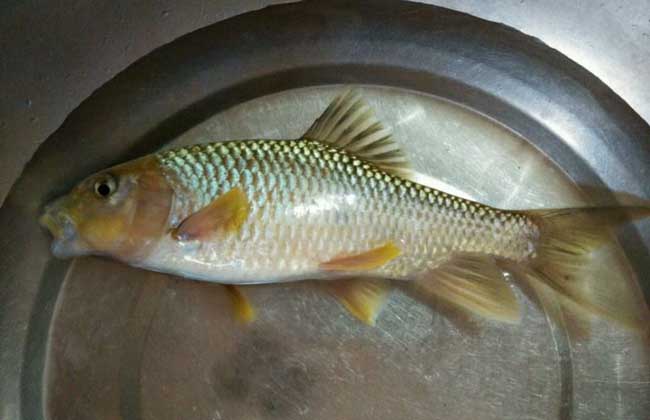
Spinibarbus fish, also known as stone grouper, luosi fish, etc., is a small economic fish of the genus Spinibarbus in the family Cyprinidae. It prefers to inhabit rivers and streams with gravel substrates, clear water and fast currents, and often uses the well-developed keratinized layer of its lower jaw to scrape moss and algae from stones. In farming, it is divided into pond culture and cage culture according to different farming methods. Now let us take a look at Spinibarbus fish farming technology separately!
Farming Conditions
Ponds can be built by digging in low- and mid-tide zones within reclaimed areas, or constructed from existing shrimp culture ponds. The conditions required are: sandy or semi-sandy substrate is preferable, though hard mud bottoms are also acceptable; the water quality of the surrounding sea area must be pollution-free with high transparency; the pond area should preferably be 5-10 mu, and the pond water depth should be more than 1 m.
Pond Clearing and Reef Placement
After the Spinibarbus fish culture pond has been exposed to the sun and desilted, some rubble should be laid on the pond bottom, or some discarded tires with holes, tile water pipes, etc. should be placed there, to accommodate the Spinibarbus fish's habit of liking to drill into holes.
Fry Stocking
The fry for Spinibarbus fish farming must be vigorous, disease-free, and dark in body color, and should be stocked separately by size. The stocking density must be adapted to local conditions. Generally, for fry of about 100 g per fish, about 0.5 fish per sq m can be stocked.
Feeding Management
1. Bait feeding: The bait is mainly fresh small trash fish, preferably live bait, and should be cut into appropriately sized pieces according to the fry size before feeding. When feeding, adopt quantitative feeding; generally, the amount is 10-15% of the fish body weight in the early stage and 5-10% in the later stage. The best feeding times are 5-6 a.m. and 7-8 p.m.
2. Reasonable polyculture: To save costs, white shrimp can be introduced into the Spinibarbus fish pond for self-reproduction and self-culture, or tilapia summer fry can be stocked for polyculture. The residual bait and feces of Spinibarbus fish serve as feed for the white shrimp and tilapia, while the white shrimp and tilapia are high-quality bait for Spinibarbus fish, achieving ecological balance in the fish pond.
3. Daily management: In Spinibarbus fish farming, the water temperature is required to be 14-30 degrees C, salinity 12-35%, pH 7.8-8.4, and dissolved oxygen above 4 mg/L, and the daily variation range must not be too large. The daily water exchange volume is generally required to be 1/3-1/4. During farming, if the water exchange conditions are poor and the stocking density is too high, hypoxia and floating head are likely to occur, so mechanical pumping or aerators should be used promptly to increase oxygen. In addition, the pond should be patrolled frequently, and attention should be paid to safe production.
4. Timely harvesting: Spinibarbus fish has poor tolerance to low temperatures, so harvesting should generally be completed before the cold wave arrives. The few Spinibarbus fish that have not reached commercial specifications should be overwintered.
Note: The Spinibarbus fish is a medium-sized individual, commonly 12-20 cm in body length and up to 30 cm for large ones. Its yield is considerable, and it is a common economic fish in production areas, but its eggs are toxic. Accidental ingestion can cause poisoning, with mild cases involving diarrhea and severe cases involving nausea, vomiting, dizziness, etc., requiring prompt treatment. Well, that is all for the introduction to Spinibarbus fish pond culture technology. Now let us take a look at Spinibarbus fish cage culture together!
Farming Season
The growth period of Spinibarbus fish in the Zhejiang sea area is generally from May to November. It takes 14-16 months to raise Spinibarbus fish from fry of 50-100 g body weight to commercial fish of 400-600 g. Generally, two farming cycle arrangements are used for production. One is to raise fry of about 100 g purchased from May to July of the first year until they reach 150-200 g before winter, then overwinter them and raise them until they are marketed before the winter of the second year. The other is to stock large-size fry of 200 g in April to May, which can be raised to 400-600 g commercial fish for sale before winter of the same year.
Stocking Density
For the stocking density of Spinibarbus fish in cage culture, based on many years of production practice and experimental results, it is considered appropriate that a 3×3×3 m cage has an annual stocking density of 10 kg/sq m. This stocking density can achieve a relatively high survival rate, with high total weight gain rate and net production rate, and a low feed conversion ratio.
Feeding Technology
After the fry are transported and divided into cages, they need 7-10 days to adapt to the environmental conditions before they begin to feed. Before formal feeding, they should be trained to eat. Their bait is mainly trash fish, and the feed conversion ratio is generally 7-8:1. When using compound feed, several issues need attention. First, Spinibarbus fish has a strong habit of feeding on a particular diet, so there is a relatively large adaptation and transition process from feeding trash fish to artificial compound feed. Second, the formula of the compound feed must be reasonable, and its protein content should not be lower than 40%. Third, if the grouper encounters feed that is not palatable or not fresh enough, it will spit it out, so palatability must be considered. Fourth, it needs to be made into soft pellets, and their size should match the mouth diameter of the Spinibarbus fish. Spinibarbus fish is suspicious by nature and highly selective about bait, so feeding technology has a great influence on its feeding. The feeding time is 8-11 a.m., and the feeding amount accounts for about 5-10% of the fish body weight. The feeding method should be slow feeding, and feeding should continue only after the fish have finished eating. Spinibarbus fish generally do not eat bait that sinks to the bottom of the cage.