Breeding Techniques and Management Methods for Nubian Goats
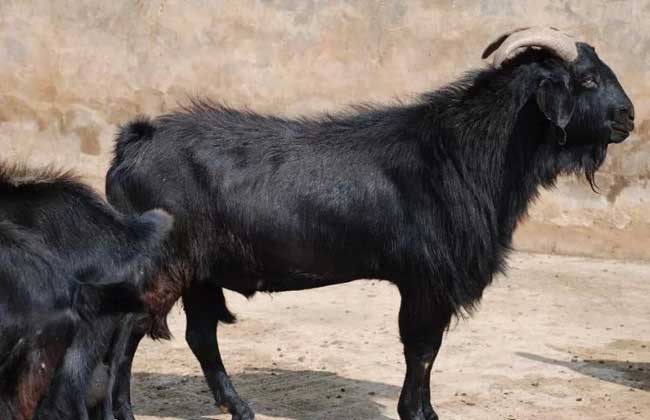
Nubian goats are a dual-purpose breed for meat and milk, also known as the Nubian goat. They are named after the Nubian region in the upper reaches of the Nile River in Egypt, where they originated. They have good heat tolerance but poor adaptability to cold and humid climates. They are quite effective in improving local goats in terms of meat production performance and reproductive performance. This breed has been introduced in places such as Guangxi and Sichuan in China. Now let us take a look at the breeding techniques for Nubian goats!
Feeding and Management of Nubian Goats
1. Rearing methods: In hilly areas, Nubian goats are often raised using two combined methods: pen feeding or tethering. In mountainous areas, grazing is mainly used, while most farming households use pen feeding and tethering. The goat sheds are equipped with slatted manure-dropping floors, water troughs, feed troughs and other facilities.
2. Feed formulation: The forage for Nubian goats mainly consists of wild pasture grass, leaves and branches, vines, crop stalks from farming households and artificially planted pasture. The supplemental concentrate is mainly corn, wheat and wheat bran, with appropriate addition of feed additives.
3. Disease prevention: For disease prevention, Nubian goats should be given two vaccinations each year. Deworming according to the season can ensure the healthy development of Nubian goats.
Feeding of Multiple Lambs of Nubian Goats
1. Lamb fostering: When a ewe gives birth to multiple lambs in one litter (or the ewe dies accidentally after giving birth), some of the lambs from a litter with many lambs can be allocated to a ewe with fewer lambs for fostering. To ensure successful fostering, it is generally required that the delivery dates of the two ewes differ by within 3 to 5 days, and that the individual body weights of the two litters of lambs do not differ greatly. In addition, ewes have a relatively keen sense of smell. To avoid the ewe detecting the scent of the fostered lamb and refusing to nurse it, fostering is generally recommended to be carried out at night. Before fostering, spray both litters of lambs with the same odor-producing substances such as carbolic acid solution or alcohol, or smear them with the milk or urine of the recipient ewe, then place the two litters of lambs together for feeding for 30 to 60 minutes, so that the recipient ewe cannot distinguish the true from the false, thereby achieving the purpose of fostering.
2. Batch nursing: When the number of suckling lambs exceeds the number of teats of the ewe, the lambs can be divided into two groups and nursed in turns. When using the batch nursing method, the feeding and management of the nursing ewe must be strengthened to ensure a nutrient level slightly above medium for the ewe, so that the ewe has sufficient milk to supply the lambs. The grouped lambs should be reasonably allocated according to size and strength. At the same time, early grass supplementation and feed introduction for the suckling lambs should be done well, so as to reduce the nursing burden on the ewe as much as possible and ensure the balanced development of all lambs in the litter.
Prevention of Dystocia in Nubian Goats
1. Prevent premature mating: From a physiological perspective, ewes generally reach sexual maturity at 5 to 6 months of age and have reproductive capacity, showing their first estrus, but at this time the ewe's body has not yet fully developed. If mated at this time, its growth and development will be suppressed, and its pregnancy will naturally be seriously affected. The consequence of this effect is an increased rate of dystocia. Therefore, for goats, the first mating time for ewes should be chosen when the goat has reached body maturity. This will not only not affect the ewe's health, but also produce robust young goats.
2. Body size matching principles: In cases of dystocia, about 50% are related to oversized fetuses, and the vast majority of these are related to the use of oversized breeding rams, especially when an immature ewe is mated with a large-bodied ram, the incidence of dystocia is even higher. Therefore, the correct body size matching principle should be adhered to. The correct body size matching principle should be: large with large, large with medium, medium with small, and absolutely never large with small. The result of matching large with small often leads to oversized fetuses and an increased rate of dystocia, and the consequences are even more serious for premature mating.
3. Management during gestation: For goat dystocia, in addition to the above two factors, poor feeding and management during gestation is also an important factor. Nutritional imbalance in goats during gestation is one of the triggers of dystocia. Excessive obesity or malnutrition in ewes during gestation can both lead to insufficient labor force and induce dystocia. At the same time, exercise is indispensable for pregnant ewes, and quite a few ewes with dystocia are related to lack of exercise during gestation. Insufficient exercise in pregnant goats may induce abnormal fetal position and can also lead to insufficient labor force; both of these are direct triggers of dystocia. For ewes, reasonable exercise should be both appropriate in amount and moderate in intensity. Generally, 2 hours per day is suitable.
Breeding Advantages of Nubian Goats
1. Tall stature: Adult male Nubian goats generally can reach a body weight of more than 300 jin, and adult females can reach more than 200 jin. The weaning weight at two months of age is 28.16 kg for males and 21.20 kg for females, which is 50% higher than other domestic breeds.
2. Strong reproductive capacity: The initial mating time for male Nubian goats is 6 to 9 months of age, and for females 5 to 7 months of age. The lactation period is 70 days, the lamb survival rate is 96 to 98%, the lambing rate is 2.65 kids, and the annual number of births is 2.
3. High meat yield: The slaughter rates of adult male and female Nubian goats are 51.98% and 49.20% respectively, and the net meat rates are 40.14% and 37.93% respectively.
4. Strong adaptability: Nubian goats have good adaptability and very good production capacity. The results of improving local ewes after introduction are remarkable, among which the improvement of Jianyang Big-Eared goats is the most notable.