Key Points of Dongshan Goat Breeding Technology and Feeding Management Methods
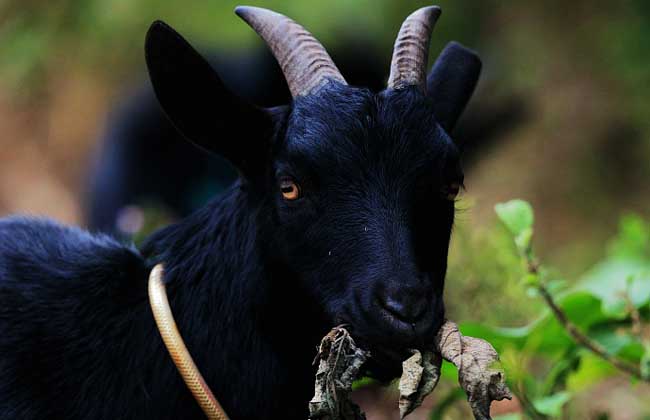
Hainan Dongshan goats are mainly produced in Dongshan Ridge in Wanning, Hainan, and are referred to locally simply as "Dongshan goats." They are famous both on and off the island for their high-quality mutton, and together with Jiaji duck, Hele crab, and Wenchang chicken, they are known as the four famous dishes of Hainan. In 2009, they were included by the Hainan Provincial Department of Agriculture in the first batch of the list of livestock and poultry genetic resource protection breeds. Now let us take a look at Hainan Dongshan goat breeding technology!
Breeding Advantages of Dongshan Goats
1. Small investment: Dongshan goats are herbivores and belong to grain-saving animal husbandry, so there is no problem of competing with humans and livestock for grain.
2. Strong reproductive capacity: Dongshan goats come into heat in all four seasons. Ewes can be bred and conceive at six months of age, producing 1 to 2 litters per year, with a lambing rate of 150 to 200%, and the twin lambing rate per litter can reach as high as 80%.
3. Good adaptability: Dongshan goats can adapt to both grazing and barn feeding, and are especially well adapted to hot and humid conditions, making them suitable for breeding in southern China.
4. Dual use for meat and medicine: In addition to having excellent meat qualities, Dongshan goat ewes have an extremely high content of sheep placenta extract, making them an excellent raw material for extracting sheep placenta extract.
Breeding Technology for Dongshan Goats
1. Build good goat sheds: The goat shed should face away from the wind and toward the sun, warm in winter and cool in summer. Each goat should have 1 sq m of space, and an exercise yard should be set up outside the goat shed with an area 3 times that of the shed. The exercise yard should be equipped with feed troughs, hay racks, water troughs, etc. Feed storage rooms, silage pits, and other facilities should be built near the goat shed. At the same time, feed processing machinery and chaff cutters and other equipment should be installed for processing concentrated and roughage feed.
2. Prepare sufficient feed: For barn-fed goats, each goat requires 300 to 400 kg of straw or dry grass per year, 60 to 100 kg of succulent feed, and 60 to 100 kg of concentrated feed. Feed sources should be widely developed. Straw from various crops, such as corn stalks, rice straw, wheat straw, bean stalks, bean pods, peanut vines, and sweet potato vines, are all good feed for raising goats.
3. Scientific feeding: Goat raising should adhere to the feeding principle of giving roughage as the main feed and supplementing with concentrated feed. The main feed should be straw from various crops, dry grass, silage, and ammoniated feed, with appropriate supplementation of concentrated feed such as corn and oilseed cakes. The feeding method should be roughage first and concentrate second: first feed straw or dry grass, then feed green grass or silage, and finally feed concentrated feed.
4. Careful management: Do a good job of maintaining pregnancy in pregnant ewes, do not feed moldy, spoiled, or frozen feed, and prevent miscarriages caused by butting and squeezing. In summer, do a good job of airing the goats; at "Start of Summer," set up "goat beds," and frequently spread dry soil inside the shed. At "Start of Winter," remove the goat beds, and afterward do not remove manure from the pen in order to help keep the goat shed warm. Before overwintering, reorganize the flock and cull and sell old, weak, diseased, disabled, and infertile goats to reduce barn-feeding pressure and improve goat-raising efficiency.
5. Do a good job of breeding: Achieve centralized mating and centralized lambing for easier management. For flocks using natural mating, mating can generally begin from "Start of Winter" in early November to "Minor Snow," with centralized lambing around "Pure Brightness" the following year, which is beneficial for lamb survival. For flocks using frozen semen mating, the mating period can be advanced to begin in early October. Ewes that have still not conceived after insemination over two estrous cycles can be supplemented with natural mating by a breeding ram.
Disease Prevention and Disinfection for Dongshan Goats
1. Environmental disinfection: The surrounding environment of the goat shed (including the exercise yard) should be regularly disinfected once with 2% caustic soda or by spreading quicklime. The area around the goat farm and the sewage pools, manure pits, and sewer outlets within the farm should be regularly disinfected once with bleaching powder. Disinfection pools should be set up at the main entrance of the goat farm and the entrance of the goat shed, and the disinfectant should be replaced regularly.
2. Personnel disinfection: Workers entering the production area must change their work clothes and work shoes and undergo ultraviolet irradiation for 5 minutes for disinfection. Outside visitors entering the farm area for visits should change into the farm area's work clothes and work shoes, undergo ultraviolet irradiation for 5 minutes for disinfection, comply with the farm's epidemic prevention system, and walk along designated routes.
3. Goat shed disinfection: After each batch of goats is sent to market, the shed should be thoroughly cleaned, washed with water, and sprayed with disinfectant at the specified concentration.
4. Equipment disinfection: Feeding equipment should be disinfected regularly. Daily equipment should be disinfected and cleaned before and after use. Vehicles transporting goats should be disinfected before and after transport.
5. Goat body disinfection: Before any contact operation on goats, such as assisted delivery, mating, or injection treatment, the relevant parts of the goat should first be wiped and disinfected to ensure the goat's health.