Detailed Guide to Xinong Saanen Dairy Goat Farming Technology
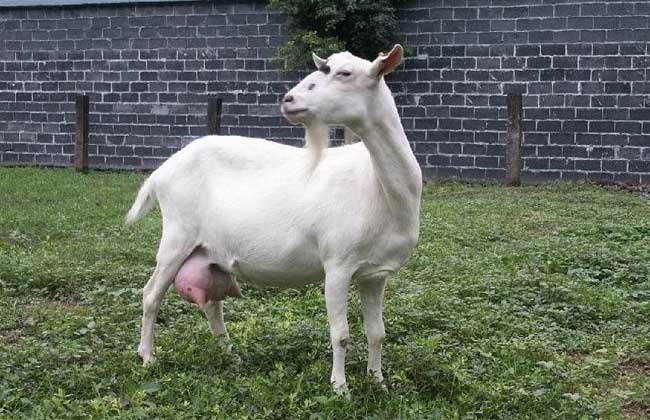
The Xinong Saanen dairy goat is one of the dairy goats with the highest milk production in the world. It originated in Switzerland and was later introduced into China, where a new breed was selected and developed. It has the characteristics of strong disease resistance, tolerance of coarse feed, and high milk production. A single goat can produce over four thousand jin of milk per year. Such yields have also attracted many farmers to raise them. Today we will discuss the farming technology for Xinong Saanen dairy goats.
Building the Flock
For ewes of the same breed, a larger frame and body weight indicate a healthy constitution and good nutritional status, with more nutrients stored in the body, which inevitably means more milk production. As ewes age and the number of lambing parities increases, the milk production of dairy goats gradually rises. Under normal circumstances, milk production reaches its peak during the 2nd to 5th parities, and gradually declines after the 6th parity. Therefore, older goats and sickly or weak goats with low milk production should be culled in a timely manner. In production, it is advisable to select and retain ewes that give birth to twin lambs per parity as milk-producing goats. For udder shape, ewes with round or pear-shaped udders that swell before milking and shrink noticeably after milking should be selected as milk-producing goats.
Disease Prevention and Control
An important part of managing dairy goats well is preventing and treating udder diseases. The udder is an important organ for ewes to secrete milk, and timely prevention and treatment of mastitis is crucial to ensuring vigorous lactation. During the lactation period, the udder should frequently be washed and wiped with soapy water and warm clean water to keep the skin of the teats and areola clean and supple. If suckling by lambs damages the teats, nursing should be suspended for 2 to 3 days, the milk should be expressed and fed to the lambs, and sulfonamide ointment should be applied to the affected area. Milking should be done on schedule every day, and the udder should be massaged to eliminate hidden risks of mastitis. The health of the udder should be checked frequently. If the milk changes color or lumps appear in the udder, local hot compresses should be applied to promote blood circulation and resolve stasis. The goats should also be given plenty of water to reduce the viscosity of the milk and make it thinner, so that it is easier to express. At the same time, the udder should be gently kneaded and massaged continuously by hand, and while kneading, the stagnant milk can be expressed until the stagnant milk is fully drained and the lumps disappear, so as to prevent and control mastitis in its bud. In addition, regularly feeding the goats cooling herbs such as dandelion, viola, and mint can clear heat, purge fire, cool the blood, and remove toxins, thereby preventing and treating mastitis.
Feeding Management
1. Forage selection: The feeding of Xinong Saanen dairy goats should adhere to a grass-based diet. Goats are ruminant herbivorous livestock and should be fed mainly on grass. For planting grass to feed goats, species such as Musu grass, Hemai grass, and Zili fresh grass can be selected. These grasses have strong drought resistance, are suitable for mountainous areas where dairy goats are raised, have high grass yield and excellent grass quality, and are rich in protein, vitamins, and inorganic salts. Generally, 4 to 5 kg of fresh grass can be sun-dried into 1 kg of hay, and any nutritional shortfall can be supplemented with concentrate.
2. Concentrate feeding: In the diet of Xinong Saanen dairy goats, coarse feed must not be less than 60%, and concentrate must not exceed 40%. If the daily concentrate feeding amount exceeds 1.50 kg, it will cause acidosis in dairy goats. Therefore, attention should be paid to feeding more high-quality coarse feed and high-quality green hay that dairy goats like to eat and that are rich in protein and nutrients, and a certain amount of green, succulent feed should also be fed each day.
3. Feed changes: Farmers can also implement an alternating feed change feeding method. This method uses increasing the amount of high-quality hay and succulent feed and alternately changing the amount of concentrate to increase the milk production of dairy goats, that is, regularly changing the feeding level and feed characteristics at set intervals. Through this periodic stimulation, the appetite of dairy goats is improved and milk secretion is promoted. (Contribution: Rural Notes)