How Often Should Sheep Be Sheared? A Detailed Explanation of the Shearing Cycle
Wool is mainly composed of protein. Human use of wool can be traced back to the Neolithic Age, spreading from Central Asia to the Mediterranean and other parts of the world, and it thus became a major textile raw material across Asia and Europe. The fiber is soft and elastic, and can be used to make textiles such as woolen cloth, knitting yarn, blankets, and felt. Let's take a look below at how often wool is sheared!
How Often Is Wool Sheared?
1. The timing and frequency of shearing sheep should be determined according to conditions such as climate, breed, physiological characteristics, and the quality of feeding and management. Generally, sheep are sheared twice a year, the first time in April to May, and the second time in September to October. Special attention must be paid to spring shearing: shearing too early easily causes the sheep to catch cold and fall ill, and wool should not be sheared on rainy days; shearing too late is also not good, as short wool cannot protect the body from mosquito and fly bites, making the sheep restless and affecting grazing and rest. When the wool length is less than 6 cm, it should not be sheared. For pregnant sheep, shearing is best done after giving birth to avoid causing premature delivery.
How Should Wool Be Sheared?
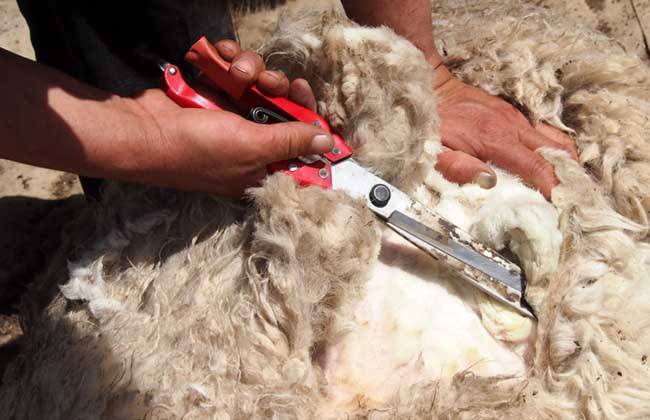
When shearing wool, wool shears can be used to trim the wool. Before starting shearing, first lay the sheep down and restrain it properly, with the head slightly higher; it must absolutely not be lower in front and higher in back. Start from the thigh area and shear forward in a straight line, then shear parallel along this line in sequence, and shear all the wool on the head completely, then shear the wool on the back; after this side is done, shear the wool on the opposite side. The sheared wool should be rolled into a bundle with the tips facing inward and the wool roots facing outward, rolled from back to front, and put into a bag for storage.
How to Collect Down?
Goat down should be collected when the goats are molting. Spring is the molting season for various livestock, and this is the right time to collect cashmere from goats. The tool is very simple; only a wooden or metal comb is needed. The spacing between the comb teeth should be appropriate, and the tips of the comb teeth should not be too sharp. Generally, start from the left side and collect by moving from front to back and from top to bottom, repeatedly working in a cross pattern. The collected cashmere should not be exposed to moisture, contaminated, or mixed with other impurities; it should be packaged by category and stored properly.