Small-tailed Han sheep or Boer goats: which is better? Comparative analysis of farming advantages
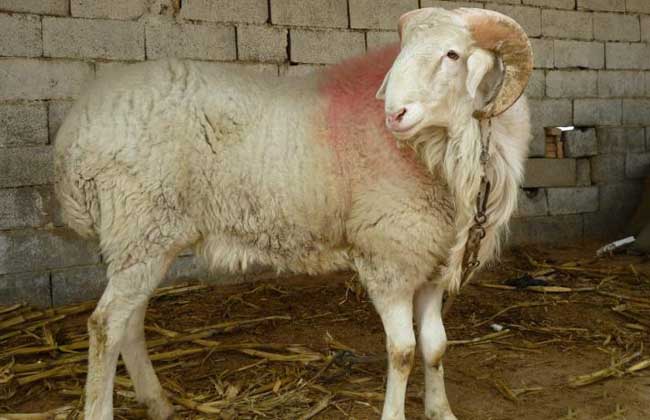
Small-tailed Han sheep have farming characteristics such as fast growth and development, early maturity, strong reproductive capacity, stable genetic performance and strong adaptability, while Boer goats have characteristics such as large body size, fast growth, strong reproductive capacity, multiple kids per litter, high dressing percentage, high meat yield, tender meat, good palatability, tolerance of coarse feed, strong adaptability, strong disease resistance and stable heredity. Let us take a look below at which is better, the Small-tailed Han sheep or the Boer goat!
Adaptability of Small-tailed Han sheep and Boer goats
1. Small-tailed Han sheep: Although the Small-tailed Han sheep belongs to the Mongolian sheep line, because it has developed the habit of “shed feeding and confined raising” in the southwestern Shandong region over thousands of years, natural conditions such as sun exposure, rain and severe cold can all be regulated by the shed, and it is rarely affected by regional climate factors. It can be raised all over the country, from Heilongjiang and Inner Mongolia in the north to Guizhou and Yunnan in the south, and can grow, develop and reproduce normally.
2. Boer goats: Boer goats are one of the livestock breeds with the greatest tolerance of coarse feed and the strongest adaptability, able to adapt to various climatic zones. They perform well in inland climates, tropical and subtropical scrubland, semi-desert and desert areas, and under drought conditions without water and feed they survive longer than other animals.
Production performance of Small-tailed Han sheep and Boer goats
1. Small-tailed Han sheep: Small-tailed Han sheep can be fattened and sent to market at 4 months of age, with an annual market rate of over 400%. Body weight can reach 50 kg at 6 months of age, 100 kg at one year of age, and 130-190 kg as adults. The dressing percentage of one-year-old fattened sheep is 55.6%, and the net meat rate is 45.89%. The meat is tender, with intramuscular fat in a marbled pattern, moderate fat and lean, delicious and juicy, rich but not greasy, fresh without a muttony odor.
2. Boer goats: Boer goats are the world-famous goats for producing high-quality lean meat. The body height of adult Boer bucks and does reaches 75-90 cm and 65-75 cm respectively, and their body weight is 95-150 kg and 65-95 kg respectively. The dressing percentage is relatively high, averaging 48.3%, and they can maintain production value until 7 years of age. In addition, the skin quality of Boer goats is excellent, making them a superior leather raw material.
Reproductive capacity of Small-tailed Han sheep and Boer goats
1. Small-tailed Han sheep: Small-tailed Han sheep can reproduce all year round and have extremely strong reproductive capacity, producing three litters in two years, and many produce two litters a year. They can be mated and conceive at 6 months of age, producing 2 litters per year, with 2-6 lambs per litter, and at most 9 lambs in a single litter. The average lambing rate reaches over 281.9% per litter. Within the first four litters, the lambing rate increases greatly as the number of litters increases, and the three-lamb rate and four-lamb rate of the third and fourth litters are about twice those of the first and second litters.
2. Boer goats: Boer goats can come into heat, be mated and give birth in all four seasons, and does mature at 6 months of age. According to the lambing results of 100 does, 24 gave birth to single kids, 58 to twins, 15 to triplets and 1 to quadruplets, with an average of 1.93 kids per litter. Bucks mature at 6 months of age, and under grazing conditions they can on average mate 15 does, while at over 9 months of age they can on average mate 30 does.
Market prices of Small-tailed Han sheep and Boer goats
1. Small-tailed Han sheep: The price of Small-tailed Han sheep is set according to the purity of the breed and the sheep's growth and frame, not entirely by the sheep's weight. A 40-jin ewe lamb costs about 600 yuan, a first-litter pregnant ewe about 1,300 yuan, a second-litter pregnant ewe 1,600 yuan each, and an adult breeding ram about 3,000 yuan.
2. Boer goats: Boer goat crossbreeds can be divided into generations 2 to 6 according to the number of crossbreeding generations, and prices differ with the generation. Generation 2-3: a 3-month lamb costs about 600 yuan and a first-litter ewe 1,300 yuan each; generation 4-5: a 3-month lamb costs 650 yuan and a first-litter ewe 1,400 yuan; generation 6: a 3-month lamb costs 680 yuan and a first-litter ewe 1,500 yuan; and an adult purebred breeding ram costs 2,800-3,000 yuan each.
Summary: There is actually no definitive answer to which is better, the Small-tailed Han sheep or the Boer goat. This mainly depends on the farming area. The hotter climate of the south is not suitable for raising Small-tailed Han sheep, while fewer Boer goats are raised in the north, because Boer goats are not as cold-resistant as Small-tailed Han sheep. Although the price trend and market situation of Small-tailed Han sheep are not as good as those of Boer goats, their growth and reproduction are faster than those of Boer goats.