How to Grow Amaranth for High Yield? A Detailed Guide to Cultivation Techniques
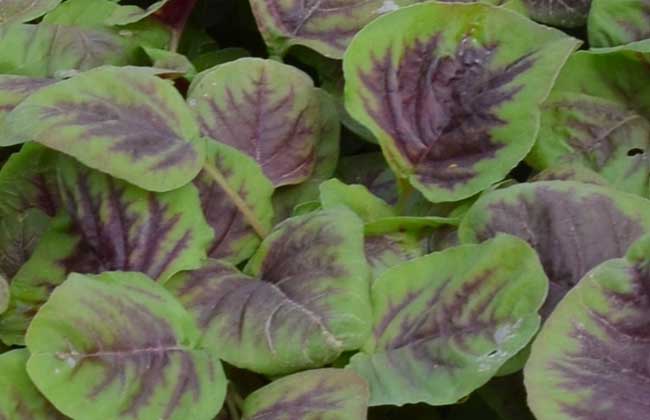
Amaranth originated in China, India and Southeast Asia, and has been eaten as a wild vegetable in our country since ancient times. In various parts of southern China there are some amaranth varieties with excellent quality and high nutrition. Because of its strong resistance, easy growth, drought tolerance, moisture tolerance and high-temperature tolerance, along with the fact that pests and diseases rarely occur, it has gradually become known and developed both at home and abroad. Let us take a look below at the high-yield amaranth cultivation techniques!
Variety Selection
For amaranth cultivation, different varieties should be used according to the habits of the varieties in different seasons and consumption habits. In winter and early spring, use red amaranth and huahong varieties with strong cold resistance; in other seasons, use huahong amaranth and all-green amaranth with strong resistance to pests and diseases. Generally, from late February to late March it is suitable to choose early-maturing and relatively cold-tolerant varieties such as pointed-leaf red rice amaranth and pointed-leaf huahong amaranth; from early April to late May it is suitable to choose varieties such as red amaranth, Dahongpao, white rice amaranth and willow-leaf amaranth; from early June to early August, for summer and autumn cultivation, it is suitable to choose relatively heat-tolerant varieties such as white rice amaranth, willow-leaf amaranth and red amaranth.
Cultivation Time
Amaranth can be cultivated during the frost-free period from spring to autumn. In open-field cultivation, sowing can be done from late March to early August, while cultivation under plastic tunnels and small arch sheds can be sown 20-30 days earlier, that is, sowing begins in late February, and can be brought to market about 30 days earlier. Except for early spring cultivation, it can generally be brought to market about 35 days after sowing.
Sowing Techniques
1. Seed soaking and germination: Soak amaranth seeds in cold water for 24 hours. During soaking, rub and wash them several times to facilitate water absorption. In winter and early spring, take out the soaked seeds, rub and wash them clean with clean water, remove and drain off the water, wrap them well in gauze with good air permeability, then cover with a wet towel, and keep them at 15-20°C for germination. When 30-50% of the seeds have sprouted white, they can be sown. In other seasons, direct sowing is used for cultivation.
2. Land preparation and fertilization: For amaranth cultivation, it is best to choose a plot with few weeds. Although amaranth is not strict about soil requirements, soil that is loose, fertile and good at retaining fertilizer and water is preferable, and amaranth likes slightly alkaline soil. Apply 5000 kg of decomposed organic fertilizer and 50 kg of 25% compound fertilizer per mu, carry out fine cultivation, and make raised beds with a bed width of 1-1.2 m, a ditch width of 0.3 m and a ditch depth of 0.15-0.2 m.
3. Sowing method: Amaranth seeds are relatively small. Mixing in some fine sand or fine soil when sowing can make sowing more uniform. The seeding rate is 0.25-0.5 kg per mu. Flat-bed broadcasting or drilling can be used. For broadcasting, a four-tooth rake can be used to lightly rake or not rake; for drilling, it can be slightly deeper in spring and shallower in summer, with shallow soil covering, then pressing, after which watering can be done and emergence waited for. In winter and early spring, cover with a thin layer of rice straw to retain moisture, then cover with a layer of plastic film for insulation. In summer, cover with a sunshade net.
Field Management
1. Temperature management: In winter and early spring, after amaranth emerges, remove the plastic film and covering materials. After watering, build a small arch shed inside the plastic tunnel to help keep warm. When the outside temperature is relatively low, cover the small shed with a layer of straw curtain in the evening for insulation. In summer, after emergence, promptly cover with a sunshade net, covering early and uncovering late.
2. Water management: In winter and early spring, amaranth should be kept with constantly moist soil and watered frequently with small amounts. Try to choose sunny mornings for watering, and after full emergence apply a 0.2% urea water solution once, then topdress once every 7-10 days to promote growth. In summer, appropriately increase the watering amount, generally watering in the morning and evening.
3. Reasonable topdressing: Amaranth requires multiple topdressings. Generally, the first fertilizer application is when the seedlings have 2 true leaves, the second is 10-12 days later, and after that, topdress once after each harvest. The fertilizer type is mainly nitrogen fertilizer. Each time, 1500-2000 kg of thin human urine can be applied per mu, with 5-10 kg of urea added.
Pest and Disease Control
1. Amaranth white rust: The main disease of amaranth is white rust. At the seedling stage, 75% chlorothalonil wettable powder at 1000 times dilution or 77% Telike Keshaqian at 1500 times dilution can be sprayed on the leaves for prevention. In the early stage of the disease, chemical control should be combined with manual leaf removal, but immediately after each harvest, do not spray pesticide on the same day, so as not to affect commodity quality.
2. Stem base rot: Implement crop rotation. When crop rotation cannot be implemented, carefully clean the field after harvest, collect diseased residues and burn them, then immediately plow and sun the soil, and disinfect the soil when preparing the land before sowing (by spreading poisoned soil or spraying liquid pesticide). If diseased plants are found, pull them out immediately. The pesticide can be 40% triadimefon-carbendazim wettable powder at 1000 times dilution.
3. Root-knot nematode disease: In severely affected areas, promptly remove diseased residues after harvest, and rotation with Liliaceae vegetables or paddy-upland rotation can also be used. At sowing or transplanting, apply 10% Limanku granules in furrows or holes at 75 kg per hectare. During the growth period, methyl isofenphos emulsion at 200 times dilution can also be used to drench the roots 1-2 times.