Where is burdock produced? Overview of main production areas
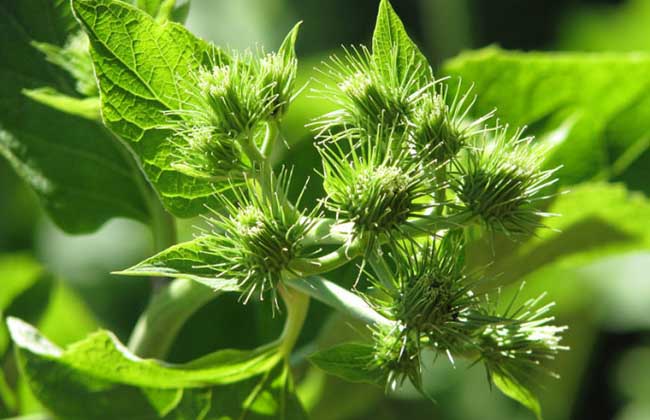
Burdock, also known as Dalizi, Eshi, Niubangzi and so on, is a biennial herbaceous plant of the genus Arctium in the Asteraceae family. Its place of origin is China. More than a thousand years ago, Japan introduced it from China and improved it into a food. When Japan occupied Taiwan, China, it required local farmers in Tainan to plant it in large quantities as a vegetable. Now let us take a look at where burdock is produced!
Where is burdock produced?
Burdock is mainly distributed in China, Western Europe, the Kashmir region, Europe, Russia, North America, Eurasia, South America, cold temperate zones and other places. In China, the main production areas for burdock cultivation are distributed in Jiangsu Province and Shandong Province and other places, especially Feng County and Pei County in Xuzhou, Jiangsu Province, and Lanling County in Shandong Province, which have the longest cultivation history and the largest planting scale.
China's hometown of burdock
China's hometown of burdock refers to Zhuangwu Town. Zhuangwu Town is located in Lanling County, Shandong Province, with a total area of 33.75 square kilometers, arable land area of 28,000 mu, jurisdiction over 19 administrative villages, and 35,000 people. It has the reputation of being the hometown of burdock and is currently the largest township in China integrating burdock planting, processing and export. In February 2004, it was named by the National Specialty Commission as the only “China's Hometown of Burdock”.
The production environment of burdock
1. Temperature: Burdock prefers warm climatic conditions and is both heat-tolerant and relatively cold-tolerant. The suitable temperature for seed germination is 20-25°C, and the suitable temperature for plant growth is 20-25°C.
2. Light: Burdock can promote germination under light conditions. Under strong light and long-day conditions, the plants develop well, and the fleshy roots expand quickly and become plump.
3. Water: Burdock is a plant that requires more water. From germination to the seedling stage, slightly higher soil moisture is suitable, and relatively moist soil conditions are also required in the middle and later stages.
4. Soil: When cultivating burdock as a vegetable, it is advisable to choose sandy soil or loam with deep soil layers, loose texture, rich organic matter content, and a pH value of 6.5-7.5.