A Detailed Guide to Burdock Planting Techniques and Field Management Methods
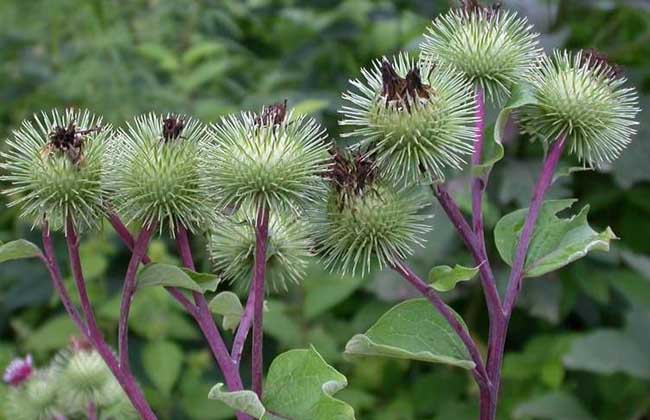
Burdock, also known as Dalizi, Eshi, Niubangzi and so on, is a biennial herbaceous plant of the genus Arctium in the Asteraceae family. It has been eaten as a vegetable in Taiwan, China for many years. In China it is distributed in places such as Jiangsu Province and Shandong Province. Xuzhou Fengxian and Peixian in Jiangsu Province and Cangshan in Shandong Province have a long history of cultivation and relatively large planting areas. Let us take a look at burdock planting techniques together below!
Growth Habits
Burdock prefers warm climatic conditions and is both heat-tolerant and relatively cold-tolerant. The optimum temperature for seed germination is 20-25°C, and the optimum temperature for plant growth is 20-25°C. During the growing period it requires strong light conditions. Moreover, burdock is a plant that needs more water. From seed sprouting to seedling growth, moderately high soil moisture is suitable, and in the middle and later stages of growth relatively moist soil conditions are also required, but the field must not accumulate water. If water accumulates for 12 hours in summer, the taproot will rot. When cultivating it as a vegetable, choose deep, loose sandy soil or loam with rich soil organic matter content, with a pH value of 6.5-7.5 being suitable.
Site Selection and Fertilization
For burdock planting, choose loam or sandy loam that faces the sun, has deep soil layers, fertile soil and good drainage for cultivation. Avoid continuous cropping. The previous crop should preferably be cereals, rapeseed, broad beans and other crops. Generally, apply 3000-4000 kg of high-quality farmyard manure, 50 kg of superphosphate and 5 kg of urea per mu as base fertilizer. Before plowing, spread the fertilizer evenly on the ground surface, and turn it into the soil in one pass together with plowing. The plowing depth should be more than 30 cm, then harrow level and fine.
Sowing at the Right Time
Burdock is mainly propagated by seed. Choose plump seeds with no disease or insect spots and no damage. Before sowing, first sun-dry the seeds for 1-2 days, then soak them in warm water at 40-50°C for 1-2 hours, remove and dry them in the shade before sowing. Sow from early April to late April. There are two sowing methods: drilling and hole sowing. For drilling, open furrows at a row spacing of 60 cm and a furrow depth of 2-3 cm, sow the seeds evenly in the furrows, and cover with 1-2 cm of soil. For hole sowing, open holes at a plant and row spacing of 30×60 cm and sow, with 4-6 seeds per hole, covering with 2-3 cm of soil. After sowing, both methods should be slightly compacted so that the seeds are in close contact with the soil, and grass should be covered to keep the soil moist. The seeding rate per mu is 0.5-0.75 kg.
Field Management
1. Thinning and final singling: After burdock emerges, remove the covering grass in the evening or on cloudy days. When the seedlings grow 2-3 true leaves, thin them. In drilled fields, keep 1 strong seedling at a plant spacing of 4-5 cm; in hole-sown fields, keep 2 strong seedlings per hole and pull out the surplus. When the seedlings grow 4-5 true leaves, carry out final singling. In drilled fields, keep 1 strong seedling at a plant spacing of 25-30 cm; in hole-sown fields, keep 1 strong seedling per hole.
2. Cultivation and weeding: Burdock planting should be combined with thinning and final singling for cultivation and weeding. Burdock plants grow slowly, and at the seedling stage they are most afraid of “grass eating the seedlings”, so cultivation and weeding should be carried out in time until the plants close the rows. During the whole growth period, cultivate and weed 4-5 times, and at the same time earth up around the roots to facilitate aeration and protect the roots. When earthing up, take care that the growing point is not buried in the soil.
3. Topdressing at the right time: For burdock planting, topdressing is carried out in late April of the second year after sowing. Apply 1000 kg of high-quality farmyard manure and 15 kg of diammonium phosphate per mu, spread evenly on the ground surface, and turn into the soil together with weeding. During the flowering period, spray 0.2-0.3 kg of potassium dihydrogen phosphate per mu on the leaves to promote flowering and fruiting.
4. Disease control: The main disease of burdock is black spot disease. Black spot disease mainly harms burdock leaves. When it occurs, spray with 500-600 times dilution of 75% chlorothalonil wettable powder or 400-500 times dilution of 70% mancozeb wettable powder, spraying once every 7-10 days, and 3-4 sprays are sufficient.
5. Pest control: The most common pest of burdock is aphids, which usually gather on the underside of burdock leaves, affecting growth and development and causing stunted plants. To control aphids, spray with 2000-3000 times dilution of 50% pirimicarb wettable powder, spraying once every 7-10 days; 2-3 consecutive sprays can achieve good results.