Key Technical Points for Planting Green-kernel Black Soybeans and Field Management Methods
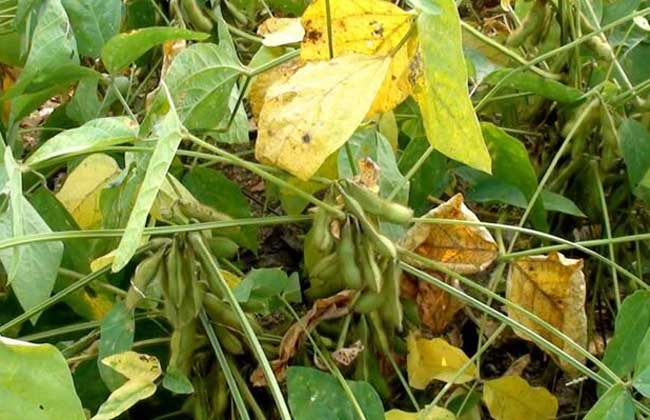
Green-kernel black soybean is the black seed of the leguminous plant soybean, with a black seed coat, green kernel, and white hilum. The seeds are plump and round, and people call them "black pearls." They have very high nutritional value and offer benefits such as anti-aging, improving eyesight and darkening hair, tonifying the kidney and spleen, and prolonging life. The products sell well in Japan, South Korea, and Southeast Asia and are in short supply, with very considerable economic returns. Let's take a look at green-kernel black soybean planting techniques below!
Variety Characteristics
Green-kernel black soybean is a medium-maturity variety with tall plants, strong branching ability, a well-developed root system, and steady, robust growth that is quite impressive. It is disease-resistant and lodging-resistant. It has strong pod-setting ability, with many pods and large seeds, 2 to 3 seeds per pod, and 4-seed pods accounting for more than 10%. The 100-seed weight of fresh beans is 82 to 88 grams, and the 100-seed weight of dry beans is 42 to 44 grams. Yields are high, generally about 200 kg of dry beans per mu, with high yields reaching more than 250 kg, and more than 900 kg of fresh edamame per mu. The seeds are glossy black and shiny, and the inner kernel is emerald green and crystal clear. Especially when eaten as fresh edamame, the flavor is more fragrant, the taste is better, and the flavor is unique.
Timely Sowing
1. Land selection and sowing: For green-kernel black soybean planting, it is best to choose plots with medium or higher soil fertility that are not continuous cropping or alternating cropping. Apply 3000 kg of high-quality farm manure and 10 to 15 kg of compound fertilizer per mu as base fertilizer. Spring sowing is in early to mid-April, and the soil temperature at 5 cm below the ground should be 18°C. In summer, it can also be sown after rapeseed harvest in the Yangtze River basin. In wheat regions north of the Yangtze River, sow immediately after wheat harvest, and sowing should be completed before mid-June.
2. Sowing density: Green-kernel black soybean plants are tall, so sparse sowing is suitable. For fields with medium fertility, sow 11,000 to 13,000 plants per mu in spring, and about 10,000 plants per mu for fields with high fertilizer and water levels. For summer sowing, 12,000 to 15,000 plants. For plots sown later or with poor soil fertility, sowing density should be increased to 18,000 to 20,000 plants per mu. Generally, row spacing is 30 to 40 cm, plant spacing is 20 to 25 cm, sow 2 to 3 seeds per hole, and use 4 to 5 kg of seed.
Field Management
1. Transplanting seedlings to fill gaps: During green-kernel black soybean planting, plots with missing plants can generally be filled by transplanting seedlings on site. When transplanting, cover the soil firmly. If soil moisture is low, water as well to ensure survival rate. To enable transplanted seedlings to grow rapidly, after transplanting and survival, appropriately apply seedling fertilizer to promote uniform and strong seedlings. If missing plants are severe, reseed directly.
2. Cultivation and weeding: For green-kernel black soybean, thin seedlings when 2 single leaves are fully expanded, and finalize the stand when the first compound leaf is fully expanded. When thinning, remove weak plants, diseased plants, and mixed plants, and retain healthy plants. The first cultivation is generally carried out when the first compound leaf appears and the cotyledons have not yet fallen, and the second cultivation is carried out when the seedlings are about 20 cm tall and the leaves have not yet closed the rows. The first cultivation should be shallow, and the second slightly deeper, combined with topdressing and hilling.
3. Timely topdressing: For green-kernel black soybean, combine with plowing and apply 20 to 30 kg of three-element compound fertilizer and 2000 kg of farm manure per mu as base fertilizer. After emergence, check seedlings promptly and reseed or transplant to fill gaps. When the plants are about 20 cm tall, apply 15 kg of nitrogen, phosphorus, and potassium compound fertilizer per mu. For summer sowing without base fertilizer, the topdressing amount should be increased.
4. Chemical regulation: When green-kernel black soybean plants exceed 50 cm in height, for overly vigorous fields, spray 1 to 2 times with 15% paclobutrazol powder at 2000 times dilution to prevent excessive growth. At the early flowering stage, apply 10 kg of urea per mu and spray a 0.01% to 0.05% ammonium molybdate solution to reduce pod shedding, accelerate seed enlargement, and increase yield.
5. Disease and pest control: For green-kernel black soybean at the flowering and podding stage, when disease spots appear on more than 30% of leaves, use 50% carbendazim wettable powder or 40% carbendazim suspension concentrate at 1.5 kg per hectare, mixed with 500 kg of water for spraying, to control gray leaf spot. For aphids and red spider mites, use 1000 to 1500 ml of 35% saidan emulsifiable concentrate per hectare, or 1500 g of 10% imidacloprid, or 150 ml of 1.8% abamectin formulation, mixed with 500 kg of water for spraying to control them.