Black bean sprout cultivation methods and key technical points
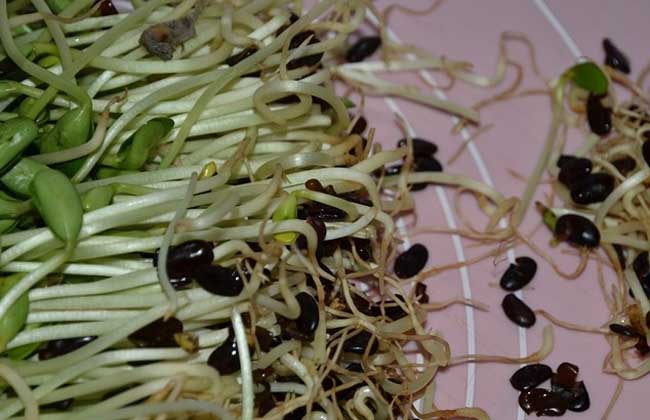
Black bean sprouts are an excellent health food with very high nutritional value, rich in protein and carbohydrates, and abundant in iron, calcium, phosphorus and carotene. They are slightly cool in nature and sweet in taste. Regular consumption has the effects of promoting blood circulation and diuresis, clearing heat and reducing swelling, and tonifying the liver and improving eyesight. They have a refreshing, crisp and tender texture and are deeply loved. Let us take a look below at the cultivation methods for black bean sprouts!
Variety selection
For black bean sprout cultivation, choose varieties that sprout quickly, have a short growth cycle, produce uniform sprout thickness, have strong disease resistance and good palatability. Currently, the commonly used varieties are GanniuLiao black bean and Pingding black, and it is best to use black beans harvested in the current year.
Seed treatment
Before cultivating black bean sprouts, first winnow and water-float the seeds to remove seeds damaged by mechanical crushing, insect-damaged, moldy or too small. When water-floating, rub and wash gently and repeatedly with your hands, repeatedly skim off impurities and inferior beans, then scoop the black beans into a bamboo sieve to drain off the water.
Hot water seed soaking
Pour the drained black beans into 55°C warm water for hot water seed soaking, stirring rapidly and continuously in one direction. The amount of water used for soaking is twice the amount of dry seeds. After stirring for about 15 minutes, add an appropriate amount of cold water, and when the temperature drops to 25°C, begin soaking. At the same time, add one vial (2 ml) of rootless bean sprout hormone, stir evenly, and soak the seeds for 24 hours. At this point the black beans have absorbed enough water. Rinse 2 to 3 times with clean water, pour into a bamboo sieve to drain off the water, air-dry for 3 to 5 minutes, and prepare for germination.
Disinfection and germination
Spread a layer of toilet paper on the bottom of a disinfected foam box, moisten it with 25 to 30°C warm water, and evenly scatter the black beans in the box so that the beans are packed closely together in a dense layer on the bottom of the box, using 350 grams of dry bean seeds per box. After spreading, spray with 20°C warm water; the spray amount should be such that no water drips from the foam box and no water accumulates, so as to avoid seed rot. Then stack the boxes 6 trays per pile for germination.
Seedling stage management
1. Black beans usually reach 3 to 4 cm as black bean sprouts in about 30 hours. Place the foam boxes on a rack or on the ground, take one vial of rootless bean sprout hormone (2 ml) and mix with 1 to 2 kg of water, and spray the sprouts to reduce the production of lateral roots and root hairs and increase the cotyledon area.
2. When the black bean sprouts are 8 to 9 cm tall, take one vial of thickening agent (2 ml) and mix with 1 to 1.5 kg of water, and spray the sprouts to inhibit true leaf elongation, make the stems thicker and more crisp and tender, reduce fiber content, and make the bean cotyledons plump, fresh green and glossy, improving marketability.
3. During the entire production process of black bean sprouts, spray water 2 to 4 times a day. If the temperature is high and humidity is low, spray more; otherwise spray less. Spray less in the early growth stage; in the later stage growth is rapid and water demand is high, so spray more.
4. During black bean sprout production, promptly remove moldy and rotten seeds to avoid creating infection centers that infect surrounding bean seeds. When reusing foam boxes, thoroughly disinfect them with fungicide and expose them to the sun for 3 to 4 hours.