Where is the place of origin of black beans?
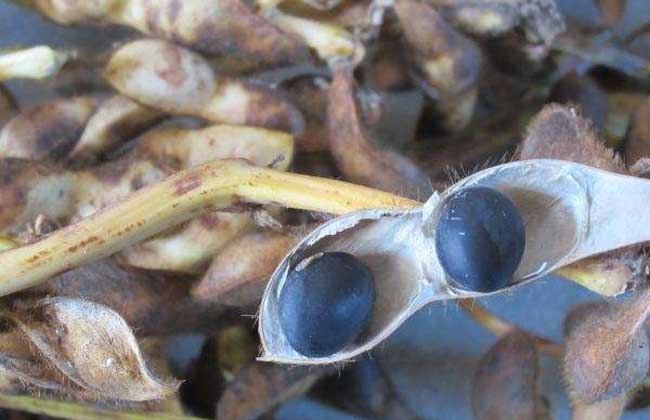
Black beans are the black seeds of the soybean, a plant in the Fabaceae family, also known as ludou, black soybean, horse feed bean, and so on. The outer skin is black, while the inside is yellow or green. Common varieties include green-kerneled black beans, yellow-kerneled black beans, Hengchun black beans, and others. They prefer warmth and tolerate high temperatures, with an optimal growing temperature of 18-30 degrees. For propagation by sowing, seeds that are large, plump, and glossy black are best. Now let us take a look at where black beans come from!
Where is the place of origin of black beans?
In China, black beans are planted everywhere from south to north, and the richness of variety resources ranks first among all countries in the world. At present, China preserves more than 22,000 accessions of soybean variety resources, among which there are 2,980 accessions of black soybeans, accounting for 13.2%, mostly distributed in the Yellow River basin, which is the main production area of small black beans. Today, the loess plateau areas of northern Shaanxi and Shanxi still mainly grow small black beans. In some places, farmers collectively call soybeans black beans, call yellow soybeans white black beans, and call black beans black black beans, which shows how widespread and long-standing local black bean cultivation is.
The production environment of black beans
Black beans have an extremely strong ability to adapt to ecological environments, especially harsh environments, so from the northernmost end of China to the southernmost end, and from east to west, black beans can be grown whether on dry land, upland, sloping land, shaded land, or in saline-alkali and low-lying wet land, and even in mountain areas at an altitude of 1700 m. Because the ecological environments of different places differ, such as differences in day length, light intensity, frost-free period, temperature, soil fertility or barrenness, and moisture content, as well as differences in precipitation, many variety types adapted to the environment have been formed.
The cultivation regions of black beans
1. Northern soybean region: The northern soybean region includes **, Gansu, Qinghai, Ningxia, Inner Mongolia, as well as northern Shaanxi, northern Shanxi, northern Hebei, and the provinces of Northeast China. The cultivation system is one crop per year, mainly spring-sown black beans. Although the three northeastern provinces are included in this region, they mainly produce yellow soybeans, and the area is very small. Representative varieties include Daliehei, Shangzhi black bean, Fengcheng medicinal black bean, and others. In Inner Mongolia, Ningxia, and other places, as well as in the northern parts of Hebei, Shanxi, and Shaanxi, black beans are planted relatively more, mostly small-seeded black beans with indeterminate podding habit and oval or flat-round seeds.
2. Huaihai soybean region: The Huaihai soybean region includes the vast area south of the Great Wall in Hebei and north of the Qinling Mountains and Huai River, from the coast in the east to the Minshan Mountains in the west, including Shandong, Henan, central and southern Hebei, southern Shanxi, the Guanzhong Plain of Shaanxi, southern Gansu, and northern Jiangsu and Anhui. Varieties include Shunyi black bean, Jindou No. 3, Lu black bean No. 1, Yudou No. 4, and others. Summer-sown varieties also include black-skinned bean, and in the north and in low-lying saline-alkali land there are some small-seeded black beans with indeterminate podding habit.
3. Southern soybean region: The southern soybean region includes the areas south of the Qinling Mountains and Huai River, the middle and lower reaches of the Yangtze River in Jiangsu, Anhui, Jiangxi, Hubei, and Hunan, the southeastern areas of Zhejiang and Fujian, as well as Guangdong, Guangxi, and other places. Representative varieties include Wupi green bean, Taichun No. 1, autumn black bean, Shaxian black bean, black yellow bean, and others. Promoted varieties include Qiudou No. 1, Zhongyou 19, Zhechun No. 2, and others. Spring-sown varieties are intercropped with corn on dry land or interplanted between wheat rows, including Taixing black bean, Wuren black bean, Jinjiang oil black bean, and others.
4. Southwest soybean region: The southwest soybean region includes Yunnan, Guizhou, Sichuan, and parts of Guangxi. These areas have relatively high terrain, with an altitude above 1000 m, and belong to a mid-subtropical climate. Because of differences in altitude, the climates vary greatly. This region mainly grows spring-sown black beans, with some summer sowing and autumn sowing as well. Representative varieties include black yellow bean, black-mouthed bean, small black bean, Liujiang black bean, and others. The plants are generally short and mostly have a determinate podding habit.
5. South China soybean region: The South China soybean region mainly includes the southern areas of Guangdong, Guangxi, Yunnan, and Fujian, as well as Taiwan, China, Hainan, and other provinces, where black beans can be planted in all four seasons. Winter black beans are sown from late December to early January of the following year and mature from mid-April to early May. Spring black beans are sown from late February to early March and mature in early to mid-June. Summer black beans are sown from late May to early June and mature from late August to early September. Autumn black beans are sown from late July to late August and mature from late October to late December.